

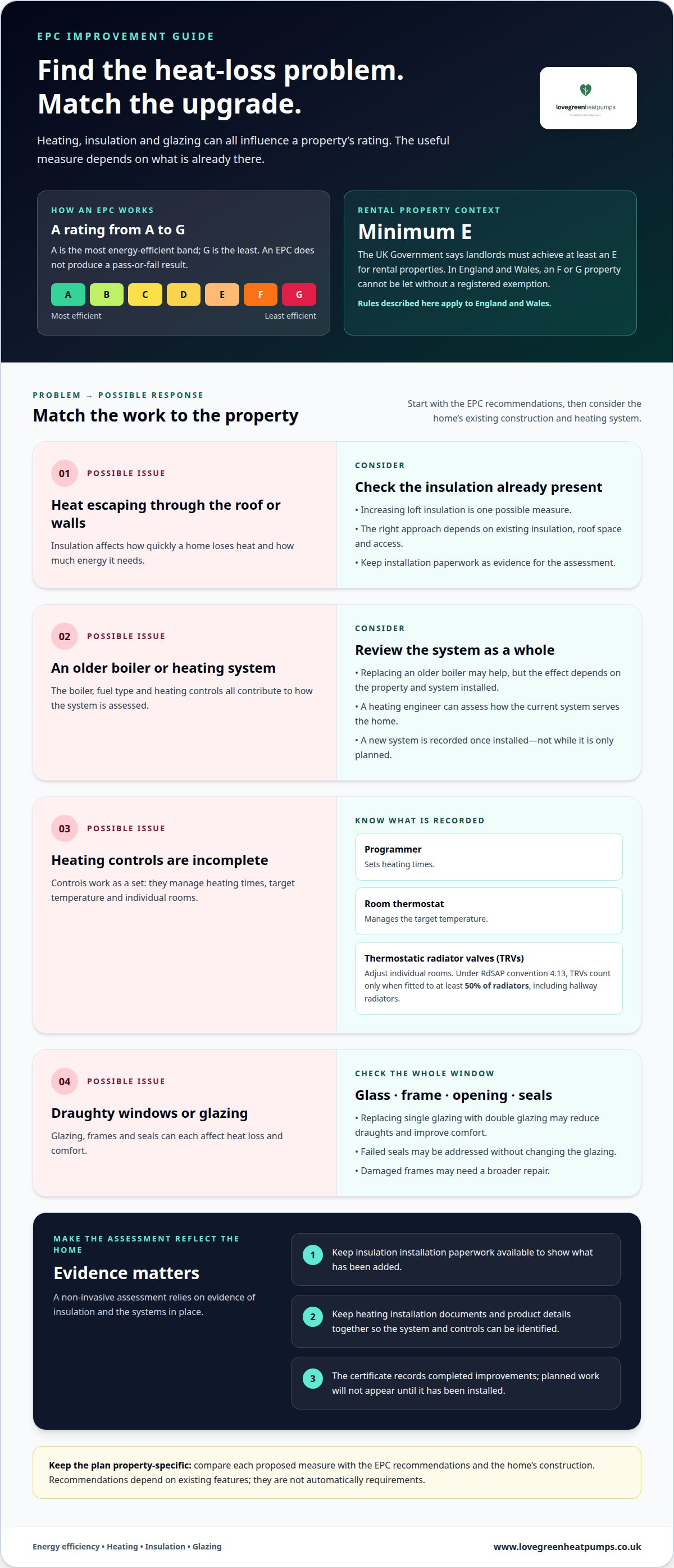
An EPC assessment doesn’t produce a pass or fail: it rates a property from A, the most energy-efficient band, to G, the least. So, what fails an EPC assessment? No single item makes a property fail. Features such as heating, insulation, windows and lighting can contribute to a low rating. According to the UK Government, landlords must achieve a minimum EPC rating of E for rental properties.
A low rating can be concerning, especially if you’re preparing to let or sell a home. It doesn’t automatically prevent a sale, and recommended improvements depend on the property’s existing features. This guide explains what can lower a rating, which upgrades may help and what to do if an assessment appears inaccurate. It also covers what a low rating can mean for landlords, so you can plan practical next steps without treating every recommendation as a requirement.
Key Takeaways
- An EPC rates a property from A to G rather than issuing a pass or fail, but a low rating can affect landlords’ options.
- According to the UK Government, rented properties must meet a minimum EPC rating of E, so understand the rules before deciding what to improve.
- Insulation, heating controls and glazing can all influence a rating. The most useful upgrades depend on where the property is losing heat.
- An assessor needs evidence of insulation during a non-invasive assessment. Keep relevant records available to help the assessment reflect the property accurately.
- If the certificate seems wrong, contact the assessor and review details such as the heating, walls and property type.
What happens if a property receives a low EPC rating?
An EPC rates a property’s energy efficiency from A to G; it does not give a pass-or-fail result. What follows depends on the property’s use, location and rating.
Why a low EPC rating matters
A low rating indicates that a property uses energy less efficiently than one in a higher band. For owners, it can point to heat loss or outdated systems; for landlords, it may affect whether a home can be let. A low score does not automatically prevent a sale: there is currently no minimum EPC rating required to sell a property.
In England and Wales, a seller or landlord who has not secured an EPC after all reasonable efforts within 7 days of marketing must obtain one within a further 21 days, according to UK legislation (legislation.gov.uk). A stand-alone building with a total useful floor area of less than 50m2 is exempt from the EPC requirement, according to UK legislation (legislation.gov.uk).
Rental property minimum ratings
The UK Government says landlords must achieve a minimum EPC rating of E for rental properties. In England and Wales, a property rated F or G cannot be let without a registered exemption, according to the Department for Energy Security and Net Zero. Commercial properties may also be subject to energy-efficiency requirements when leased.
Yes, EPC rules differ across the UK. The rules described here apply to England and Wales; a Scottish EPC assessment does not technically produce a pass-or-fail outcome. Check the rules for the nation where the property is located before relying on a rating or exemption.
Renting below the minimum can lead to penalties. The Department for Energy Security and Net Zero says failure to meet the stated energy-efficiency standards can result in fines of up to £5,000. Some privately rented properties may qualify for an exemption if upgrades would cost more than £3,500, according to the Department for Energy Security and Net Zero. An exemption must be registered to apply.
Improving a rating and typical costs
Improving an EPC rating means addressing features that affect the assessment, such as insulation, heating controls, an older boiler or glazing. The right work depends on the property and its recommendations. Better loft insulation may reduce heat loss, while controls can help manage heating more effectively. Solar PV & Other Renewables may also be relevant if they suit the property and the assessment recommendations.
How much do common improvements cost in the UK? Costs depend on the work, property and materials, so there is no single figure for every upgrade. Treat this as an example, not a standard price. After improvements, an updated EPC assessment can record the property’s changed performance.
Insulation, heating and glazing upgrades
Insulation, heating and glazing each affect how a home uses energy. Start with the EPC recommendations, then consider them in light of the property’s existing construction and heating system.
Heating systems and controls
A heating upgrade changes the system that supplies warmth, while controls help manage when and how it runs. Both can influence an EPC rating, so consider the boiler, fuel type and controls together. Replacing an older boiler may help, but the effect depends on the property and the system installed. A heating engineer can assess how the current system serves the home.
Controls need to work as a complete set. A programmer sets heating times, a room thermostat manages the target temperature, and thermostatic radiator valves adjust individual rooms. Under RdSAP convention 4.13, TRVs count in an EPC assessment only when fitted to at least 50% of radiators, including hallway radiators. Fitting one valve in a bedroom alone won’t meet that recording convention.
Changing heating fuel or installing a different system can alter the assessment’s picture of energy use. The assessor records the system in place, not a future plan. Keep installation documents and product details together so the system and its controls can be identified accurately during a later assessment.
Glazing upgrades
Glazing improvements address heat loss through windows, but frames and seals matter too. Replacing single glazing with double glazing may reduce draughts and improve comfort, while poorly fitting frames can still let cold air into a room. The EPC assessment considers the home as it stands, so a planned window replacement won’t appear on the certificate until it has been installed.
Check the whole window: glass, frame, opening mechanism and seals. For example, replacing failed seals may address a draught without changing the glazing, while damaged frames may need a broader repair. The right improvement depends on the existing window and the property’s recommendations.
Insulation can make heating upgrades more effective by limiting heat escaping through the roof or walls. Increasing loft insulation is one possible measure; the right approach depends on what is already present, the roof space and access. An assessor records insulation based on evidence, so installation paperwork can help show what has been added.
Plan upgrades as connected decisions rather than isolated purchases. Improving insulation first may change the heating demand a replacement system needs to meet. Glazing and draught reduction can also affect comfort in rooms where radiators work hardest. Compare each proposed measure with the EPC recommendations and the home’s construction before arranging work.
For homes where a heating system replacement is being considered, heat pump installation can be part of an upgrade discussion alongside suitable insulation and controls. A new certificate should reflect completed improvements, not work that remains planned.
Insulation and heat loss
Insulation affects how quickly a home loses heat and how much energy it needs for heating. During an EPC assessment, the assessor considers the building’s construction and insulation, including areas that may be hidden from view.
A non-invasive EPC assessment does not involve drilling holes to inspect cavity walls. The assessor needs evidence that insulation is present. If cavity wall insulation was installed but cannot be seen, provide relevant installation records or other evidence available for the property. Without evidence, the assessor may not be able to record the insulation as present.
Loft insulation can be easier to show, but access matters. Clear access allows the assessor to inspect visible insulation and consider its coverage and condition. If the loft hatch is blocked or the roof space cannot be reached safely, the assessment may have to rely on other evidence. Keep installation paperwork with the property records and make it available during the visit.
Gather evidence before the assessment rather than assume an upgrade will be recognised automatically. Useful records can include installer documents that identify the work and the part of the property treated. For example, records showing cavity wall insulation was installed can help the assessor judge insulation that sits behind finished walls. The evidence must give the assessor a sound basis for recording it.
How is an EPC assessment carried out, and what evidence should homeowners provide? An accredited energy assessor inspects the property’s features, including construction, heating, insulation and windows, then records the findings for the certificate and register. Provide available records for hidden insulation and completed improvements, such as loft or cavity wall work.
Construction type and age can also affect how an assessor records heat loss. For an unfilled cavity wall in England, BRE’s RdSAP 10 specification gives a U-value of 1.5 W/m²K for age bands A to E, up to 1975. A U-value describes how readily heat passes through a building element; the lower the value, the less heat passes through it. This is why the correct wall type and evidence of insulation matter.
Match evidence to the specific improvement. A document identifying insulation in the loft is more useful for that area than a general record of home upgrades. Likewise, records for a heat pump or heating installation do not prove that a wall cavity has been insulated. Clear, relevant evidence helps the assessor describe the property’s energy performance accurately.
If an EPC seems to overlook insulation, identify the area affected and what evidence was available at the assessment. Then contact the assessor with the relevant details. A certificate should reflect the property’s supported features, not assumptions about work that cannot be seen.
Single glazing and draughty frames
Single-glazed windows and draughty frames can contribute to heat loss and affect a home’s energy performance. An EPC assessment records features such as windows and glazing alongside heating, insulation and lighting. For example, a single-glazed front-room window is a different feature for the assessor to record than a double-glazed replacement. Neither condition creates a separate pass-or-fail result, but window details contribute to the property’s overall rating.
Glass is only one part of a window. Frames, seals and opening mechanisms also affect how well it closes. A loose sash or worn seal can let cold air into a room, even when the glass is in reasonable condition. Before an assessment, note which windows are single-glazed and identify visible draughts, such as air around a bedroom frame. This gives the assessor a clear description of the property’s existing features.
Owners can consider repairs or replacement in light of the EPC recommendations. For example, replacing damaged seals may address a draught without changing the glazing, while a window with a failing frame may need a broader repair. Upgrading to double glazing changes the window specification, but the right option depends on the existing frames and the property. Avoid treating one window upgrade as a guaranteed route to a particular rating.
Evidence matters when improvements are already complete. Keep records identifying the work, such as an installation document for replacement windows, with the property’s other energy-efficiency paperwork. If only some rooms have double glazing, make that distinction clear. A certificate should describe the home as it stands, not assume every window has the same specification because one replacement is visible.
For landlords, accurate window details can help clarify how a property compares with the minimum standard for renting. The assessment also considers other elements, so glazing should not be viewed in isolation from insulation, heating or lighting. For instance, a draughty living-room frame and an older heating system are separate features that contribute to the overall picture of energy use.
If the certificate appears to record the wrong glazing type, identify the affected window and gather relevant evidence. Then contact the energy assessor with the specific detail, such as a documented replacement or an incorrect description of single glazing. A focused correction request is more useful than a general concern about the rating. Check that the final certificate reflects the property’s actual windows and completed work.
Common causes of an incorrect EPC assessment
An EPC can contain an error if the assessor records the wrong heating, walls or property type. For example, a boiler may be listed incorrectly, cavity walls may be recorded as solid, or a flat may be described as a house. Understanding what fails an EPC assessment also means distinguishing an incorrect entry from a genuinely inefficient feature. Each detail affects the energy assessment, so a factual mistake can change the overall picture.
Check heating records closely. A certificate might describe an old boiler when a replacement was already installed, or omit a heating control that was present during the visit. Compare the certificate with installation records and the actual system. An invoice or commissioning document can help identify the equipment and when it was fitted.
Wall construction can also be misidentified, particularly when insulation sits behind plaster or external finishes. An assessor cannot confirm hidden insulation by drilling during a non-invasive assessment. If the certificate records an unfilled cavity but insulation was installed, provide relevant paperwork to the assessor. Evidence should relate to the specific wall or improvement, not simply list general home upgrades.
Property type matters because a detached house, a mid-terrace home and a flat have different building features. Check that the certificate describes the correct dwelling and its main construction. Window details can also be wrong: a record of single glazing may conflict with documented double-glazing installation. Lighting entries may warrant review too if the listed fittings do not match the property.
In England and Wales, an energy assessor must carry out an assessment with reasonable care and skill. A UK EPC must be lodged on the register by an assessor registered with an accreditation scheme. These requirements make accurate observations and records important. For a dwelling in England or Wales, an EPC is valid for 10 years, so an error can remain visible unless corrected or replaced.
Start by checking the existing certificate’s rating, issue date and expiry date on the UK EPC Register. Then identify the exact entry that appears wrong, such as the wall type, boiler or glazing. Gather relevant evidence, including dated installation records, and contact the assessor to explain the discrepancy. If you believe an EPC is incorrect, you can raise your concern with the assessor.
Keep the request factual and specific. For example, state that the certificate lists a particular boiler, but the property records show a replacement was installed before the assessment. If you’re working out what fails an EPC assessment in your own home, focus on specific recorded details and supporting evidence. If a new assessment is needed to reflect later work or corrected details, arrange an EPC assessment based on the property’s current features.
Love Green Heat Pumps Ltd: EPC Assessments
Love Green Heat Pumps Ltd provides EPC assessments for property owners who need a certificate or want an updated rating after improvements. The assessment records the home’s current energy features, helping the certificate reflect installed insulation, heating and glazing rather than planned work.
If a certificate appears to describe the wrong property details, or you’ve completed upgrades since it was issued, an assessment can help establish the property’s current energy performance. The findings can also give you a clearer basis for considering measures such as heating changes or solar PV.
For a straightforward assessment of your property, contact Love Green Heat Pumps Ltd.
Turn your EPC into a practical plan
Knowing what fails an EPC assessment can help you make a more informed decision: treat the certificate as a starting point for planning, not a verdict on your home. Choose improvements around the property’s actual needs and your priorities, whether that means addressing comfort, energy use or preparing for a change in how the home is used. Keep clear records of completed work so future assessments can reflect the property accurately.
Love Green Heat Pumps Ltd can support your next step with an EPC assessment or related home energy work, including heat pump installation, air conditioning, solar PV and other renewables. The right starting point depends on whether you need an accurate certificate, are considering an upgrade or want to understand how the two fit together.
For a clear next step, contact Love Green Heat Pumps Ltd. A considered plan can make home improvements feel more manageable.
Frequently Asked Questions
What improvements can help increase a poor EPC rating?
Loft insulation, improved heating controls and replacing an older boiler may help, depending on the property. Start with the recommendations on the certificate and consider which measure addresses a feature it identifies. For example, if heat loss through the roof is highlighted, loft insulation may be worth investigating. Keep records of completed work so a later assessment can take account of the updated features.
Can you fail an EPC?
No. An EPC gives a property an energy-efficiency rating rather than a pass-or-fail result. Its A-to-G scale describes how the property performs, with A representing the most efficient band and G the least. A low rating can still matter for landlords because rental rules set a minimum standard. For homeowners who are not letting the property, a low band does not itself mean the home has failed an assessment.
How do I check what the assessor actually recorded?
Open the certificate and review its property details, rating and recommendations. Check the entries against the home, including whether the boiler, wall construction or window type matches what is installed. The UK EPC Register can show a certificate’s rating, issue date and expiry date. If a specific entry looks wrong, note the detail and contact the assessor with relevant supporting records, such as an installation document.
What is an EPC and what does it mean?
An Energy Performance Certificate, or EPC, records a property’s estimated energy efficiency and gives it a band from A to G. It also includes recommendations for possible improvements, helping owners understand which features could be addressed. In England and Wales, a dwelling’s EPC is valid for 10 years and can be reused during that period. It describes the assessed property, not a guarantee of future energy use.
Why is my EPC rating lower than it should be?
The rating may reflect a feature that is less efficient than expected, or information recorded incorrectly. For example, the certificate might list an older boiler, omit documented insulation or describe double glazing as single glazing. Improvements completed after the assessment will not appear on that certificate. Compare the recorded details with the property and available installation paperwork, then raise a specific discrepancy with the assessor.
Can You Still Sell a Property With a Low EPC?
Yes, a low EPC rating does not by itself prevent a property sale. There is currently no minimum EPC rating required to sell a property. However, in England and Wales, an EPC must be commissioned before a building is put on the market if it has no valid certificate. Check the certificate’s issue and expiry dates, since an existing valid EPC may still be usable.
Can a property fail an EPC assessment in Scotland?
No. A Scottish EPC assessment does not technically produce a pass-or-fail outcome. It records the property’s energy efficiency instead. That distinction matters when interpreting a low rating: it is an assessment result, not a failed test. Use the certificate’s recorded features and recommendations to understand the rating, and consider Scotland’s applicable rules separately if the property is being rented.
Can a property fail an EPC assessment in England and Wales?
No. An EPC in England and Wales assigns an energy-efficiency rating rather than a pass or fail. For privately rented homes, the UK Government states that landlords must achieve at least band E, subject to applicable exemptions. A property below that standard can create a rental compliance issue, but that is separate from whether the assessment itself has been passed. Review the property’s use and relevant rules before letting it.
Disclaimer
Disclaimer
The information published on this website is provided by Love Green Heat Pumps for general information and educational purposes. As a specialist provider of heating and renewable energy solutions, we strive to ensure that our content is accurate, relevant and up to date. However, heating requirements, system suitability, installation specifications, costs and performance can vary depending on individual property characteristics, usage and other site-specific factors.
Information provided in our articles should not be regarded as a substitute for a professional property assessment, technical survey or tailored recommendation. Any decisions regarding the selection, installation, replacement or maintenance of heating systems should be made with appropriate professional guidance.
Love Green Heat Pumps accepts no responsibility for decisions made solely on the basis of general information published in these articles. For advice specific to your property or project, we encourage you to contact our team for professional guidance and an assessment of your requirements.


