

What if the best air conditioning system for your home isn’t the biggest one, but the one planned around how you use each room? Choosing a domestic air conditioning installer uk homeowners can trust starts with understanding the property, household routines and comfort needs, rather than simply picking a unit.
Before work begins, it’s natural to have questions. Will one unit cool the room you use most, or would a multi-split system suit several rooms better? Where can indoor and outdoor units go, and what might affect the installation? Efficiency, heating capability, noise and future maintenance all deserve consideration.
This guide explains what domestic air conditioning installation involves and how to compare options for your home. You’ll learn how installers plan a system, choose unit positions and carry out the work, as well as what to consider if you want heating as well as cooling. We’ll also cover everyday efficiency and routine care, so you can make a more informed decision before requesting a quote.
Key Takeaways
- A domestic air conditioning installer can help match a system to the rooms you want to cool or heat.
- Compare single-split and multi-split systems by the rooms they serve, the control you want and the installation required.
- Consider unit placement, noise, controls and maintenance alongside efficiency information.
- Understanding the stages from discussing your needs to installation and handover can help you plan with confidence.
- Love Green Heat Pumps Ltd provides domestic air conditioning installation, maintenance and repairs, with system choices tailored to your home.
What a domestic air conditioning installer does for your home
A domestic air conditioning installer plans and fits a fixed system around the needs of your home. That means looking beyond the unit itself. Room size and layout, how each space is used, household routines and possible equipment positions all help shape the proposed installation. A domestic air conditioning installer uk homeowners work with should explain how these practical details inform the system design.
Fixed air conditioning differs from a portable unit. Portable models can be moved and don’t need a permanent installation, while fixed systems have indoor and outdoor equipment connected as part of a planned setup. A portable unit may suit occasional use or situations where flexibility matters. A fixed system may be worth considering if particular rooms regularly become uncomfortable. The right option depends on how you use the space and what you want the system to do.
What happens during a domestic air conditioning installation?
Planning starts with the rooms you want to serve and how you use them. A bedroom used overnight, a home office occupied during the day and an open-plan living area can have different comfort needs. The installer considers the layout, suitable indoor and outdoor unit positions, and the routes needed to connect the equipment. Room dimensions, windows and exposure to sun can also influence the design. These decisions affect both how the system fits into daily life and the work involved.
Installation covers planning and fitting the system. Routine servicing is ongoing care to help keep it working as intended, while a repair addresses a fault or problem. Love Green Heat Pumps Ltd provides domestic air conditioning installation, maintenance and repair, including single-room and multi-split systems.
When could fixed air conditioning make sense at home?
Start by identifying rooms that regularly feel too warm in summer. A top-floor bedroom, a sun-facing home office or a glazed extension may be uncomfortable at times, but that doesn’t mean every room or home needs air conditioning. A fixed system can give you control over comfort in the rooms it serves, which may suit households whose routines change throughout the day.
Some air conditioning systems can also provide heating. These work as heat pumps, moving heat rather than simply producing cooling. Read more about how heat pump air conditioners work. Heating capability is a feature of relevant systems, not a promise that one installation will replace a home’s entire heating setup. An installer can tailor the proposed arrangement to the property and the rooms you want to serve.
Single-split or multi-split air conditioning: match the system to your rooms
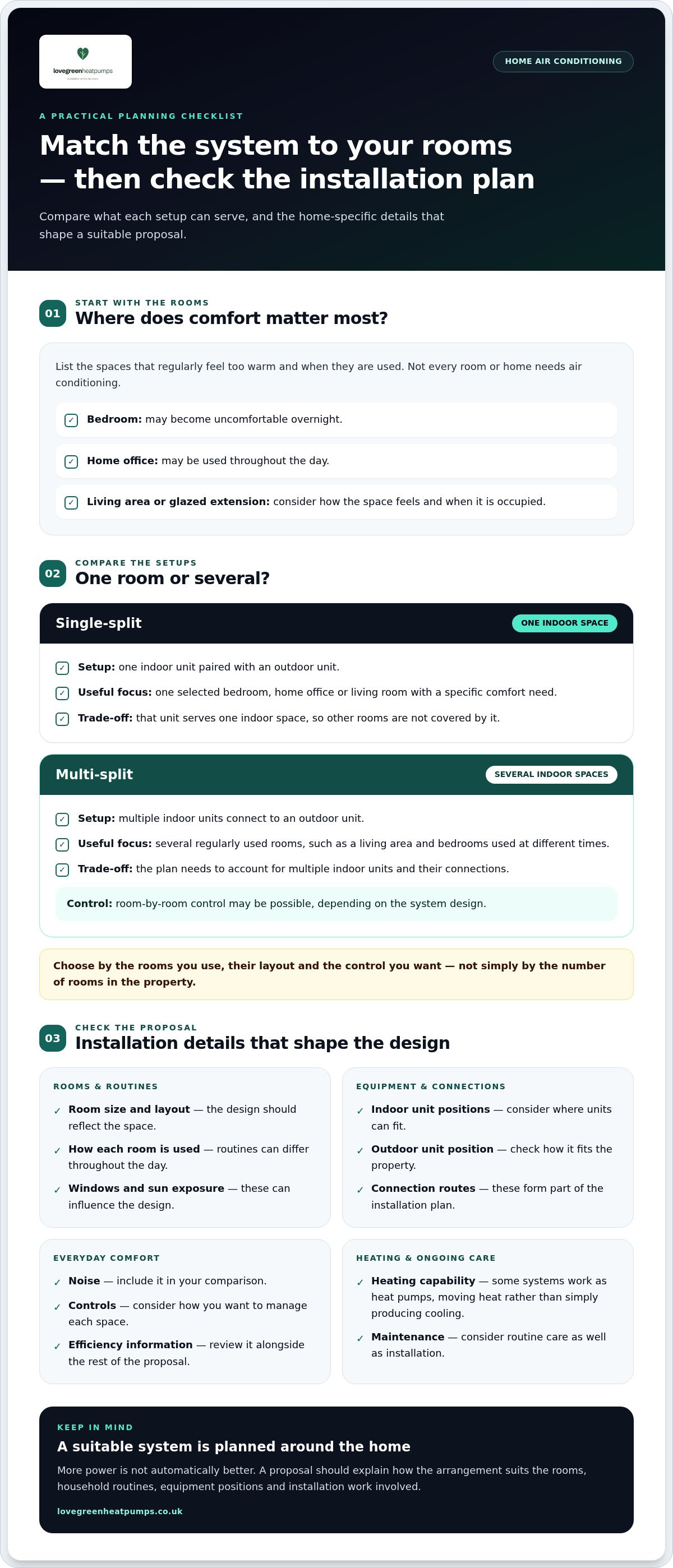
The main difference is how many indoor spaces the system is designed to serve. A single-split system pairs one indoor unit with an outdoor unit to condition one room. A multi-split system connects multiple indoor units to an outdoor unit, allowing several spaces to be served. The right arrangement depends on your home’s layout and which rooms you use, not simply the number of rooms in the property.
Think about where comfort matters most. If one bedroom or home office is the priority, a single-split system may be a focused option. If several rooms need attention at different times, a multi-split arrangement may be more suitable. Compare the locations of the indoor units, the outdoor unit and the connections required, as well as how you want to control each space. For a closer comparison, read our multi-split versus single-split air conditioning guide.
| System | Advantages | Trade-offs | Typical use |
|---|---|---|---|
| Single-split | Designed around one selected room, with a straightforward focus for everyday control. | Serves one indoor space, so other rooms aren’t covered by that unit. | A bedroom, home office or living room with a specific comfort need. |
| Multi-split | Can serve several indoor spaces, with room-by-room control depending on the system design. | Requires planning for multiple indoor units and their connections to the outdoor unit. | Several regularly used rooms where separate control is useful. |
When is a single-split system a practical choice?
A single-split system can suit a room that regularly becomes uncomfortable in warm weather, such as a bedroom that heats up overnight or an office used throughout the day. Consider the room’s size, layout and use when planning the unit and its position. There isn’t one capacity or specification that suits every space, so the design should reflect the room rather than rely on a one-size-fits-all choice.
When might a multi-split system suit a home?
A multi-split system may suit households that want to condition more than one room, perhaps a living area and bedrooms used at different times. Separate indoor units can allow room-by-room control, while a single-split system focuses on one space. The practical fit depends on the property layout, the rooms involved and how the installation is designed. A domestic air conditioning installer should tailor the arrangement to those needs.
Love Green Heat Pumps Ltd installs single-room and multi-split air conditioning systems, with proposals shaped around the home and the rooms you want to serve. Explore domestic air conditioning installation to learn more.
How to assess an air conditioning installation before choosing
A useful proposal should explain how the system fits your rooms and routines, not simply recommend the largest unit. More power isn’t automatically better: the design needs to suit the space and how it’s used. System suitability depends on the home, room use and installation design.
Use this checklist to organise your priorities before comparing options:
- Rooms served: Decide which spaces need cooling and when they’re usually occupied. Note whether rooms are used at the same time or separately.
- Controls: Consider whether you want to adjust rooms separately or mainly condition one space.
- Unit positions: Think about where indoor and outdoor equipment could sit, how visible it will be and whether it can be accessed for maintenance.
- Noise: Consider household routines, particularly in bedrooms or quieter work areas, when discussing unit placement.
- Ongoing care: Include routine maintenance in your plans so the system can be looked after as intended.
Energy labels help you compare the rated efficiency of different units. Seasonal performance information gives a broader indication of how equipment performs across varying conditions, rather than relying on one operating point. Compare the same type of rating across similar systems, and treat it as a guide to performance, not a promise of a particular bill or saving. Ask how the figures relate to the proposed system and the way you expect to use it.
Which practical details affect comfort and day-to-day use?
Room-by-room controls can be useful if household members use different spaces at different times. A bedroom may be occupied overnight, while a home office is used during the day. Unit location also matters: it can affect how air reaches the room, how the equipment looks and how easily it can be reached for maintenance. Discuss noise as part of the planning, especially where people sleep, work or relax. Think about access to the outdoor unit too, so its position works for the property and future maintenance.
Can domestic air conditioning also provide heating?
Some systems can cool and heat. That can offer room-level heating in spaces served by the equipment, but it doesn’t automatically make the system a complete home-heating design. Whether heating is suitable depends on the system and the property. For a broader look at heat pumps and whole-home considerations, read the heat pump installation homeowner guide.
Love Green Heat Pumps Ltd tailors domestic air conditioning proposals to the property and the rooms you want to serve. A free, no-obligation quote gives you a starting point for discussing the installation you have in mind. Explore domestic air conditioning options.
What to expect from domestic air conditioning installation and aftercare
A well-planned installation starts with your household’s needs, then moves through system planning, fitting and handover. A domestic air conditioning installer should tailor the equipment and installation details to the property, rather than assume the same arrangement suits every home.
How does the installation process usually progress?
1. Discuss your requirements. Begin with the rooms you want the system to serve, how you use them and whether heating as well as cooling matters to you. Mention any spaces that are difficult to keep comfortable and when they’re usually occupied. These details help shape the proposed system.
2. Plan the installation. Indoor and outdoor unit positions and the routes connecting them need consideration before work begins. The property layout and practical access inform the plan. Discuss how the equipment will sit in the home, along with any concerns about disruption or noise.
3. Prepare the space. Make access to the relevant rooms and work areas as clear as possible. Move furniture or belongings away from proposed equipment positions and routes where practical. Preparation depends on the installation, so follow the arrangements agreed for your home.
4. Fit and hand over the system. The installer carries out the planned work, checks the installation and explains the controls and day-to-day use. At handover, make sure you understand how to operate the system and what routine care it needs. Installation details and time on site vary with the property and system, so there’s no single duration that applies to every job.
What should homeowners know about maintenance?
After installation, simple ongoing care and professional servicing both have a part to play. Dust can build up on filters and affect airflow, so follow the equipment guidance on checking and cleaning user-accessible filters. Routine servicing allows the system to be checked and maintained; it supports ongoing operation but can’t guarantee that faults won’t occur.
Maintenance is planned care. Repair is work to address a fault or problem, and the two aren’t interchangeable. Love Green Heat Pumps provides air conditioning maintenance and repair as well as domestic installation, helping homeowners look after their system after it’s fitted.
Planning a system for your home? Request a free, no-obligation air conditioning quote from Love Green Heat Pumps.
Choose Love Green Heat Pumps for domestic air conditioning installation
Choosing a domestic air conditioning installer means looking for clear planning as well as equipment that suits the rooms you want to serve. Love Green Heat Pumps provides domestic air conditioning installation, maintenance and repair across the UK. Each proposed installation is tailored to the property and household, whether you’re considering a single-room system or a multi-split arrangement.
Love Green Heat Pumps installs and maintains domestic air conditioning systems across the UK, with options planned around each home and the rooms its household wants to use comfortably.
What support can homeowners expect from Love Green Heat Pumps?
Start by considering your home and how you want to use the system. Which rooms matter most? Are they occupied at the same time, or at different points in the day? These practical details help shape the installation proposal, including whether a single-room or multi-split system is a better fit.
Love Green Heat Pumps also provides air conditioning installation and maintenance for commercial settings. For homeowners, the focus is on a system arrangement that works with the property and everyday routines. Planning takes account of the rooms to be served and the practical details of fitting the equipment, rather than assuming one layout suits every home.
Support continues after installation. Routine maintenance helps look after the equipment, while a repair addresses a fault or problem. Keeping these needs in view from the outset can help you understand what ongoing care may involve and how to use the system as intended.
How can you take the next step?
A free, no-obligation quote gives you a project-specific starting point. It lets you discuss the rooms you’d like to serve and receive a proposal shaped around your home, without relying on generic figures or assumptions about the installation. You don’t need to have every detail decided before you begin. A clear outline of your comfort priorities and household routines is a useful place to start.
If you’re ready to explore domestic air conditioning for your home, request a free, no-obligation quote from Love Green Heat Pumps.
Plan a more comfortable home with the right system
The right air conditioning setup starts with the rooms you want to serve and how your household uses them. A single-room system may suit one regular hot spot, while a multi-split system can be planned for several spaces. Unit placement, controls and ongoing care all contribute to how well the installation fits everyday life.
Choosing a domestic air conditioning installer uk homeowners can work with means looking for a proposal tailored to the home, not a one-size-fits-all solution. Love Green Heat Pumps provides domestic single-room and multi-split installations, alongside air conditioning maintenance and repair. A free, no-obligation quote offers a straightforward way to discuss your project and receive a proposal based on your home and requirements.
To discuss your home and the rooms you want to serve, request a free, no-obligation quote from Love Green Heat Pumps.
Frequently Asked Questions
What does a domestic air conditioning installer do?
A domestic air conditioning installer plans and fits a cooling system for your home. They consider which rooms need conditioning, how you use them, and where the indoor and outdoor equipment can be positioned. A domestic air conditioning installer UK homeowners choose should tailor the proposal to the property, rather than assume one setup suits every household. Love Green Heat Pumps installs single-room and multi-split systems, and also provides maintenance and repairs.
Is air conditioning suitable for a UK home?
Air conditioning can suit a UK home if particular rooms regularly become uncomfortable and you want more control over their temperature. A warm bedroom, home office or sun-facing living space may be a reason to explore options, though not every home needs a fixed system. Suitability depends on the rooms, household routines, property layout and installation design. A portable unit may also suit occasional or flexible use without a permanent installation.
What is the difference between single-split and multi-split air conditioning?
A single-split system is designed to serve one indoor space, while a multi-split system connects multiple indoor units to serve several rooms. A single-split arrangement may suit one priority room, such as a bedroom or office. A multi-split system may be worth considering if you want to condition several spaces, potentially with separate room controls. The best fit depends on your layout and how each room is used.
Can home air conditioning provide heating as well as cooling?
Yes, some home air conditioning systems can provide both cooling and heating. These systems can offer heating to the rooms they serve, but that doesn’t automatically make them a complete replacement for a home’s wider heating setup. The heating function and its suitability depend on the system and property. If you’re considering both uses, include them in your installation requirements so the proposed arrangement reflects how you want to use it.
How long does domestic air conditioning installation take?
Installation time depends on the system and the property, so there isn’t one duration that applies to every home. Fitting a system for one room may involve a different scope of work from installing multiple indoor units. Equipment positions, connection routes and access to the work areas also affect the plan. Before work begins, discuss practical preparation and access for your project, then keep the relevant areas clear where possible.
How much does it cost to install air conditioning at home?
The cost depends on the system selected, the number of rooms to be served and the installation requirements of your property. A single-room installation and a multi-split project have different scopes, so a general figure may not reflect your home. Love Green Heat Pumps provides free, no-obligation quotes based on project-specific requirements. This gives you a tailored starting point without relying on a broad estimate that may not fit your installation.
Does domestic air conditioning need regular maintenance?
Yes, routine maintenance helps support the system’s ongoing operation. Follow the equipment guidance for checking and cleaning accessible filters, as dust build-up can affect airflow. Professional servicing provides planned care, while a repair addresses a fault or problem. They’re different needs. Love Green Heat Pumps provides air conditioning maintenance and repairs, helping homeowners look after their systems after installation. Always follow the manufacturer’s instructions for routine care.


