

A comfortable bedroom installation starts with the room, not the unit. If summer heat is making sleep difficult, it’s natural to focus first on finding an air conditioner. But a successful bedroom air conditioning installation depends on more than the model: room size, glazing, insulation and layout all affect which solution will work well.
It’s also worth planning for noise, indoor and outdoor unit positions, and the work needed to connect them. Getting these details right can help avoid a system that feels too powerful, struggles to cool the space or disturbs your rest.
This guide explains what room details matter, how unit type and positioning affect comfort, and what to expect when a professional installation is planned from design through commissioning. You’ll also find practical ways to prepare for installation day and care for the system afterwards. A room-specific plan makes the process clearer and helps the finished system suit the bedroom when it’s at its warmest.
Key Takeaways
- Plan bedroom air conditioning installation around how the room gains and holds heat, not floor area alone.
- Windows, furniture and airflow paths can all affect where the indoor unit works best.
- Compare fixed split and portable systems by installation needs, noise, portability and everyday use.
- A professional survey helps plan indoor and outdoor unit positions and the route for connecting services.
- Understand the steps from room discussion and system design through installation, testing and handover.
Bedroom Air Conditioning Installation: Is It Right for Your Room?
A bedroom that stays warm long after the sun has gone down can make it difficult to settle and sleep comfortably. A well-planned system provides controlled cooling, but the right choice depends on the room and how you use it. Consider comfort, placement and the room’s practical constraints before choosing a unit.
Bedroom air conditioning installation means selecting and fitting a system around the room’s use, layout and comfort needs, rather than choosing a unit by appearance or floor area alone. Fixed systems connect an indoor unit to an outdoor unit and provide controllable cooling. Some can also provide heating, depending on the system selected and its intended use.
Assess the room before choosing a unit: heat gains, layout and everyday use all help shape a comfortable installation.
What bedroom conditions should you assess first?
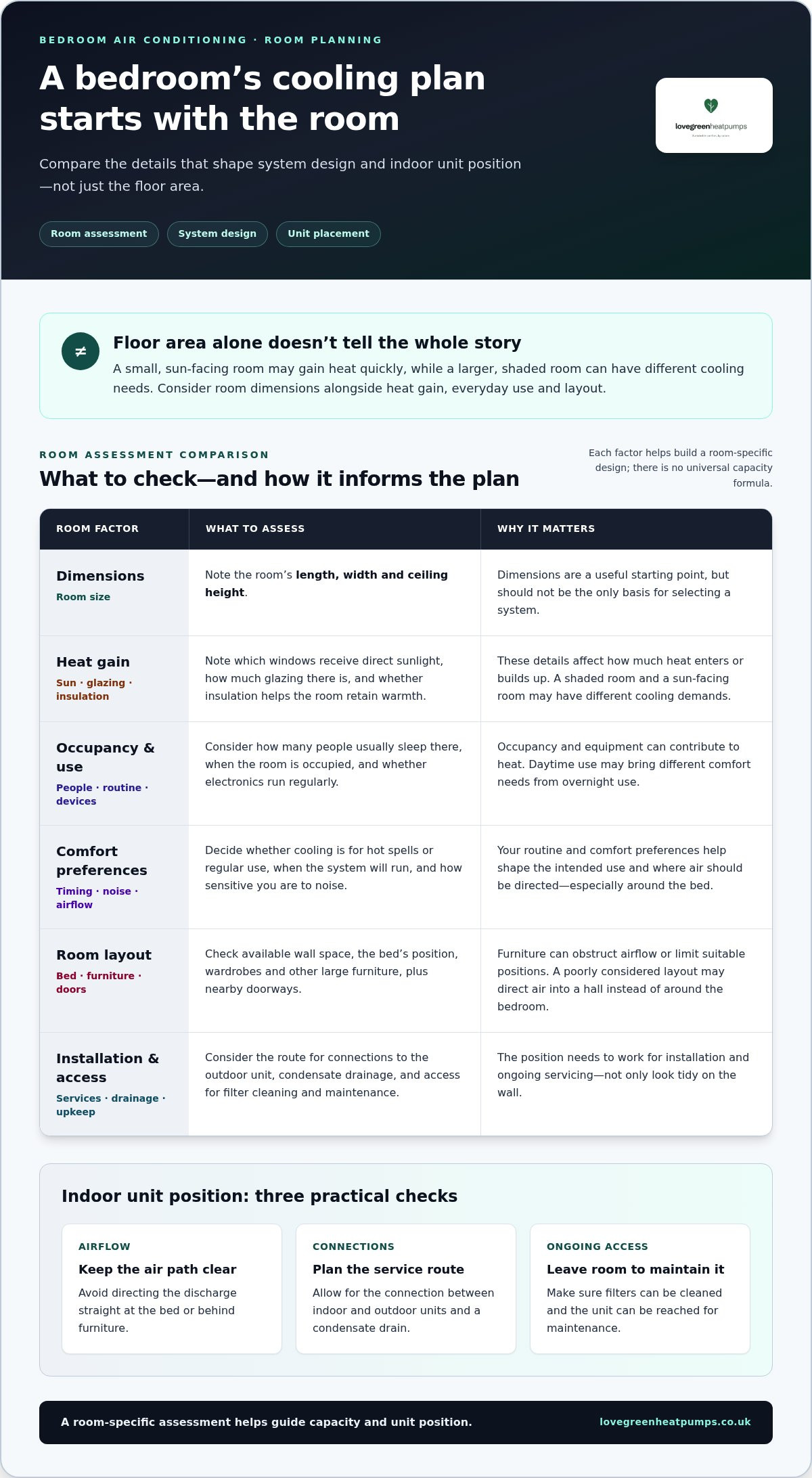
Start with the room’s length, width and ceiling height, then consider how many people usually sleep there and when it’s occupied. A bedroom used during the day may have different comfort needs from one used mainly overnight. Note which windows receive direct sunlight, how much glazing there is and whether insulation helps the room retain warmth.
Electronics can add heat too, particularly if several devices are used in a small room. These details help an installer understand the room’s heat gain and inform the system design. A room assessment is more useful than relying on floor area alone.
What comfort do you want from the system?
Decide whether you want occasional cooling during hot spells or regular temperature control through warmer months. Think about when you’d run the system, whether doors are usually open or closed, and how quickly you want the room to feel more comfortable. Be clear about noise sensitivity and where airflow should be directed, especially around the bed.
If you’d also like heat in cooler weather, include that in the brief. Heating capability depends on the system chosen, so it should be considered as part of the design rather than assumed. For broader context on planning air conditioning beyond one room, see this domestic air conditioning installation guide.
It can also help to understand the basic differences between system types before discussing the room. This overview of Understanding Air Conditioning Systems explains how air conditioning works and outlines common formats, including split and portable systems.
Before a survey, note the room’s measurements, sunny periods, usual occupancy and any equipment that runs regularly. Think about your preferred temperature and whether the system is mainly for summer cooling or broader year-round comfort. Love Green Heat Pumps provides domestic air conditioning installation, including single-room systems, with the design planned around the space. That room-first assessment helps guide decisions on capacity and unit position.
How to Plan Bedroom Air Conditioning Size and Unit Position
Choosing a system by floor area alone can miss what makes one bedroom harder to cool than another. A small room with large, sun-facing windows may gain heat quickly, while a larger, shaded room may have a different cooling demand. Consider capacity and placement together, so the system suits the space and can circulate air effectively.
Room size and heat gain both matter: dimensions alone don’t show how much warmth the system needs to remove.
How does room size affect system design?
Before a survey, note the room’s length, width and ceiling height. Also consider glazing, direct sunlight, insulation and how many people usually occupy the room. These factors affect how much heat enters or builds up in the space. The Sizing Your Bedroom Air Conditioner for Efficiency guidance also highlights room area, sun exposure and occupancy as relevant sizing considerations.
That information is a useful starting point, not a universal capacity formula. Rather than rely on a generic table, a professional design should account for the actual room and the selected system. This helps avoid choosing a unit that’s poorly matched to the space or intended use.
Where should a bedroom indoor unit go?
Look for a wall position that lets air travel across the room without blowing directly onto the bed. The installer will consider the bed, wardrobes and other large furniture, which can obstruct airflow or limit suitable wall space. Doorways matter too: if the layout isn’t considered, air may move into a hall instead of circulating where it’s needed.
Placement also needs to work for the installation. The indoor unit connects to the outdoor unit through services that need a practical route. Condensate must be able to drain, and the position should leave enough room to access the unit for filter cleaning and maintenance. A spot that looks tidy but makes servicing awkward may not be the best choice.
- Airflow: Keep the discharge path clear of furniture and avoid directing it straight at the bed.
- Connections: Consider the route for pipework and the condensate drain.
- Ongoing access: Leave space to clean filters and reach the unit when it needs maintenance.
There may be more than one workable position, but the final choice depends on the bedroom layout and system design. During a bedroom air conditioning installation survey, Love Green Heat Pumps considers these practical details when planning a single-room system. Find out more about room-specific air conditioning installation.
Fixed Split or Portable Unit: Which Suits a Bedroom Best?
A fixed split system and a portable air conditioner solve the same problem in different ways. One is planned into the room; the other can be moved and set up when needed. The better fit depends on whether you value an integrated arrangement or flexibility, and how each option’s practical requirements suit your bedroom.
| Consideration | Fixed split system | Portable unit |
|---|---|---|
| Installation | Professionally fitted indoor and outdoor units, joined by connecting services. | Set up in the room, with warm air vented outside, often through a window opening. |
| Room appearance | A permanent indoor unit and visible service route; placement is planned. | A floor-standing appliance and exhaust hose take up room while in use. |
| Portability | Stays in its chosen position. | Can be moved, subject to access to a suitable exhaust route. |
| Noise | Sound depends on the system and installation; the outdoor unit sits outside. | Noise depends on the model and its position in the room. |
| Day-to-day use | Designed for regular, controlled operation once installed. | Requires positioning and venting when used, then storing or moving as needed. |
What are the bedroom trade-offs of a fixed split system?
A split system has an indoor unit in the bedroom and an outdoor unit elsewhere on the property, connected by services. The arrangement depends on the building and available positions. Its permanent placement can make everyday operation straightforward, but installation requires a practical route between the units. Sound and energy performance vary with the selected system and how it’s installed, so assess the specific system rather than judging by type alone.
A fixed installation doesn’t have to mean an unclear process. Plan the unit positions and service routes first, then carry out the installation and test the system. Clearing access to the proposed indoor-unit wall and relevant outdoor area helps keep the work organised. The installation plan should account for the home, rather than assume every bedroom or property is the same.
When might a portable air conditioner suit the situation?
A portable unit may appeal if you want to move cooling between rooms or avoid a permanently positioned indoor unit. It still needs a route for warm exhaust air, commonly through a window. The window opening needs to be managed around the hose, and the appliance takes up floor space. Setup, sound and cooling performance differ between models, so consider how each option fits your room and routine.
For occasional use, flexibility may matter most. For regular bedroom cooling, consider whether repeatedly positioning the appliance and arranging its exhaust will suit your day-to-day life. A fixed split system involves more planning upfront but creates an integrated arrangement designed around the room. Love Green Heat Pumps provides domestic air conditioning installation, including single-room systems, planned from design through commissioning.
Bedroom Air Conditioning Installation: What Happens Step by Step?
A clear process makes a bedroom air conditioning installation easier to prepare for. It starts with a conversation about the room and ends with system checks and guidance on using the controls. The plan depends on the property, so each installation is shaped around its requirements rather than a one-size-fits-all template.
- Room discussion: Talk through how you use the bedroom, the comfort you want and any practical concerns.
- Survey: Assess the room and possible positions for the indoor and outdoor units.
- System design: Plan a solution and route for the connecting services to suit the property.
- Installation: Fit the units and connect the system components.
- Testing and commissioning: Check operation against the system design.
- Handover: Review the controls and explain the main points for everyday use and care.
What should happen during the survey and design stage?
The survey brings the room’s use and layout into the design. The installer considers where the indoor unit can sit, where the outdoor unit can be located and how to connect them. Pipework, condensate drainage and the service route need to be considered together, not treated as separate afterthoughts. The design is tailored to the property, taking account of its features and practical constraints.
Point out anything that could affect access or placement, such as fitted wardrobes, your preferred bed position or areas where you’d rather not have visible services. Raising these details early helps the design account for both comfort and the work needed to install the system.
What should you expect on installation day?
The work involves fitting the indoor and outdoor units, connecting the system and carrying out checks. Before work begins, agree access to the bedroom and relevant outdoor area. Clear personal items and breakables from the work areas, and discuss how nearby flooring or furniture will be protected. These preparations help keep the work area clear while allowing for the needs of your home.
Commissioning is the set of checks that confirms the installed system operates as designed. After testing, the installer should show you how to use the controls and explain the handover information. Ask about operating modes and routine filter care during the demonstration, so you know what to expect in everyday use.
Installation requirements and property details can affect the work involved. For an overview of what may influence the price, see the UK air conditioning installation cost guide. Love Green Heat Pumps manages domestic air conditioning projects from design through commissioning. Arrange a bedroom installation quote to discuss a room-specific plan.
Plan Your Bedroom Air Conditioning Installation with Love Green Heat Pumps
A comfortable result comes from making decisions in the right order: start with how the bedroom is used, consider which system format suits your needs, then plan the unit positions and installation. A fixed system should be designed around the property, not selected as a one-size-fits-all purchase. This room-specific approach brings comfort, practical placement and a clear plan for the work together.
Love Green Heat Pumps provides domestic air conditioning installation and maintenance, including single-room systems. The team manages the installation process from design through commissioning. Explore domestic air conditioning installation and how a system can be planned for your home.
What information helps shape a bedroom installation?
A few notes can make the initial discussion more useful. Record the room’s length, width and ceiling height, and note which windows receive direct sun. Mark possible indoor-unit positions, along with any preferences or access considerations for the outdoor unit. You don’t need to settle the layout yourself; these details help frame the survey and design discussion.
Describe what feels uncomfortable, when the bedroom is usually occupied and whether you want cooling only or heating as well. Mention practical constraints such as fitted furniture, limited access or areas you’d prefer to keep clear. A focused discussion gives the installation team a clearer picture of your priorities, helping shape an arrangement for the room and property.
What is the next step towards a more comfortable bedroom?
A survey brings your room notes together with the practical details of installation. The design considers the selected system, unit placement and connection routes. The planned work then moves through fitting, checks and commissioning, followed by a handover on using the controls. Love Green Heat Pumps’ HEIS-accredited expertise supports this planned approach, with the installation managed through to commissioning.
Before deciding, compare your priorities:
- Room needs: What makes the bedroom uncomfortable, and when does it happen?
- System format: Would you prefer a fixed installation or a movable unit?
- Placement: Where could equipment sit without disrupting the room or access?
- Use: Is the system mainly for summer cooling, or do you want heating capability too?
These answers don’t need to be perfect. They give the design process a sensible starting point, and the survey can help resolve questions about placement and installation. Love Green Heat Pumps offers a free, no-obligation quote for bedroom air conditioning installation. Request your free, no-obligation quote to discuss a room-specific plan.
Take the Next Step Towards a Cooler, More Comfortable Bedroom
Before making a decision, think about what would make the room more comfortable in everyday use. Perhaps you want gentle cooling overnight, a system that can also heat the room, or a clearer idea of what can fit your property. Your priorities are a useful starting point, not a commitment to a particular unit or layout.
A bedroom air conditioning installation should suit the way you live as well as the room itself. A focused discussion can turn your preferences and practical considerations into a plan for your home. Love Green Heat Pumps brings HEIS-accredited expertise to domestic air conditioning projects, including single rooms and multi-split systems, and manages installation from design through commissioning.
To explore what could work in your bedroom, discuss your bedroom air conditioning plans with Love Green Heat Pumps.
Frequently Asked Questions
Can I run bedroom air conditioning overnight?
Yes, bedroom air conditioning can be run overnight if the system and its settings suit your comfort. Try adjusting the temperature and fan settings, or use a timer to limit operation to the hours you need. Clean filters in line with the manufacturer’s instructions. Noise levels vary, and no system suits every sleeper, so mention sound sensitivity when planning your installation.
Does bedroom air conditioning also provide heating?
Some fixed air conditioning systems can cool and heat using a reversible heat-pump cycle, but this depends on the model. Check the proposed system’s specification to see whether heating is included and what its intended use is. This feature can provide another way to manage bedroom comfort in cooler weather, although heating performance varies by system and property.
How much electricity does bedroom air conditioning use?
There isn’t one reliable electricity-use figure for every bedroom system. Consumption depends on the unit’s efficiency, the room’s heat gain, your chosen temperature and how long you run it. For a useful estimate, compare the proposed system’s verified technical information with your likely pattern of use, such as running it overnight or only during the warmest part of the day. Don’t assume a generic figure guarantees your bill or savings.
Do I need permission to install air conditioning in a rented home?
Get the property owner’s written agreement before arranging fixed equipment or alterations. Check your tenancy agreement too, as it may set out requirements for changes to the property. External units, pipe routes or work affecting shared areas can involve additional property-management considerations. Requirements depend on the home and proposed installation, so treat this as practical guidance rather than formal legal advice.
Will bedroom air conditioning remove humidity?
Air conditioning can remove some moisture from indoor air during cooling, but the amount depends on the system and operating conditions. Cooling a room and achieving a particular humidity level aren’t the same thing, and a dedicated dehumidification mode may work differently. If damp-feeling air is a key concern, include it in the room assessment so the system design can take your comfort priorities into account.
How often should I clean an air conditioner filter?
Follow the cleaning schedule and method in the manufacturer’s instructions, as filter-care needs differ between systems and homes. Check filters regularly for visible dust build-up, especially if the bedroom is used often or has pets. Keeping them clean supports airflow, but routine filter care isn’t a substitute for professional maintenance. A maintenance plan can address checks beyond the cleaning you do yourself.
Can air conditioning be installed in a bedroom with limited wall space?
Limited wall space doesn’t automatically rule out a bedroom air conditioning installation, but it can narrow the available positions and system choices. A room assessment can account for wardrobes, bed placement, airflow and access, as well as the route to outdoor equipment. Different system formats have different space requirements, so practical options depend on the room and property rather than wall space alone.
Disclaimer
Disclaimer
The information published on this website is provided by Love Green Heat Pumps for general information and educational purposes. As a specialist provider of heating and renewable energy solutions, we strive to ensure that our content is accurate, relevant and up to date. However, heating requirements, system suitability, installation specifications, costs and performance can vary depending on individual property characteristics, usage and other site-specific factors.
Information provided in our articles should not be regarded as a substitute for a professional property assessment, technical survey or tailored recommendation. Any decisions regarding the selection, installation, replacement or maintenance of heating systems should be made with appropriate professional guidance.
Love Green Heat Pumps accepts no responsibility for decisions made solely on the basis of general information published in these articles. For advice specific to your property or project, we encourage you to contact our team for professional guidance and an assessment of your requirements.


