

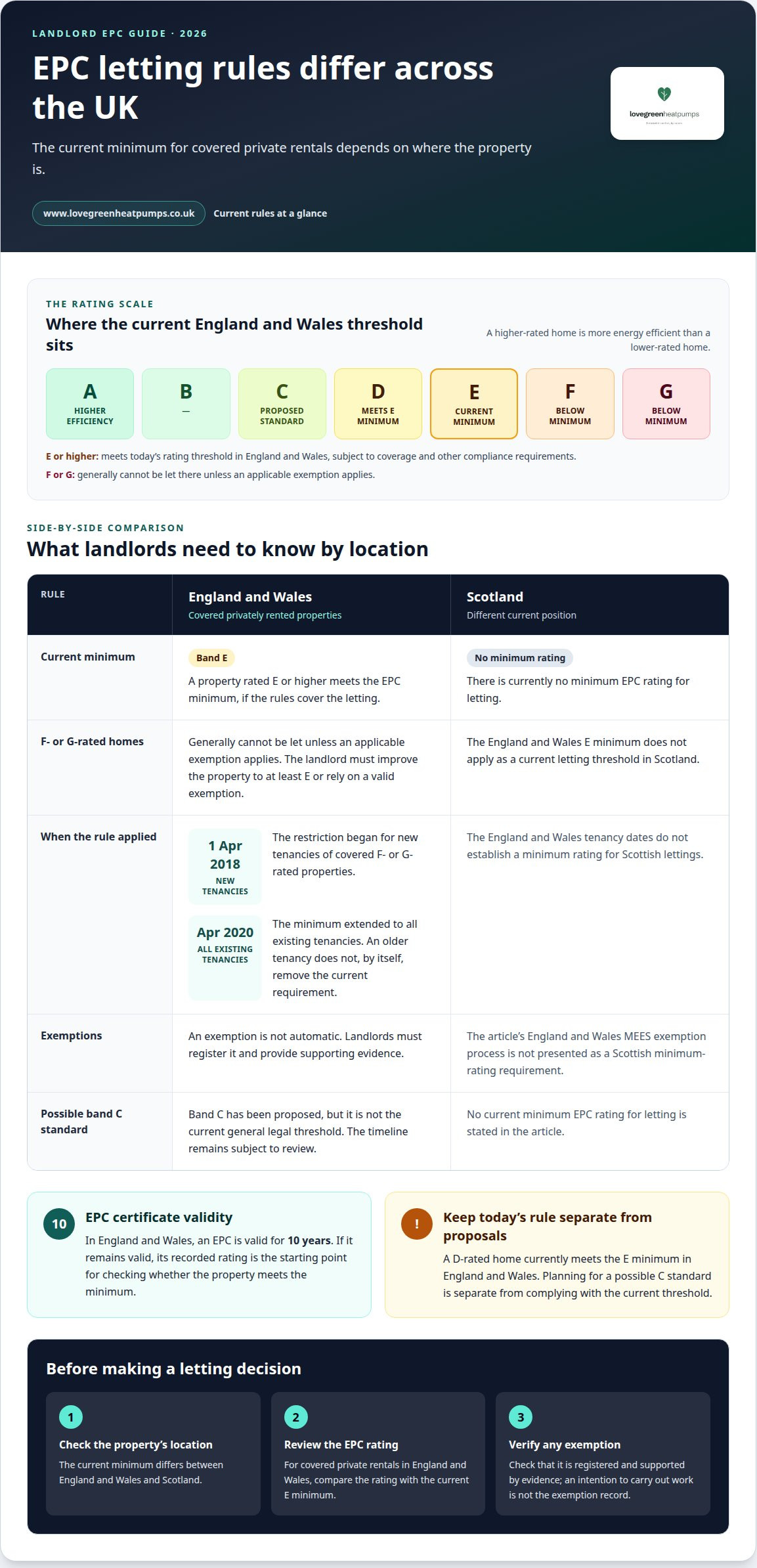
An F or G rating can prevent a landlord letting a home, but the rule depends on where the property is. In England and Wales, according to the UK Government, covered privately rented properties must meet EPC band E or have an applicable exemption. The minimum standard has applied to all existing tenancies since April 2020. Scotland currently has no minimum EPC rating for letting.
It’s easy to assume the rules are the same across the UK, or that a proposed change is already law. This guide explains the EPC requirements for landlords in the UK in 2026, including what the current minimum means for F- or G-rated homes, when an exemption may apply and how to approach improvement costs. You’ll also learn what an EPC assessment records and how to understand the rating before deciding what to do next. The aim is a clear picture of your obligations, without confusing today’s rules with future standards.
Key Takeaways
- Use the EPC recommendations to identify which improvements could raise a property’s rating, then prioritise work that suits the building.
- Assessment costs and improvement budgets are different: plan for the measures needed, not just the certificate.
- Keep evidence of improvement costs and any registered exemption, as both can matter when demonstrating compliance.
- An EPC assessment records features that affect energy performance, helping explain the rating and possible next steps.
- In England and Wales, the maximum total fine for a MEES breach is £5,000 per property, according to the UK Government.
Can Landlords Rent a Property with EPC Rating F or G?
In England and Wales, a covered privately rented home rated F or G generally cannot be let unless an exemption applies. The current minimum is band E, so check the property’s rating before letting it.
Current minimum rental rating
The current minimum EPC rating for covered private rentals in England and Wales is band E, unless a valid exemption applies. According to the UK Government, the requirement extended to all existing tenancies in April 2020. This means the standard applies beyond new lets. An existing tenancy does not, by itself, allow a landlord to continue letting an F- or G-rated property.
The restriction began earlier for new tenancies. Since 1 April 2018, the MEES Regulations have prohibited letting a covered domestic property rated F or G to a new or existing tenant on a new tenancy, unless an exemption applies. The distinction matters when reviewing a property’s letting history. A tenancy that began before the rule applied to all existing tenancies is still subject to the current minimum.
An EPC records a rating from A to G, with A representing higher energy efficiency than G. The certificate helps establish whether a home meets the minimum. In England and Wales, an EPC is valid for 10 years, according to the UK Government. If the certificate remains valid, its recorded rating is the starting point for assessing whether the property can be let.
If the rating is F or G, the landlord must improve the property to at least E before letting or rely on an applicable exemption. Exemptions are not automatic: landlords must register them and provide supporting evidence. The exemption record, not an intention to carry out work, is central to demonstrating compliance.
Minimum EPC C standard
Band C has been proposed as a higher minimum for privately rented properties, but it is not the current general legal threshold. The government has consulted on raising the standard, while the implementation timeline remains subject to review. Landlords should distinguish the existing E requirement from possible future changes.
A property rated D currently meets the E minimum in England and Wales, even though it falls below C. A rating of E also meets today’s minimum, provided the property is covered by the rules and there are no other compliance issues. Treating C as already mandatory could lead to decisions based on a proposal rather than the current standard.
For a home rated F or G, the immediate issue is the existing E threshold. Review the certificate’s rating and any registered exemption before making a letting decision. If you are considering upgrades towards C, keep that longer-term planning separate from the legal minimum currently in force. Scotland has no current minimum EPC rating for letting, so landlords there face different requirements.
Energy-efficiency improvements and estimated costs
An EPC’s recommendations can help identify practical ways to improve a rental home’s energy efficiency. Suitable measures depend on the property’s existing features, heating system and certificate findings.
Recommended energy-efficiency measures
Common measures include loft or cavity wall insulation, double or triple glazing, efficient boilers, LED lighting and smart heating controls. EPC recommendations are specific to the home assessed, so a measure that suits one property may not suit another. Insulation can reduce heat loss, while heating controls help manage when warmth is needed. Consider the recommendations alongside the building’s existing condition.
Loft insulation is one option where the assessment identifies scope to improve it. A recommendation in the available guidance is to increase loft insulation to at least 270mm. LED lighting may also be suggested as a smaller change. These measures differ in scale and effect, so use the EPC’s property-specific advice rather than treating a generic list as a fixed specification.
Estimated improvement costs
Indicative costs vary by measure and property. Straightforward insulation and heating-control work to move a rental property from band D to band C is estimated at £1,000 to £5,000.
These figures are guides, not a quote for a particular home. Access, existing materials and the work required affect the final scope. EPC improvement spending is also separate from a property’s rebuild value. For insurance planning, a Reinstatement Cost Assessment estimates the cost of rebuilding the property; it is not the same as an energy-efficiency upgrade budget. Keep the two figures separate when planning work and cover.
Choosing improvement measures
Choose measures by matching the EPC recommendations to the home’s current fabric and heating system. Start with items that address identified heat loss or inefficient controls, then consider how each change fits with other planned work. If several improvements are needed, consider their combined effect rather than choosing solely by the lowest initial cost.
The current MEES cost cap for energy-efficiency improvements to a domestic private rented property is £3,500 including VAT. Where eligible work cannot bring a home up to the required standard within the cap, a landlord may be able to register an exemption, supported by the required evidence. Keep records of completed improvements and costs. If heating changes form part of the plan, explore heating and renewable energy improvements as part of the property’s wider upgrade choices.
EPC assessment process and recorded property features
Start with the property’s certificate and recorded rating. In England and Wales, the assessment result and whether MEES covers the letting determine the next step.
Landlords can find and download a property’s certificate through the official EPC Register. An EPC in England and Wales is valid for 10 years, according to the UK Government. Check the certificate’s date as well as its rating: an older certificate may have expired, while a valid one provides the recorded assessment for that period.
An EPC rates energy efficiency from A to G, with A the most efficient and G the least efficient, according to the UK Government. In England and Wales, the assessment also gives a numerical score from 1 to 100; a higher score indicates better energy efficiency. The band and score together show how the assessed home performed under the applicable methodology.
An assessment visit typically takes 30-40 minutes. The assessor records property details that affect the energy rating, including features associated with insulation, glazing, lighting and heating. These details help explain why two homes of similar size can receive different ratings. The certificate then presents the result and recommendations, giving landlords a practical basis for considering improvements.
Which rented properties are covered? MEES applies to covered domestic private rented properties in England and Wales. The property’s use and letting arrangement matter, so establish whether the home falls within that category before relying on its rating alone. Do not assume that a rented commercial property follows the domestic rules described here.
Property value can also matter when considering proposed improvement limits. The proposed alternative cap for a property valued below £100,000 is 10% of its value. This is a proposal, not a figure to treat as the current domestic MEES cost cap. Keep proposed changes separate from rules already in force when planning work or an exemption.
How are EPC ratings calculated? An assessment uses a standard method to turn recorded property information into an efficiency score and band. RdSAP 10 launched in June 2025 and changed how EPCs are calculated. Because methodology affects the result, compare certificates with care, especially if assessments used different methods. The rating reflects the information assessed, not a promise about a tenant’s actual energy bills.
For landlords, the sequence is straightforward: locate the certificate, check its validity and rating, then establish whether the tenancy is covered. If the certificate has expired or the property’s features have changed, a new assessment can provide an up-to-date rating and recommendations.
Estimated number of properties needing improvements
An estimated 2.5-2.9 million UK rental properties may need upgrades to meet the proposed EPC C standard. That estimate concerns the proposed 2030 standard, not the current minimum for letting. For landlords, it signals why improvement planning, cost records and the property’s individual starting rating matter.
The proposed cost cap for reaching EPC C in England and Wales is £10,000 per rental property, or 10% of its value if lower. For a property valued below £100,000, the alternative cap is 10% of that value. The proposed standard is due by 1 October 2030. Keep this proposed cap separate from the current MEES cost cap of £3,500 including VAT.
Improvement costs incurred from 1 October 2025 count towards the proposed MEES cost cap. Under the current cost-cap rules, landlords can count energy-efficiency investments made to the property since 1 October 2017. Keep invoices, receipts and records linking each completed measure to the rental property. A clear record helps show what work was carried out and what was spent.
Evidence also matters when a landlord seeks a high-cost exemption under the current rules. The required evidence includes 3 quotes from qualified installers for the cheapest recommended measure, showing that it would cost more than £3,500 including VAT. The quotes need to relate to the measure identified for the property, rather than unrelated work. Store them with the EPC certificate and improvement records.
Plan work around letting dates and tenant arrangements. Insulation, heating changes and other improvements can involve different access requirements and disruption. For a vacant property, landlords can schedule work before marketing or starting a new tenancy. For an occupied rental, coordinating access and sequencing measures can help avoid unnecessary disruption. Keep plans, access arrangements and receipts together in the property file.
Grants may affect the amount a landlord needs to fund directly. The Boiler Upgrade Scheme offers £7,500 towards an air source heat pump until 2028. Treat grant support and the property’s improvement cost cap as separate parts of the budget. Record the grant and the remaining cost, alongside invoices, so the investment history is clear.
For a property below the proposed C standard, review its EPC recommendations, identify eligible measures, estimate their combined cost and retain evidence as work progresses. This creates a practical record for future letting decisions and any exemption application. It also distinguishes completed improvements from proposed work that has not yet been carried out.
What Are the Current EPC Requirements for Landlords?
In England and Wales, landlords must meet the current energy-efficiency standard and provide an EPC when required. MEES enforcement can result in financial penalties, so keep the current certificate and any exemption records accessible.
Financial penalties for non-compliance
Financial penalties apply when a landlord breaches MEES or related EPC duties. According to the UK Government, the maximum total fine for a MEES breach is £5,000 per property. Separate penalty amounts can apply to specific breaches: renting a non-compliant property for less than 3 months may incur up to £2,000, while 3 months or more may incur up to £4,000.
Other failures carry separate potential penalties. Providing false or misleading information on the PRS Exemptions Register may lead to a fine of up to £1,000. Failing to comply with a MEES compliance notice may bring a penalty of up to £2,000. A local authority penalty of £200 may apply if a tenant is not provided with an EPC.
Local-authority enforcement
Local authorities investigate suspected MEES breaches and can issue formal notices. A compliance notice may be served up to 12 months after a suspected breach occurred. If a breach is confirmed, a financial penalty may be served up to 18 months after the breach. Keep the EPC, improvement invoices and exemption evidence together to respond accurately.
A compliance notice is separate from a financial penalty. It can require information about the property and its energy performance, helping the authority establish whether the landlord met the standard. Failing to comply with the notice can itself lead to a penalty. Keep dated records of insulation work, other measures and any register entry.
Landlords remain legally responsible for EPC compliance, even when a managing agent handles the tenancy or tenants pay utility bills. In England, commission an EPC before marketing a property to let and use all reasonable efforts to obtain it within 7 days of first marketing. If it cannot be obtained within those first 7 days, there is a further 21 days to secure it.
Possession rules are changing too. Section 21 is abolished in England from 1 May 2026 under the Renters’ Rights Act 2025. This is a separate change from MEES: landlords still need to meet the applicable energy performance standard and keep evidence of compliance.
If planned compliance work includes renewable generation, discuss solar PV and renewable options with Love Green Heat Pumps Ltd as part of the property’s wider improvement plan.
Love Green Heat Pumps
Love Green Heat Pumps Ltd can help landlords consider practical energy improvements alongside their EPC findings. If the assessment points to heating changes, renewable energy or improved comfort, the team offers heat pump installation, heating engineering, solar PV and other renewables, and air conditioning. These services suit different property needs, so the useful starting point is the issue identified and the work you’re considering. For example, a landlord exploring lower-carbon heating can discuss a heat pump, while solar PV may be relevant to a wider renewables plan. If you’d like to discuss options for your property, contact Love Green Heat Pumps Ltd.
Make your next property decision with confidence
The EPC requirements for landlords in the UK in 2026 are a useful starting point, but your next decision should reflect the property itself. Think beyond a single certificate: a planned improvement can affect future maintenance, tenant comfort and the way you manage the home over time. A clear record of decisions and completed work can also make later property reviews easier.
If you’re considering an energy upgrade, focus on the practical outcome you want for the building. The right approach may involve heating, renewable energy or another improvement, depending on the property and its needs. Love Green Heat Pumps offers heat-pump surveys and installation, heating upgrades, solar panel installation and EPC assessments. A property-specific survey can help you understand suitable options and decide what to prioritise.
For practical guidance on your property’s next step, get in touch with Love Green Heat Pumps Ltd. Take the decision one step at a time, with a plan that works for your property.
Frequently Asked Questions
What is the EPC ratings deadline?
For a new letting in England, the EPC should be commissioned before the property is marketed. Landlords must use all reasonable efforts to obtain it within 7 days of first marketing. If it cannot be obtained during that period, there is a further 21 days to secure it. The separate proposed EPC C deadline for domestic private rentals in England and Wales is 1 October 2030.
Do Tenants Need a Copy of the EPC?
Yes. A tenant should be given the property’s EPC, so they can see its energy rating and recommendations. Keep a copy with the tenancy records, particularly if the certificate is renewed or replaced during a tenancy. Failing to provide a tenant with an EPC can result in a local authority penalty of £200. Supplying the certificate is separate from meeting the property’s minimum energy efficiency standard.
EPC Compliance for Rental Properties: Who Is Responsible?
The landlord remains responsible for EPC compliance, even if a managing agent handles the tenancy or the tenant pays the utility bills. An agent may manage paperwork or property access, but that does not transfer the landlord’s legal responsibility. Retain the certificate and any exemption evidence in the property file rather than relying solely on an agent’s records.
EPC Exemptions for Landlords: When Do They Apply?
An exemption may apply when a landlord cannot meet the relevant minimum standard for a recognised reason, such as qualifying improvement costs, required third-party consent or a documented impact on property value. It must be registered with supporting evidence; it is not automatic. Keep the register entry, assessment information and supporting documents together. The exemption type determines its duration and what action may be needed when it expires.
What Are the EPC Changes in 2026?
In 2026, the current minimum for covered private rentals in England and Wales remains band E. A transition allowing EPCs to use either the existing Energy Efficiency Rating method or the Home Energy Model begins at the end of 2026. The Home Energy Model is scheduled to launch in the second half of 2027. These methodology changes are separate from the proposed higher rental standard.
What Happens If an EPC Rating Is Below E?
A covered rental property in England and Wales with an F or G rating generally cannot be let unless a valid exemption applies. The landlord must address the shortfall or register an applicable exemption with evidence. A local authority can investigate suspected non-compliance and impose financial penalties. The practical first step is to establish whether the property is covered and whether its certificate reflects its current condition.
What Is an EPC and Why Does It Matter for Landlords?
An Energy Performance Certificate records a property’s energy efficiency rating and recommendations for potential improvements. For landlords, it helps show whether a home meets the relevant letting standard and gives prospective tenants information about the property. It can also help guide decisions about upgrades. For example, recommendations may identify insulation or heating changes that could improve the home’s recorded energy performance.
What EPC rating must landlords in England and Wales meet in 2026?
The EPC requirements for landlords in the UK in 2026 set band E as the current minimum for covered privately rented homes in England and Wales, unless an exemption applies. A property rated F or G does not meet that standard for letting without an applicable exemption. Band C is a future proposed standard, not the current minimum. Scotland has no current minimum EPC rating for letting.
Disclaimer
Disclaimer
The information published on this website is provided by Love Green Heat Pumps for general information and educational purposes. As a specialist provider of heating and renewable energy solutions, we strive to ensure that our content is accurate, relevant and up to date. However, heating requirements, system suitability, installation specifications, costs and performance can vary depending on individual property characteristics, usage and other site-specific factors.
Information provided in our articles should not be regarded as a substitute for a professional property assessment, technical survey or tailored recommendation. Any decisions regarding the selection, installation, replacement or maintenance of heating systems should be made with appropriate professional guidance.
Love Green Heat Pumps accepts no responsibility for decisions made solely on the basis of general information published in these articles. For advice specific to your property or project, we encourage you to contact our team for professional guidance and an assessment of your requirements.


