

A boiler swap starts with the home, not the heat pump. A heat pump quote should set out the proposed system and output, any radiator or electrical upgrades, the hot water cylinder where needed, and a clear installation cost breakdown. In England and Wales, eligible installations can receive a grant of up to £7,500, or £9,000 for homes heated by oil or LPG, according to the Department for Energy Security and Net Zero.
It’s sensible to want a clear picture of the work before changing how your home is heated. A useful heat pump quote explains how your property’s heat loss, existing radiators, hot-water needs and electrical setup shape the system design.
This guide explains how a boiler-to-heat-pump installation works, what a thorough quote should include and which details affect the project. You’ll also learn how to compare proposed systems and understand the steps from initial design through to commissioning.
Key Takeaways
- Compare proposed systems on a like-for-like basis, looking beyond the unit to the design and installation work.
- Property size alone doesn’t determine the right system. Heat loss, insulation and existing emitters all shape the design.
- Use the quote breakdown to see which upgrades and electrical work are included, and what could affect the final scope.
- Air source and ground source systems suit different properties. The available space and installation requirements help guide the choice.
- A clear process should take you from home assessment and system design through installation and commissioning.
Heat pump quote and installation prices
Costs depend on the system, property and work required, so compare the design and included tasks, not just the total. A quote should also explain how any eligible grant is reflected in the proposed amount.
In England and Wales, the Boiler Upgrade Scheme offers eligible heat pump installations grants of up to £7,500, or £9,000 for homes heated by oil or LPG, according to the Department for Energy Security and Net Zero. In Scotland, eligible homeowners may access support through Home Energy Scotland Grant and Loan.
For the Boiler Upgrade Scheme in England and Wales, eligibility requires a valid Energy Performance Certificate issued within the last 10 years, according to the Department for Energy Security and Net Zero. The home and proposed installation must also meet the scheme’s eligibility rules.
System specifications and installation costs
Compare the recommended model and output, then check them against the work included in each quote. See whether radiator upgrades, a hot-water cylinder, electrical work, controls and commissioning are included or listed separately. The property-specific cost is provided in a written quote after a home survey; heat loss, equipment, upgrades and installation complexity all affect it.
Heat pump installation may involve coordinating plumbing, electrical work and commissioning. Agree the work sequence and how any interruption to hot water will be managed. A written schedule helps you plan for the changeover, especially if the existing boiler needs to be disconnected before the new system is ready.
Warranties, running costs and timescales
Look for the manufacturer’s equipment warranty and clear terms for workmanship and key components. The quote should also explain the assumptions behind any annual running-cost estimate, including expected electricity use and the tariff. This helps you consider how the system may affect household bills, rather than comparing equipment prices alone.
An air source heat pump installation typically takes 2 to 3 days. The quote should set out its estimated timescale and identify any preparation that could affect the schedule. A clear start-to-finish plan helps you understand when the team expects to complete installation and restore heating and hot water.
Planning rules, heat pump sizing and heat loss
In most cases, UK heat pump installations are permitted development. Listed buildings and conservation areas may need local authority checks; guidance also places the unit at least 1 metre from the property boundary. Planning permission is generally needed if sound exceeds 45dB at a neighbour’s window.
To size the system, an installer calculates heat loss room by room, considering insulation, windows, outside walls and desired indoor temperatures. The results inform the recommended output and proposed flow temperature. A whole-home design helps match heat delivery to demand instead of selecting a unit by floor area alone.
Before proceeding, review the installer’s stated insurance and relevant accreditations, such as RECC or TrustMark. Check that the quotation identifies who handles each stage, from design through commissioning. These details, alongside the equipment specification and cost breakdown, give you a clearer basis for comparing installation proposals.
What a heat pump quote includes
A useful quote explains the proposed system, the work required and the assumptions behind its design. It should give you enough detail to compare the same elements across proposals, without leaving important tasks hidden in a single total.
Start with the design. The quote should identify the recommended heat pump model and output, alongside a heat-loss calculation for the home. It should also state the proposed flow temperature, which helps explain how the system is designed to meet the property’s heating needs.
Check that the document clearly sets out the equipment and installation scope. Look for:
- The heat pump model and output, with its relevant specifications.
- Any radiator or other emitter upgrades, listed by room or area where applicable.
- A hot water cylinder where the system requires one, including whether supply and fitting are included.
- Electrical work, including additional wiring or a consumer unit upgrade if required.
- A breakdown of design, equipment, installation and commissioning costs.
Extra costs may arise if radiators need upgrading, the home needs a different hot-water cylinder or electrical work is required. Ask which items are included in the quoted scope and which are charged separately.
Model details matter because proposals may specify different outputs or equipment. Ask what features are included with the named model and whether controls, commissioning and key components appear in the scope. A model name alone does not describe the complete system or its installation.
Any running-cost estimate should explain its assumptions, including expected energy use and the electricity tariff. Check that estimated energy bills are separate from fixed installation costs. If a government grant may apply, ask how it is shown in the proposed project total; eligibility is not guaranteed.
Before accepting, ask: “What heat-loss calculation determines the output?”, “Are radiator, cylinder and electrical upgrades included?” and “What warranty, installation timeframe and running-cost estimate apply?” Also ask who handles planning-permission checks and what could change the quoted scope.
These answers make it easier to compare proposals on consistent terms. A heating engineer can explain how the specified output and listed work relate to your home, rather than relying on a model name alone. For guidance on the installation work, explore heating engineer support as you review the details.
Air source heat pump prices by property size
Floor area helps inform an air-source heat pump design, but it cannot determine system size or installation cost on its own. A compact, well-insulated home may need a different output from a larger property with draughts, high ceilings or older radiators. The property-specific cost is provided in a written quote after a home survey; heat loss, equipment, upgrades and installation complexity all shape it.
A room-by-room heat-loss calculation is a more useful starting point than bedroom count. It considers the building fabric, windows, insulation and the temperature needed in each space. For example, a house with a loft conversion may lose heat differently upstairs than downstairs. The calculation helps determine the heat pump output and whether existing radiators can deliver enough warmth.
Property size matters because more heated space can mean greater demand, but layout also affects the design. A long house, an extension or rooms with different insulation levels can change how heat moves through the home. The proposed model should match the calculated demand, rather than a broad label such as small, medium or large.
Installation scope can differ between homes of similar size. An older boiler system may need radiator upgrades to work well with the selected air-source heat pump. A hot-water cylinder may also be needed, while electrical work, pipe alterations and the outdoor unit’s position can affect the work involved. Ask for each item to be clearly listed in the scope.
To compare proposals, consider the model output alongside the heat-loss calculation and included work. Check whether the system covers heating and hot water, and whether controls, commissioning and radiator changes are included. A lower equipment specification may not represent the same complete installation as a proposal that includes upgrades and commissioning.
Household energy bills depend on heat demand, electricity use and the tariff. Ask how any running-cost estimate was calculated and which tariff assumptions it uses. This helps you consider the overall cost of heating, rather than focusing only on the installation figure or the boiler being replaced.
The Boiler Upgrade Scheme may provide a grant towards an eligible installation in England and Wales, reducing the amount a household needs to fund. Treat any grant deduction as a separate line, so you can see the proposed installation cost before and after support. Eligibility is not guaranteed and must be confirmed with the scheme administrator before work begins.
If you need to spread the cost, first establish the full installation scope and the amount payable after any eligible grant. Then compare that figure with the running-cost assumptions and your heating needs. A clear breakdown lets you assess the project by its components, including equipment, home upgrades and the work needed to replace the boiler.
Ground source and air source heat pump types
Air-source and ground-source heat pumps both move heat into a home, but collect it differently. The choice affects the outdoor equipment, installation work and space needed. Compare how each option fits your property rather than assuming either type suits every household.
An air-source heat pump takes heat from outdoor air and transfers it to the home’s heating system. Its external unit needs a suitable position, with space for airflow and practical access for installation. The design also considers noise and the route connecting the unit to indoor equipment.
Ground-source heat pumps collect heat from the ground through buried pipework. Installation requires outdoor land for the ground array or boreholes, as well as access for the work. Garden space, ground conditions and potential disruption all influence whether this option suits a particular home.
Efficiency figures can help explain the difference, but they are not a promise of household performance. Air source heat pumps are described as typically achieving around 250-300% efficiency, depending on the model, local average temperature and home insulation. Ground source heat pumps could achieve around 350-400% efficiency. The system’s design and the property’s heat demand still matter.
For a fair comparison, ask each proposal to identify its heat source, recommended model and output, and the work needed for installation. Check how the outdoor equipment or ground loop will be positioned and what changes the indoor heating system needs. A design for a compact plot may differ from one for a home with more land.
Running costs depend on heat demand, system performance and the electricity tariff. Compare estimated energy use on the same basis, and ask which assumptions shape any monthly or annual estimate. Insulation, the chosen flow temperature and use of the heating controls can all affect electricity consumption.
Government support may reduce the amount a household needs to fund if the installation meets the scheme’s eligibility rules. Keep any grant separate from the comparison of system types. First assess the design, installation requirements and expected running costs, then consider any eligible grant against the project total. Eligibility is not guaranteed.
For a boiler replacement, the practical question is whether the home and site suit the equipment and installation work. Air-source systems draw energy from outdoor air; ground-source systems require buried pipework and suitable land. Compare each design with the property’s heat loss, available space and household needs before deciding which proposal fits better.
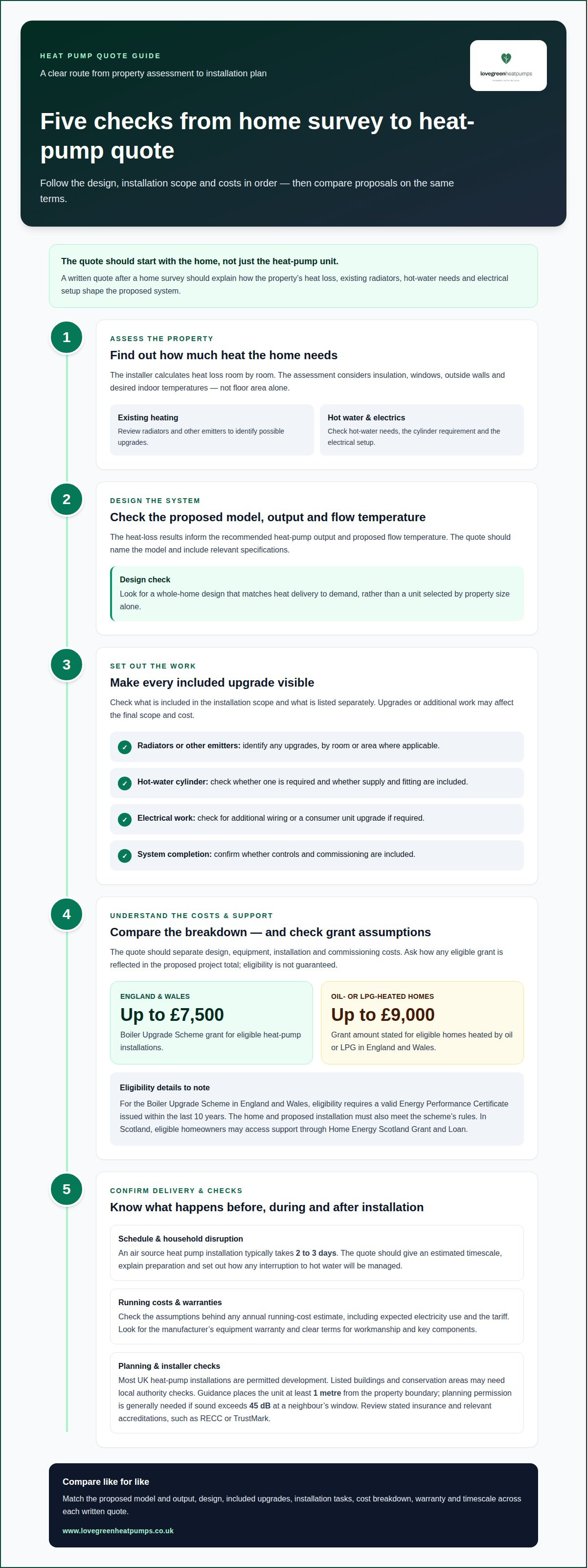
Heat pump quote process and design fee
A sound process moves from an initial discussion to a home survey, system design and written proposal. Each step connects the existing heating system with the proposed equipment and work. This gives you a practical basis for deciding whether to switch from a boiler and understanding what the upgrade involves.
Before the survey, note how you heat each room, where the boiler and hot-water cylinder are, and any comfort problems. During the visit, the installer can assess insulation, radiators, pipework, electrical arrangements and possible outdoor-unit positions. These details help identify design needs that a remote estimate cannot fully capture.
Next comes the heat-loss calculation and system specification. The design should explain the proposed model and output, expected flow temperature and any changes needed to the heating system. If existing radiators cannot meet room demand at the proposed settings, for example, the design should identify which ones need upgrading.
A design fee is a separate question from the installation price. Ask whether a fee applies, what survey and design work it covers, and whether it is payable before receiving the final proposal. If a fee is credited against installation or treated another way, the written terms should explain that clearly. The price depends on the case and is given after a quote request; survey scope, equipment, upgrades and installation complexity shape the cost.
Once the design is ready, compare each written proposal with the agreed scope. A heat pump quote should distinguish equipment, installation, electrical work, radiator changes and commissioning, rather than grouping everything under an unexplained figure. Check that exclusions and assumptions are written down, so you understand any proposed change in the work before installation begins.
Ask how any running-cost estimate or projected saving was prepared. The assumptions should cover the home’s heat demand, system performance and electricity tariff. A projected saving is meaningful only when you know its comparison basis, such as the existing boiler and current energy use. Treat grants separately, and check that any assumed support is clearly shown in the calculation.
Before accepting, ask who is responsible for design, installation and commissioning, what the proposed timeframe covers and how changes are agreed. Keep the survey findings, design, itemised scope and terms together. They provide a useful record when comparing proposals or understanding why an upgrade was included. Use the heat pump quote to check that the written details reflect what was discussed during the survey.
If you’re ready to discuss the survey and design stages for your home, request a heat pump installation quote.
Love Green Heat Pumps: Heat Pump Installation
Love Green Heat Pumps Ltd provides heat pump installation for homeowners planning to replace their existing heating system. Its process covers the project from survey and design through to commissioning, matching the proposed system and installation work to the home's requirements.
A free, no-obligation heat pump quote is a practical next step when you are ready to discuss your property, compare system options or understand the work involved. Love Green Heat Pumps Ltd also offers heating engineering, solar PV and other renewables, and air conditioning, which may suit wider home energy plans.
Contact Love Green Heat Pumps Ltd to discuss heat pump installation for your home.
Make your next heating decision with confidence
Before moving forward, consider how you want your home to feel through a typical winter. Note which rooms are hardest to keep comfortable, when hot-water demand is highest and whether you expect changes to your household or property. These practical details can help shape a system that works with daily life, not just the building’s measurements.
Use a heat pump quote as a working document. Read it alongside your priorities and note any parts of the proposed design you’d like explained before agreeing to the work. A clear heat pump quote should help you understand how the installation fits your home and routine.
Love Green Heat Pumps Ltd can guide you from considering a change to discussing a suitable installation. Arrange a home survey to talk through your plans and understand the options for your property.
Frequently Asked Questions
How do you swap a boiler for a heat pump?
Begin with a home survey and heat-loss assessment, then use the findings to design the new system. The written proposal should explain the equipment, required alterations and changeover process. Once the design and scope are agreed, the installer removes or disconnects the boiler, fits and connects the heat pump, then commissions the system. Love Green Heat Pumps works with MCS-certified installation partners and provides handover paperwork, including an MCS certificate.
How long will I be without hot water?
Your hot water is off only for part of the installation, rather than throughout the entire job. The installer needs to coordinate the boiler changeover, cylinder connection and commissioning so the interruption is limited to the relevant work. Love Green Heat Pumps says a standard installation takes 3-5 days, with heating and hot water unavailable for only part of that time. Ask how the planned sequence applies to your home.
How much can you save by switching to a heat pump?
Any change in energy bills depends on your current boiler, household heat demand, insulation, system design and electricity tariff. A correctly sized heat pump used with a suitable heat-pump tariff may have running costs similar to or lower than gas, but the result depends on how your home uses energy. Compare estimates using your own heating pattern and tariff, rather than relying on a general saving figure.
How much space do I need?
You need suitable space for an outdoor unit and indoor equipment, including a hot-water cylinder for a heat-pump system. The outdoor unit needs a practical position, while the cylinder needs a location that works with your pipework and household layout. A ground-source system also requires suitable land for buried pipework. The survey considers access, unit placement and indoor space together.
How much does an air source heat pump cost to install in the UK in 2026?
There isn’t one reliable installation price for every UK home; the cost depends on the property and the work required. Factors include heat demand, system design, cylinder requirements, radiator changes and electrical work. Love Green Heat Pumps provides a fixed written quotation after a home visit, with any eligible Boiler Upgrade Scheme grant deducted. Grant eligibility is not guaranteed and must be confirmed with the scheme administrator before work begins.
What should a heat pump quote include?
A useful proposal should name the proposed model and output, explain the system design and list the installation work. Look for the heat-loss calculation, any radiator or electrical upgrades, cylinder provision, commissioning and a cost breakdown. It should also explain estimated running costs, warranty terms, timeframe and exclusions. Check that any grant deduction is shown separately, so you can see what the proposed project includes.
How can I check a UK heat pump installer’s qualifications and MCS certification?
Ask the installer to identify the business carrying out the work and any MCS-certified installation partner involved. Check that the written proposal explains who is responsible for design, installation and commissioning, and that handover paperwork includes the MCS certificate where applicable. This gives you a clear record of the installation route and the parties involved, rather than relying on a general statement about certification.
What warranties, maintenance and performance guarantees should a heat pump quote include?
Look for the manufacturer’s equipment warranty and clear terms for workmanship and key components. The proposal should explain what the warranty covers, any maintenance conditions and how servicing is arranged. It should also show the assumptions behind estimated energy use and running costs, so expected performance has context. Treat estimates as projections, not guaranteed bill savings, and keep the commissioning and handover documents.
Disclaimer
Disclaimer
The information published on this website is provided by Love Green Heat Pumps for general information and educational purposes. As a specialist provider of heating and renewable energy solutions, we strive to ensure that our content is accurate, relevant and up to date. However, heating requirements, system suitability, installation specifications, costs and performance can vary depending on individual property characteristics, usage and other site-specific factors.
Information provided in our articles should not be regarded as a substitute for a professional property assessment, technical survey or tailored recommendation. Any decisions regarding the selection, installation, replacement or maintenance of heating systems should be made with appropriate professional guidance.
Love Green Heat Pumps accepts no responsibility for decisions made solely on the basis of general information published in these articles. For advice specific to your property or project, we encourage you to contact our team for professional guidance and an assessment of your requirements.


