

What if a radiator that kept a room cosy with a boiler can’t deliver enough warmth with a heat pump? A heat pump radiator sizing assessment is designed to resolve that uncertainty. Instead of judging radiator size by eye, it compares each room’s heat loss with the radiator’s output at the system’s planned, lower flow temperature.
It’s reasonable to wonder whether your existing radiators will cope, especially when ratings, room measurements and heat demand can seem like separate pieces of jargon. The answer isn’t automatically to replace every radiator. A room-by-room assessment shows where current radiators are suitable and where a change may be needed.
This guide explains what a proper assessment involves, how radiator output is compared with each room’s heating requirement, and what the results mean in practice. You’ll also learn about options for rooms that fall short. By considering heat loss and radiator suitability together, the findings can inform a tailored heat pump plan and help you make clear decisions about each room.
Key Takeaways
- A heat pump radiator sizing assessment looks beyond radiator count to build a room-by-room picture of heating needs.
- Prepare room measurements, notes on draughts and insulation, and details of each radiator to make the assessment more useful.
- Radiator output figures need to match the proposed heat pump’s design conditions for a meaningful comparison.
- If a room falls short, the findings can help shape a practical response, from adjusting the system plan to considering a different emitter.
- Room-by-room results feed into the wider heat pump design, installation and commissioning process.
What a heat pump radiator sizing assessment checks in your home
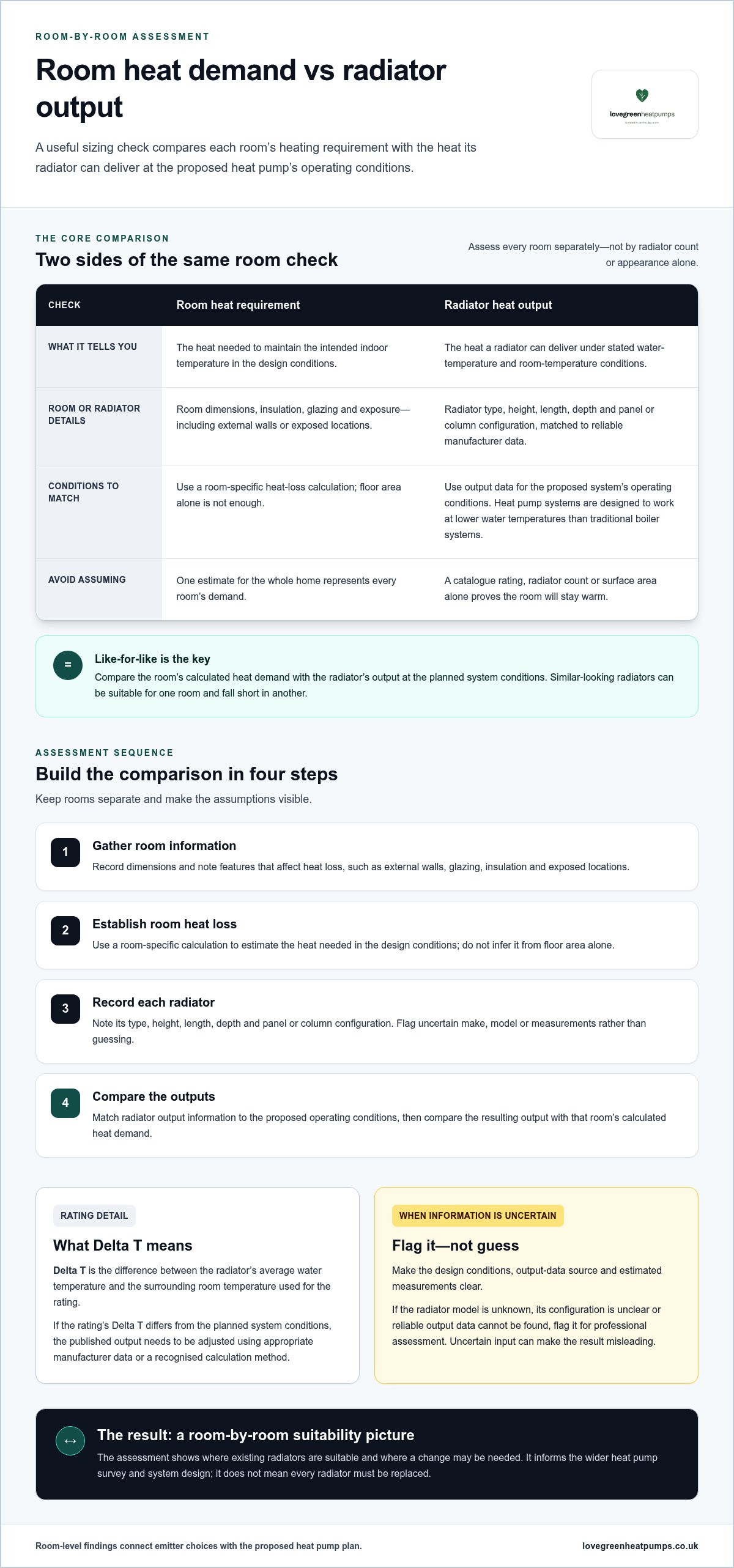
A heat pump radiator sizing assessment compares the heat each room needs with the heat its radiators can deliver under the proposed system’s operating conditions. It assesses emitters room by room, rather than assuming that a certain number of radiators will keep the whole home comfortable.
Radiator output is the heat a radiator can deliver to a room under stated water-temperature and room-temperature conditions. This distinction matters because a radiator’s published rating describes its output under specified test conditions, not necessarily the heat it will provide in your designed system.
Why room heat loss matters as much as radiator size
Room heat demand depends on more than floor area. Dimensions, insulation, glazing and exposure all affect how much warmth a room loses. A room with several external walls or large windows may need more heat than a similarly sized, well-insulated room surrounded by other heated spaces.
That’s why two rooms with radiators that look alike may need different outputs. For example, a radiator in a sheltered bedroom might be adequate, while a similar one in a larger room with more exposed walls may not meet that room’s demand. A sound assessment uses room-specific heat-loss information, not one estimate for the whole house.
What radiator output figures actually tell you
Manufacturers publish radiator outputs against specified water and room temperatures. Change those conditions and the heat delivered changes too. A heat pump is designed to work at lower water temperatures than a traditional boiler system, so a rating based on different conditions cannot simply be treated as the radiator’s expected output in the new setup. For a basic explanation of how heat pumps work, see the linked overview.
A generic radiator-size chart can offer a rough starting point, but it can’t account for the exact heat loss in each room or the planned system conditions. The assessment compares the room’s heat requirement with the relevant radiator output on a like-for-like basis. Radiator count or surface area alone can’t establish whether the room will stay warm.
This check is one part of a wider heat pump survey and system design. The survey considers the home and its heating system; the design brings those findings together to plan suitable equipment and operating conditions. Radiator assessment connects room needs with emitter choices, but it doesn’t mean every existing radiator must be replaced. Instead, it provides a room-by-room basis for deciding what the system needs.
How to assess radiator output against each room’s heat loss
A useful comparison follows the same sequence for every room. It starts with the space’s heating requirement, identifies the existing emitter, then checks whether that radiator can meet demand under the proposed heat pump’s design conditions. Changing the assumed water temperature can change the comparison, so don’t treat a radiator’s general catalogue rating as its expected output in your home.
- Gather room information. Record each room’s dimensions and note features that affect heat loss, such as external walls, glazing, insulation and exposed locations. Keep rooms separate rather than using one figure for the whole property.
- Establish room heat loss. A room-specific calculation estimates the heat needed to maintain the intended indoor temperature in the design conditions. This is a professional calculation, not something to infer from floor area alone.
- Record each emitter. Note the radiator’s type, height, length and depth. Include its panel or column configuration, and record any unusual features or uncertainty about its make and model. These details help identify the right manufacturer data.
- Compare outputs. Match the radiator’s output information to the proposed system’s operating conditions, then compare the resulting output with that room’s calculated heat demand.
Use matching output data
Radiator output ratings are based on stated water and room temperatures. The term Delta T means the difference between the radiator’s average water temperature and the surrounding room temperature used for that rating. If the rating’s Delta T differs from the planned system conditions, the published figure needs to be adjusted using appropriate manufacturer data or a recognised calculation method.
Check a radiator’s output at the intended operating temperature because its published rating may describe different conditions from those planned for the heat pump. This is why radiator dimensions alone cannot confirm suitability. The same-sized radiator can deliver a different amount of heat when the water temperature changes.
Keep the assumptions visible. The comparison should identify the design conditions used, the source of the radiator output data and any estimated measurements. If the radiator model is unknown, its configuration is unclear or reliable output data can’t be found, flag this for professional assessment rather than guessing. An uncertain input can make the result misleading.
A heat pump radiator sizing assessment brings these room and emitter details together as part of the wider system plan. Love Green Heat Pumps Ltd includes home surveys and system design in its heat pump projects, connecting room-level findings with the proposed installation. Find out more about heat pump surveys and system design.
Will existing radiators work with a heat pump at lower flow temperatures?
Possibly, but the answer depends on each room’s heat demand and the radiator’s output under the planned system conditions. Lower water temperatures can mean an existing radiator delivers less heat than its familiar boiler-system rating suggests. That doesn’t mean every radiator must be replaced. It means suitability needs to be checked, not assumed.
A heat pump radiator sizing assessment compares the verified output of each emitter with the calculated demand of the room it serves. A radiator may be suitable if it can meet that demand at the intended operating conditions, taking account of its condition and the heating system’s design. Age, material or appearance alone can’t confirm whether it will work well.
Room-by-room options
If a room appears short of output, the result points to a decision, not an automatic whole-house replacement. The right response depends on the size of the shortfall, available wall space and the wider system design.
| Option | When it may help | Important caveat |
|---|---|---|
| Retain the radiator | Its verified output meets the room’s demand under the planned conditions. | Condition and system design still affect practical performance. |
| Rebalance the system | Uneven heat distribution suggests water is not flowing as intended through the emitters. | Balancing can address distribution, but it doesn’t increase a radiator’s capacity. |
| Fit a larger radiator or add an emitter | The room needs more output and there is a suitable location or enough space. | The choice must suit the room and be included in the system design. |
A larger radiator is one possible route, but it isn’t the only one. An additional emitter may suit a room where wall space or layout limits the size of a replacement. Other design adjustments may also be considered, depending on how the room performs and the requirements of the heating system. Make these decisions from the assessment, rather than a general rule or a visual comparison with another room.
Keep room-specific changes separate from whole-system decisions. An emitter upgrade in one room doesn’t automatically mean the heat pump design needs a major change throughout the home. Equally, room results need to be considered together when planning system conditions. A home survey and system design bring those findings into one tailored plan, followed by installation and commissioning. This provides a clear basis for deciding what to retain and where a change is needed, without assuming every existing radiator will be suitable.
How to complete a practical room-by-room radiator sizing assessment
A little preparation can make a heat pump radiator sizing assessment easier to follow. Your notes help build an accurate picture of the home, but they aren’t a substitute for the room heat-loss calculations and system design carried out as part of a professional assessment.
What to record before the assessment
- Name each room and note its approximate length, width and ceiling height, if known.
- Mark where the emitters are, such as beneath a window or on an external wall. Note if a room has more than one radiator or another heat emitter.
- Describe relevant features, including large windows, external walls, noticeable draughts or recent insulation improvements.
- Record visible radiator details, such as its type, approximate height and length, panel or column shape, and any accessible manufacturer label. Don’t move a radiator or remove covers to find information.
- Note comfort concerns, for example a room that feels difficult to heat or takes longer to warm. These observations are useful context, not a heat-loss calculation.
- Keep available system information, including any known heating controls or previous design documents. The professional assessment will establish the operating conditions for the proposed system.
Room heat loss, radiator output at the proposed operating conditions and the system’s design settings need to be calculated or verified professionally. If a measurement or radiator model is uncertain, label it as unknown rather than filling in a guess. This heat pump system design and commissioning guide explains how survey findings feed into the wider project.
How to read the assessment outcome
A room-by-room record should show the evidence behind each conclusion. Use a table like this to organise the findings, with the relevant calculations and system assumptions included in the assessment.
| Room | Heat loss | Existing emitter details | Output at design conditions | Result | Notes or next step |
|---|---|---|---|---|---|
| [Room name] | [Assessment result] | [Type and measurements] | [Verified output] | [Suitable / further checks / design change] | [Assumptions or action] |
| [Room name] | [Assessment result] | [Type and measurements] | [Verified output] | [Suitable / further checks / design change] | [Assumptions or action] |
“Suitable” means the verified emitter output meets that room’s demand under the stated design conditions. “Further checks” signals missing or uncertain information. “Design change” indicates that the proposed plan needs to address a shortfall, which could involve the emitter or another part of the design. The results should state the assumptions and operating conditions used so the comparison is clear. Seasonal performance factor is a measure of a heat pump’s performance over a period of operation, rather than a radiator-sizing result.
Love Green Heat Pumps Ltd provides tailored heat pump surveys and system plans, including the design work needed to relate room findings to the proposed installation. See the heat pump project information.
What happens after the assessment: turn radiator findings into a heat pump plan
The assessment turns room-by-room findings into practical design decisions. Where an emitter meets the room’s heat demand at the planned operating conditions, it may be possible to retain it. Where output falls short, the design can consider a larger radiator, an additional emitter or another suitable adjustment. The right choice depends on the room, available space and how the whole heating system needs to operate.
How radiator findings shape the system design
Emitter choices and heat pump design need to work together. The room results help inform suitable flow temperatures and the wider system plan, rather than being treated as a separate radiator-shopping exercise. A change in one room may be local, whilst decisions about overall system operation need to account for the property as a whole. The wider project also includes installation planning, as explained in this UK heat pump installation homeowner guide.
A heat pump radiator sizing assessment is one part of a joined-up process. A home survey gathers information about the property and existing heating. System design uses those findings to plan the equipment, emitters and operating conditions. Installation follows the design, then commissioning checks and sets up the system. The outcome is tailored to the home; findings don’t mean that every household will need the same radiator changes.
Efficiency also depends on more than radiator selection alone. System design and operation matter too. Seasonal performance factor considers performance over a period of use, so it provides wider context than a room-by-room radiator assessment.
Choose a clear next step for your home
For a property-specific discussion, gather any room measurements and radiator details you have, alongside notes about rooms that are harder to heat. Previous heating or insulation information can also help build the picture. You don’t need to calculate room heat loss yourself; that belongs in the professional assessment and system design.
Love Green Heat Pumps Ltd provides turnkey heat pump projects, from surveys and system design through installation and commissioning, supported by HEIS-accredited expertise. The findings are considered as part of a tailored plan, without assuming in advance that existing emitters will all stay or all be replaced.
If you’re ready to explore the options for your home, request a free, no-obligation heat pump quote. A clear assessment gives you a practical basis for deciding what comes next, one room and one design decision at a time.
Plan your next step with confidence
A heat pump radiator sizing assessment replaces guesswork with a room-by-room comparison of heat demand and radiator output at the planned system conditions. The findings may show that existing emitters can stay, or identify particular rooms where a change should be considered. Either way, the decision is based on the home’s requirements, not radiator count or appearance alone.
Those room results form part of a wider plan. Love Green Heat Pumps Ltd provides turnkey heat pump projects, including survey, system design, installation and commissioning, supported by HEIS-accredited expertise. That joined-up process connects radiator decisions with the heating system as a whole, without assuming every home needs the same solution.
For a tailored starting point, gather any room measurements, radiator details and notes about spaces that are harder to heat. Then request a free, no-obligation heat pump quote to discuss a plan suited to your property. A clear assessment can make the path to heating-system decisions easier to understand.
Frequently Asked Questions
Can I keep my existing radiators with a heat pump?
Yes, some existing radiators may be suitable, but each needs to meet its room’s heat demand at the planned system conditions. A heat pump radiator sizing assessment compares the room’s calculated heat loss with reliable output data for its emitter. Some radiators may be retained, whilst others may need changes. Age and appearance alone don’t determine suitability, so base the decision on the room-by-room results.
How are radiators sized for a heat pump?
Each room’s heat demand is compared with the output of its radiator or other heat emitter under the proposed system conditions. The assessment uses room details, emitter type and measurements, plus relevant manufacturer information. Published radiator ratings may be based on different test conditions from those planned for the heat pump. They shouldn’t be treated as a direct measure of the heat the room will receive.
Do all radiators need to be replaced for a heat pump?
No, a proper assessment may show that some radiators can stay whilst others need attention. The decision depends on each room’s heat loss, the emitter’s verified output and the planned heating-system conditions. If a radiator’s output is insufficient, the design can consider options for that room. There’s no need to assume that every radiator must be replaced before the assessment is complete.
What does Delta T mean when assessing radiator output?
Delta T describes the temperature difference used to state a radiator’s heat output. A manufacturer’s rating applies to specified test conditions, so it doesn’t show the radiator’s output under every system setup. For a heat pump assessment, use output data that reflects the proposed operating conditions and the room being assessed. Comparing figures with different Delta T values without an appropriate adjustment can give a misleading result.
Can a heat pump work with small radiators?
It can be possible, but size alone doesn’t settle whether a radiator is suitable. The assessment compares its output at the planned system conditions with the room’s calculated heat demand. A smaller radiator may meet the needs of one room, whilst a similar one may fall short elsewhere. Room-specific information, rather than a general rule based on radiator dimensions, should guide the design.
What information is needed for a radiator sizing assessment?
A heat pump radiator sizing assessment uses room dimensions and features, calculated heat loss, existing emitter details and the proposed system conditions. Radiator type and measurements help identify suitable manufacturer output data. You can note room names, visible labels and comfort concerns. The professional system assessment should verify measurements, calculate heat demand and establish the design conditions, rather than relying on homeowner estimates for those technical results.
Does radiator sizing affect heat pump efficiency?
Radiator suitability can influence the system design and the water temperatures needed to heat rooms, which can affect heat pump operation. But radiator sizing alone can’t predict overall efficiency. The building’s heat loss, system controls, installation quality and commissioning also contribute to how the system performs. Treat the radiator assessment as one part of the wider design, not as a guarantee of a particular efficiency outcome.


