

What if a heat pump is installed correctly, but still leaves your home too cool on a winter morning? The difference often starts before installation. Heat pump system design and commissioning work together: design matches the system to your home, and commissioning checks and adjusts it so it can deliver the intended comfort.
It’s understandable to wonder what an installer should assess, or how you’ll know the system is set up properly. A thorough process looks at the home and its heating needs, then checks the completed system’s operation and explains the settings you’ll use day to day. Neither stage should feel like a mystery or an afterthought.
In this guide, you’ll learn what information shapes a home-specific design, what happens during commissioning, and what a clear handover should cover. Love Green Heat Pumps Ltd manages turnkey projects from survey and design through equipment supply and commissioning, connecting each step rather than treating installation as the finish line. You’ll know what to expect from a joined-up process, and what to look for as the design becomes a working heating system.
Key Takeaways
- See how heat-loss information and a home assessment help shape a system specification around your property.
- Understand how heat pump system design and commissioning connect the planned system with its final setup.
- Learn which equipment, heating circuit, controls and operating checks help show the system is ready.
- Use a practical checklist to follow the design review, commissioning outcomes and homeowner handover.
- Discover how connecting assessment, design, installation and commissioning can make the project easier to follow.
Heat pump system design and commissioning: why both stages matter
A heat pump can switch on and still fail to suit the home. It needs to be planned around the property’s heating needs, then checked once installed. That distinction is central to heat pump system design and commissioning: design sets out how the system should operate, while commissioning checks how it actually operates.
In brief: Heat pump system design plans equipment, layout and settings around a home’s heating demand. Commissioning tests and adjusts the installed system, records the checks and prepares it for handover.
If you’re new to the technology, this overview of what a heat pump is explains the basic principle. How that technology is applied in a home depends on the property, its heating demand and the heating system it needs.
What does heat pump system design cover?
Design begins with information about the home. Survey findings help build a system specification and practical layout, including where equipment and connections will sit. The aim is to match the system to the home’s heating demand, rather than select equipment in isolation.
Heat loss is the amount of heat a home loses through areas such as walls, windows and roofs. Understanding it helps establish how much heat the system needs to supply. Room-by-room heat-loss information can also show where demand varies across the property. The design considers the heat emitters, such as radiators or underfloor heating, that transfer warmth into each room. Their suitability depends on the home’s requirements and the planned system settings.
There’s no single specification that suits every property. The survey, heat-loss information, emitters and practical layout all shape the design. When reviewing a proposal, look for a clear explanation of how these factors informed the equipment and system choices.
What does commissioning add after installation?
Commissioning checks whether the installed equipment and connected heating components work together as intended. It involves testing and setting up the system, not simply switching the heat pump on. The checks and adjustments depend on the equipment and the design.
This is where the plan meets the finished installation. Commissioning can identify settings or connections that need attention before handover. The outcomes should be recorded and explained, so you have a clear account of what was checked and how to use the controls.
Careful commissioning supports dependable, comfortable heating, but it can’t guarantee a particular efficiency result. A joined-up process makes the stages easier to follow: the design establishes the intended operation, and commissioning checks the system against that intent before it’s handed over.
How a home-specific heat pump design takes shape
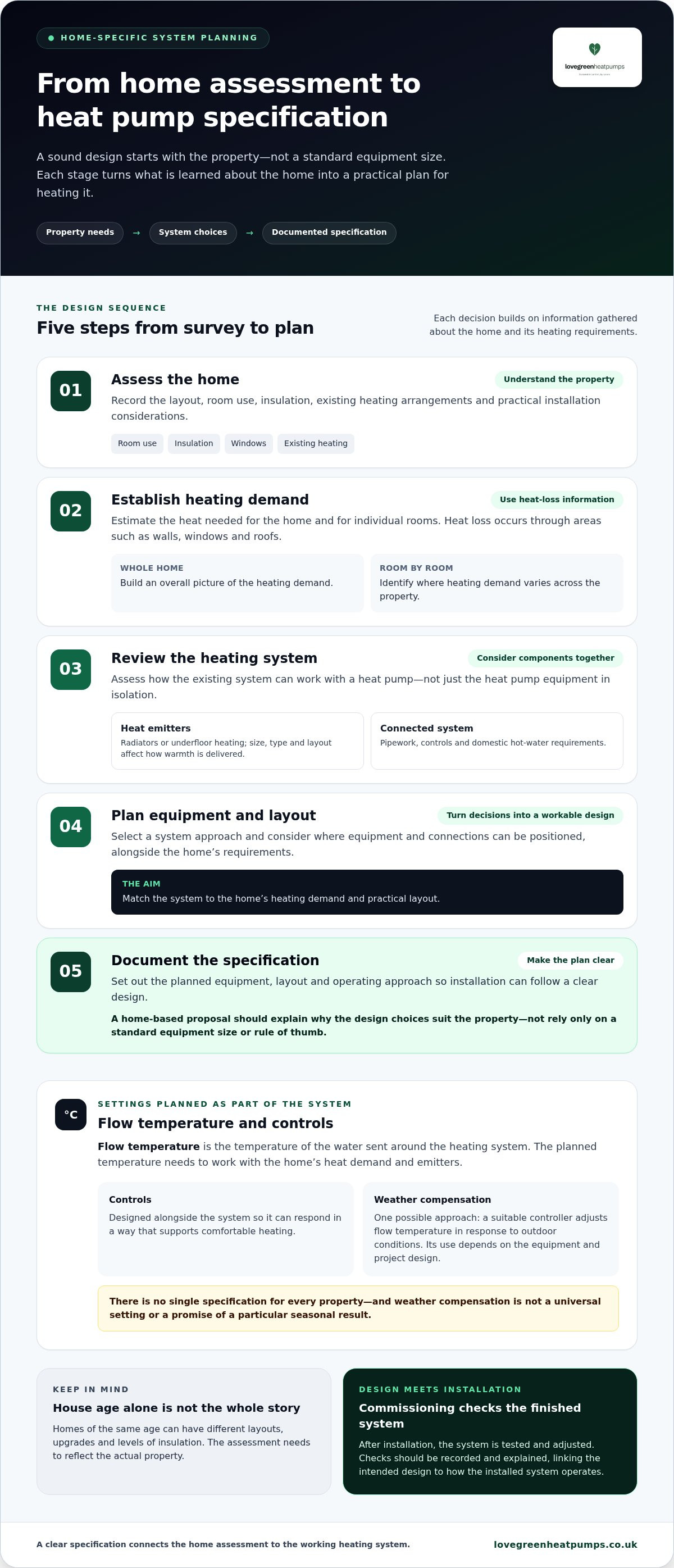
A sound design starts with the home, not a standard equipment size. The aim is to understand how each space is used, how much heat it loses and how the existing heating system could work with a heat pump. This gives the design team a practical basis for selecting and arranging equipment, pipework and controls.
Which property details influence the design?
Room use, insulation, windows and the condition of the existing heating system all inform the assessment. Heat-loss findings help estimate the heating demand the system must meet, including differences between rooms. House age alone can’t tell the whole story: homes of the same age may have different layouts, upgrades and levels of insulation.
Radiators and underfloor heating also affect the plan. Their size, type and layout influence how heat is delivered around the home. The design needs to account for these emitters alongside pipework, controls and domestic hot-water needs. When discussing the proposal, ask how the existing emitters and room-by-room heating requirements have been considered.
From assessment to system specification
The design process can be understood as a sequence:
- Assess the home: Record the layout, room use, insulation, existing heating arrangements and practical installation considerations.
- Establish heating demand: Use heat-loss information to estimate the heat needed for the home and its individual rooms.
- Review the heating system: Consider radiators or underfloor heating, pipework, controls and hot-water requirements together.
- Plan the equipment and layout: Select a system approach and consider where equipment and connections can be positioned.
- Document the specification: Set out the planned equipment, layout and operating approach so the installation can follow a clear design.
This sequence connects the survey to decisions made later. It also gives you a practical way to understand why the proposed design suits your property. A proposal based on a home assessment should explain the main design choices, rather than relying only on a standard equipment size or rule of thumb.
How do flow temperature and controls fit into the plan?
Flow temperature is the temperature of the water sent around the heating system. The planned temperature needs to work with the home’s heat demand and its emitters. Controls are designed as part of the same picture, so the system can respond in a way that supports comfortable heating.
One possible approach is weather compensation. A suitable controller adjusts the flow temperature in response to outdoor conditions. Whether and how this is used depends on the equipment and project design. It isn’t a universal setting or a promise of a particular seasonal result.
In a turnkey project, the survey, design, equipment supply and commissioning can be managed as connected stages. Explore heat pump system design and installation to see how a home-specific plan can carry through to installation.
What commissioning checks show that the heat pump system is ready?
A thorough commissioning process checks more than whether the heat pump starts. It looks at how the equipment, heating circuit and controls work together, then compares the results with the intended design. That gives a clearer picture of whether the installation is ready for handover.
Exact tests and settings depend on the equipment and system design. These are professional checks, not DIY instructions. Homeowners can still understand what each group of checks is intended to show.
Equipment and connections
The installer checks the heat pump and its installation, including whether the relevant connections are complete and the equipment is operating as intended. The aim is to confirm that the installed components match the project requirements and are ready to work with the rest of the system.
Heating circuit and circulation
The heating circuit carries warmth from the heat pump to radiators or underfloor heating. Commissioning checks that the connected parts operate as a system and that water can circulate through the intended circuit. This matters because sound equipment alone can’t provide dependable heating if the wider system isn’t working with it.
Controls and household settings
Controls are reviewed alongside the household’s heating requirements. This can include checking schedules and planned operating settings, then explaining how to use them. A useful handover makes the controls understandable, rather than leaving you to guess what each setting does.
Operating checks and design comparison
The system is run and observed so the commissioning findings can be compared with the design intent. If the design sets out how the system should serve the home, these checks help show whether the installed system is operating along the planned lines. Any adjustments depend on the equipment and the actual system.
For homeowners, useful evidence of a thorough process is a clear explanation of what was checked, what was adjusted and whether the outcomes align with the design. Commissioning records make the results easier to follow, though the documents can vary by project. Ask for the findings to be explained in plain English during handover.
Commissioning doesn’t establish a fixed efficiency figure or guarantee a particular result in every season. Seasonal performance factor is a broader measure of heat pump performance over time, rather than a simple pass-or-fail commissioning check. Heat pump system design and commissioning are connected: one sets the intended operation, and the other checks the installed system against it.
Leave technical testing and adjustments to qualified professionals. Your role is to understand the outcomes and how to operate the controls confidently.
How homeowners can assess the design, commissioning and handover
You don’t need to interpret technical readings to follow the project. A clear explanation should connect what was found during the home assessment with the proposed system, then show how commissioning checks the installation against that plan. Use this checklist to keep the conversation practical.
- Design: Can you see how the home’s heating needs informed the proposal?
- System choices: Are the equipment, radiators or underfloor heating, hot-water provision and controls explained in terms you understand?
- Planned operation: Do you know how the system is intended to heat the home and how you’ll use its controls?
- Commissioning: Are the checks and any adjustments explained, including how their outcomes relate to the design?
- Handover: Do you know which information to keep and where to find guidance on normal operation?
What should a clear design discussion explain?
The design discussion should make the reasoning easy to follow. It should explain the assessed heating needs, how those findings shaped the system proposal and why the chosen equipment and heat emitters suit the home. You should also receive a plain-English explanation of the controls and planned operation. If a term or choice isn’t clear, ask for it to be described in everyday language.
For a broader view of the stages involved in planning a project, the heat pump installation buying guide can help put the design conversation in context.
What should the homeowner learn at handover?
By handover, you should be shown how to use the main controls, set or adjust heating schedules and recognise normal operation. The installer should explain the commissioning outcomes, including relevant checks and adjustments, rather than simply leave you with a set of technical terms.
Useful information to retain may include the system specification, equipment details, control guidance and commissioning records. The exact documents can vary by project, so make sure you know what you’ve received and where to find it later. Clear records help connect the original design with the installed system.
Seasonal performance factor gives broader context about efficiency over time; it’s different from a commissioning result. The related seasonal performance factor article can help explain that measure without confusing it with the handover checks.
A connected process makes these conversations easier to follow from survey through to commissioning. Explore heat pump installation for a project planned around your home.
A complete heat pump project connects design, installation and commissioning
A heat pump project follows a clear path: assess the home, design the system, install the equipment, commission it and hand it over. Each stage informs the next. The assessment shapes the design, the installation puts that design into place, and commissioning checks how the finished system operates before you take over.
Keeping these stages connected can make the process easier to understand. If the survey and design inform equipment choices from the outset, the installation has a clear plan to follow. Commissioning can then compare the installed system with its intended operation, rather than treating the final checks as a separate task. That’s the practical value of a joined-up approach to heat pump system design and commissioning.
How does a turnkey process reduce uncertainty?
Love Green Heat Pumps Ltd manages turnkey projects from home survey and system design through equipment supply and commissioning. This links property findings with the proposed system and carries that plan through to the final checks and handover. The company describes its heat pump expertise as HEIS-accredited. This is not a promise of a particular result: the project still needs to be designed for the property and commissioned as installed.
For you, a connected process makes it easier to follow why the system was specified, what was fitted and what the commissioning findings show. It also gives you a clearer point of reference during handover, as the system’s operation can be explained in relation to the original design.
What is a sensible next step for a homeowner?
Start with the basics. A rough floor plan, details of your current heating and hot-water arrangements, and any information about insulation or previous upgrades can help set the scene for a project discussion. You don’t need to work out equipment sizes or technical settings yourself. Those decisions depend on the home assessment and system design.
If you’re still getting familiar with the overall process, explore the heat pump installation buying guide for a broader view of the decisions involved. Then consider what matters most in your home, such as room comfort, existing radiators, hot-water use or the practical location of equipment. These details can help focus the conversation.
A well-coordinated project should leave you with more than a working heat pump. It should leave you understanding why the system was designed as it was, how it was checked and how to use it day to day. If you’re considering a heat pump for your property, discuss a tailored heat pump project.
Take the next step towards a well-planned heat pump
A heat pump should be designed around your home, not simply fitted and switched on. The survey and system design shape equipment choices and planned operation; commissioning then checks how the installed system works against that design. Clear explanations and a useful handover help you understand the controls and feel confident using your heating.
Love Green Heat Pumps Ltd brings the stages together in turnkey projects covering the home survey, system design, equipment supply and commissioning. The company describes its heat pump expertise as HEIS-accredited. This joined-up approach gives you a clear route from understanding your home's needs to reviewing how the completed system has been checked.
If you're considering a heat pump, start with a conversation about your property and current heating. Request a free, no-obligation heat pump quote and discuss a system designed around your home.
Frequently Asked Questions
What is heat pump system design?
Heat pump system design plans equipment and operating settings around a home’s heating needs. It uses property information, including heat-loss findings, existing radiators or underfloor heating, pipework and hot-water requirements, to develop a suitable system specification. The design sets out how the system is intended to operate. Commissioning then checks the installed system against that plan, which is why both stages matter.
Why is commissioning important for a heat pump?
Commissioning checks that the installed heat pump and connected heating components work together as intended. It helps identify whether the system’s operation matches the design and allows settings to be adjusted before handover. This gives you a clearer understanding of what has been checked and how the system should operate. Commissioning supports dependable heating, but it can’t guarantee a particular efficiency result or comfort level in every home.
What happens during heat pump commissioning?
A qualified professional checks the equipment and its connections, the heating circuit and water circulation, and the controls and operating settings. They run the system, make any needed adjustments and compare the findings with the intended design. The exact tests depend on the equipment and system. At handover, you should receive an explanation of the outcomes and guidance on using the main controls, rather than being expected to interpret technical readings yourself.
Can a heat pump be commissioned after installation?
Yes. Commissioning takes place after the equipment has been installed, when the connected system can be tested and set up. It’s generally completed before the homeowner handover so the installer can explain the checks and operating controls. If a system has been installed but not commissioned, technical checks and adjustments should be carried out by a qualified professional. Don’t try to commission the equipment yourself by changing technical settings.
How do design choices affect heat pump performance?
Design choices influence how well the system can meet the home’s heating needs. Heat-loss findings help establish demand, while radiators or underfloor heating, pipework, hot-water requirements and controls shape the system specification. For example, the heat emitters need to work with the planned operating approach. There’s no universal equipment size or setting: the design needs to reflect the individual property and its heating arrangements.
What should a homeowner receive at heat pump handover?
At handover, you should be shown how to use the main controls, set heating schedules and understand normal system operation. Useful information to retain may include the system specification, equipment details, control guidance and commissioning results. Records vary by project, so ask for a plain-English explanation of what checks were completed and any adjustments made. Keep the documents together so you can refer to them if questions arise later.
Is commissioning included in a turnkey heat pump installation?
Yes. Love Green Heat Pumps Ltd’s turnkey heat pump projects cover the home survey, system design, equipment supply and commissioning. This connects the property assessment with the system specification, installation and final checks. Commissioning remains a distinct stage after installation, where the installed system is checked and set up before handover, with outcomes explained to help you understand how to operate it.


