

Could your existing pipes heat your home comfortably with a heat pump, or will they need changing? It’s a reasonable concern, especially if you’re picturing extensive work to floors and walls. In practice, pipework adjustments for heat pumps depend on whether the existing system can deliver the water flow and heat required by the design.
Pipe size, layout and condition all matter. Restrictions or unsuitable routes can affect circulation and contribute to uneven heating. That doesn’t mean every pipe needs replacing: suitable sections may be reused, while others may need adjustment or replacement following an assessment.
This guide explains what an installer considers during a home survey, how pipework decisions fit into system design and why balanced flow matters for comfortable heating. You’ll also learn how adjustments connect with installation and commissioning, and what to consider before work begins.
Key Takeaways
- Existing pipes may be suitable, need targeted changes or require replacement. The right option depends on the property and system design.
- Pipe diameter, circuit length and bends can affect water flow and how evenly heat reaches each room.
- An assessment considers the pipework alongside emitters, controls and the home’s heating requirements.
- Prepare by making accessible parts of the heating system easy to inspect and noting rooms that have been uncomfortable.
- Pipework is one part of the design. Emitters, controls and commissioning also help the system deliver steady heat.
Why pipework adjustments for heat pumps matter in an existing home
Pipework adjustments for heat pumps are changes to a home’s heating circuit that help water circulate as the system design requires. This may mean retaining suitable pipes, altering part of a circuit or replacing a section. There’s no single rule for every home: the right approach depends on the pipes’ condition and layout, along with the requirements of the complete heating system.
Heat pumps generally deliver heat through water at lower temperatures than many traditional boiler systems. It’s therefore important to assess how effectively heat can travel around the home and reach each room. The basic idea is principles of hydronic heating: water carries heat through a connected circuit to the parts of the home that need it.
Pipework is suitable when it can support the water flow and heat delivery required by the whole system, not simply because it already works with the existing boiler. An assessment considers pipes alongside radiators or other heat emitters, controls and the property’s heating requirements.
Can existing central-heating pipes work with a heat pump?
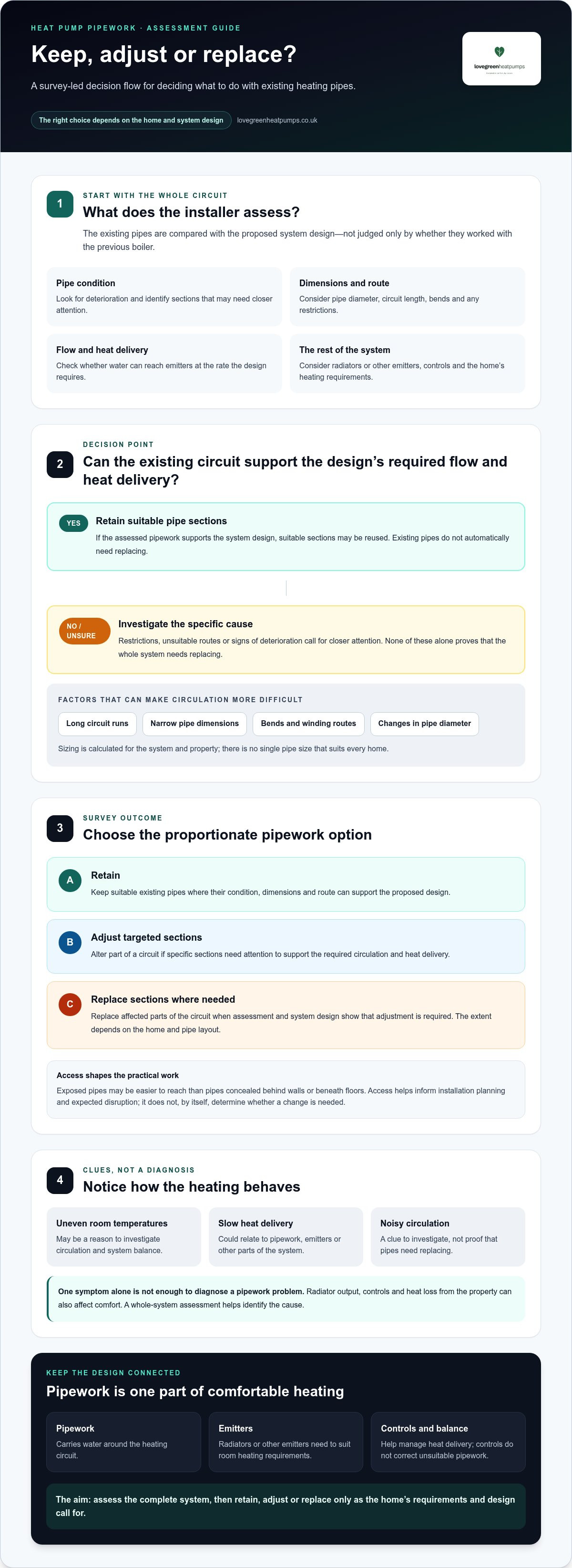
Yes, some existing pipework may be reused after an assessment. An installer considers its condition, dimensions and route, then compares the circuit with the proposed system design. Restrictions, awkward routes or signs of deterioration may need closer attention, but none of these alone determines the outcome.
The assessment helps establish whether pipes can be retained, adapted or replaced in specific areas. It’s best not to assume either that every pipe needs replacing or that the whole existing system can stay untouched.
What homeowners may notice when pipework needs attention
Uneven room temperatures, slow heat delivery or noisy circulation can be reasons to investigate how a heating system is operating. They’re clues, not a diagnosis: the cause could be related to pipework, but it may lie elsewhere in the system.
Radiators that don’t provide enough heat, control settings and heat loss from the property can also affect comfort. A whole-system assessment helps distinguish between these possibilities before deciding whether pipework changes are appropriate. One symptom alone isn’t proof that pipes need replacing. The aim is to identify its cause and keep any proposed work proportionate to the home’s heating requirements.
How pipe size, water flow and system balance affect heat pump pipework
Flow rate describes how much heating water moves around the circuit over time. The pipes need to let that water reach the heat emitters at a rate that suits the system design. Pipe diameter, circuit length and bends all affect resistance. A long, narrow or winding route can make circulation more difficult than a short, direct one.
There isn’t one pipe size that suits every home. Sizing depends on the heat output required, the system configuration and the conditions found during the survey. These calculations are part of heat pump system design and commissioning, rather than a decision made in isolation.
Why pipe diameter and circuit layout are assessed
Pipe dimensions and routing influence how easily water travels between the heat source and radiators or other emitters. Bends, changes in diameter and lengthy circuit runs can add resistance. An installer considers these details alongside the required heat output and system design, then identifies whether any targeted pipework adjustments for heat pumps are needed. Final sizing is based on calculations and the property’s specific conditions, not a universal rule of thumb.
| Factor | What it means | Why it matters |
|---|---|---|
| Flow | Movement of heating water through the circuit | Water needs to reach the emitters as the design requires |
| Pipe sizing | The dimensions of pipes carrying that water | Dimensions affect resistance and circulation |
| Balancing | Sharing flow appropriately around the circuit | Helps avoid some areas receiving less flow than others |
| Controls | Settings that manage when and where heat is delivered | They influence system operation, but don’t correct unsuitable pipework |
Balancing flow across radiators and heating zones
Balancing distributes water around the heating circuit so radiators and zones receive flow suited to the system. Restrictions or poorly adjusted circuits can contribute to uneven heating, but they aren’t the only possible cause. Radiator output and room heating requirements matter too. A room-by-room radiator sizing assessment looks at whether emitters are suitable, while a pipework assessment considers how water reaches them.
The Energy Saving Trust discusses circumstances that may call for upgrading existing pipework, including systems with microbore pipes. Whether a change is needed depends on the home and its design. Love Green Heat Pumps Ltd considers these factors as part of a complete heat pump project. Explore heat pump installation and system design.
Reuse, adjust or replace: comparing heat pump pipework options
There are three broad approaches to existing heating pipes: retain them, make targeted changes or replace sections of the circuit. The survey and system design guide the choice. Pipe condition and performance matter, as do the route through the home, access to the pipes and how well the existing layout can support the planned system.
Access affects the practical scope of work. Exposed pipes may be easier to reach than those concealed behind walls or beneath floors. This doesn’t determine whether a change is needed, but it helps shape how adjustments fit into the installation and what disruption to plan for.
When retaining existing pipework may be practical
Keeping pipes may be suitable if their condition and circuit performance align with the proposed design. The assessment considers whether the layout can support the required heat delivery, rather than assuming that a working boiler system will automatically suit a heat pump. If pipes are retained, commissioning checks after installation help establish how the complete system operates and whether it’s delivering heat as intended.
When targeted changes or replacement may be considered
A restricted, damaged or poorly routed section may call for a local alteration, such as changing part of a run or improving its route. If a wider part of the circuit doesn’t fit the system design, replacing sections or a circuit may be considered. Complete replacement isn’t an automatic requirement.
The decision also needs to account for heat emitters and controls. For example, if a room heats slowly, its radiator, control settings and pipe route may all need consideration before one is treated as the cause. A joined-up assessment helps ensure that pipework adjustments for heat pumps address a design need instead of changing pipes in isolation.
- Retain: where condition, layout and performance are compatible with the design.
- Adjust: where a specific restriction or route needs attention.
- Replace: where the assessed section or circuit can’t suitably support the planned system.
The amount of access required depends on where pipes run and which option the assessment supports. Discussing the proposed scope before work begins clarifies which areas may be affected and why. It also helps distinguish changes required by the design from work that isn’t indicated.
The right scope follows the system assessment, not a one-size-fits-all rule. Survey findings guide the decision, then installation and commissioning connect the pipework work to the performance of the complete heating system.
What happens during a heat pump pipework assessment and adjustment
A pipework assessment gives the installation a clear starting point. The installer reviews the existing heating system, compares it with the proposed design, agrees necessary changes and checks operation after the work. The exact scope depends on the property and the solution designed for it. Disruption can vary according to pipe access and which areas need attention.
For a wider view of how these steps fit together, see the guide to heat pump system design and commissioning.
What the installer assesses before recommending pipework changes
The review can include visible pipe routes and condition, existing radiators or other heat emitters, and how the heating currently behaves. Note which rooms take longer to warm up, feel colder or have noisy circulation. These details help explain what the system is doing in everyday use.
Design calculations help assess whether the circuit and emitters can meet the home’s heating requirements. Not every pipe run is visible, however. Concealed pipes may need direct access to be assessed, so the proposed work can depend on what the survey reveals and the final design.
Agreeing the work and preparing your home
Before adjustments begin, the intended scope should be clear: which parts of the system are affected and why. Pipework adjustments for heat pumps might involve a limited change or more extensive work, depending on the findings. Make the heating system accessible where possible, and share any known comfort issues so the assessment can focus on the property’s needs.
Where pipes are hidden behind walls or beneath floors, access requirements can influence disruption. The survey and design findings guide what needs to be reached. They don’t mean all pipework must be exposed or replaced.
How adjustments are checked during commissioning
After installation and pipework work, commissioning checks how the system operates, including circulation and heat delivery. Balancing and control settings may also need attention so water is distributed and the heating responds as intended. These checks connect the physical pipework to the performance of the whole system.
Seasonal performance depends on more than one factor. The seasonal performance factor guide explains the broader efficiency context. For a system designed around your home, explore heat pump installation and commissioning with Love Green Heat Pumps Ltd.
Plan heat pump pipework adjustments as part of the complete installation
Pipework decisions make most sense as part of a complete heating plan. The process starts with a home survey, followed by calculations and system design. Those findings inform whether existing pipes can be retained, need targeted adjustments or require replacement in particular areas. The system is then installed and commissioned, with checks on how it operates.
Pipework isn’t assessed on its own. Its layout and performance need to work alongside radiators or other heat emitters, controls and the property’s heating requirements. This joined-up approach keeps proposed pipework adjustments for heat pumps proportionate to the design, rather than treating every home as if it needs the same work.
Questions homeowners can use to understand the proposed work
A clear explanation should connect the survey findings with the recommended scope. Ask how a proposed change relates to water flow, comfort in particular rooms and the heating system as a whole. It’s also reasonable to ask which adjustments are needed for the design and which are optional improvements, so you understand the reasoning before work begins.
For example, if a pipe route is being altered, ask what issue the change is intended to address. If a room is slow to warm, ask how the recommendation accounts for its radiator, controls and the wider design, rather than assuming one part is responsible. These questions make the plan easier to follow.
How a whole-system installation supports dependable heating
A home survey informs the design. The design guides equipment selection and any pipework work. Commissioning then checks how the installed system operates. Keeping those stages connected gives the team a consistent view of the home’s heating needs and the decisions made to meet them.
Love Green Heat Pumps Ltd provides turnkey heat pump projects covering home surveys, system design, equipment supply and commissioning. Its heating engineering work includes pipework adjustments and system troubleshooting. The scope is tailored to the property, with pipework considered alongside the rest of the heating system.
If you’re planning a heat pump project, explore heat pump installation services to see how a joined-up approach can guide the work from survey through to commissioning.
Plan a heat pump system that suits your home
Existing heating pipes don’t automatically need replacing for a heat pump. Their suitability depends on the home, their condition and layout, and whether the complete system can deliver heat as designed. A survey helps establish whether pipework can be reused, needs targeted adjustment or calls for replacement in particular areas.
Flow matters, but it’s only one part of the picture. Pipework needs to work alongside radiators or other heat emitters and controls to support steady, comfortable heating. Installation and commissioning bring the design together and check how the system operates.
Love Green Heat Pumps Ltd provides turnkey projects covering survey, design, equipment supply and commissioning. Its heating engineering services include pipework adjustments and system troubleshooting, and the company describes its expertise as HEIS-accredited. This joined-up approach connects decisions about your pipes to the needs of your whole home.
Ready to plan a project around your property? Explore a heat pump installation tailored to your home. A clear assessment and considered design help make pipework adjustments for heat pumps part of a practical route to comfortable heating.
Frequently Asked Questions
Do all heat pump installations need new pipework?
No, a heat pump installation doesn’t automatically require new pipework. An assessment considers the existing pipes’ condition, dimensions, route and performance against the proposed system design. Suitable sections may be retained, while others may need targeted changes or replacement. The decision depends on the home and its heating circuit, so it’s best made after a survey rather than assumed in advance.
Why might pipework need adjusting for a heat pump?
Pipework adjustments for heat pumps may be needed if the existing circuit can’t deliver water flow in line with the design. Pipe dimensions, long or restricted routes, bends and pipe condition can all affect circulation. Adjustments may help the system deliver heat around the home as intended, but uneven temperatures can also relate to radiators, controls or heat loss, so the full system needs consideration.
Can a heat pump work with small-bore pipework?
It depends on the pipework and the heating system design. Small-bore pipes, including microbore systems, can affect how easily water circulates, so the installer assesses their condition, layout and suitability for the required heat delivery. Calculations help determine whether they can remain in place or whether sections need attention. Pipe size alone isn’t enough to decide; the complete circuit and system requirements matter.
What pipework changes are commonly considered for a heat pump?
Options can include retaining suitable pipes, altering a restricted or poorly routed section, or replacing part of a circuit where the design calls for it. The assessment may also consider connections to radiators or other heat emitters, and how the system is controlled and balanced. The proposed work should follow the survey and design findings. Replacing every pipe isn’t a universal requirement.
Will pipework adjustments mean a lot of disruption at home?
Not necessarily. Disruption depends on which pipes need attention, where they run and how accessible they are. Exposed pipework may be easier to work on than pipes concealed behind walls or beneath floors. A targeted adjustment may affect a smaller area than replacing a whole circuit, though the final scope depends on the home and system design. Knowing where access may be needed helps you prepare.
How much do heat pump pipework adjustments cost?
There isn’t one standard cost for pipework adjustments. The price depends on the work identified, including how much pipe needs altering or replacing, its route and accessibility, and the materials and labour involved. A survey and system design establish the proposed scope, which should be explained as part of the project costs. This helps you understand what the recommended work covers without relying on a generic estimate.
How do installers check that adjusted pipework is working properly?
After installation, commissioning checks how the system operates, including circulation and heat delivery around the home. The installer may also review balancing and control settings as part of setting up the complete system. These checks help show whether the pipework and other components are working together as designed. If you notice a comfort issue during operation, it can be considered alongside the system’s overall performance.


