

The most useful energy upgrade isn’t always the most obvious one. A home energy performance audit looks at how your home uses and loses heat, then identifies improvements that may suit the property. An EPC rates a home from A, the most energy efficient, to G, the least energy efficient, but an audit can also help you understand the practical steps behind improving performance.
It’s sensible to want a warmer, more efficient home without paying for work that misses the real problem. A home energy performance audit looks at your property room by room, how it uses energy and which improvements may be worth prioritising, from insulation and heating to ventilation and renewable energy.
This guide explains what an assessment covers, how energy calculations and recommendations work, and what can affect the order of suggested upgrades. It also clarifies how an EPC assessment fits in, so you can make informed decisions about your home.
Key Takeaways
- An assessment can help identify where your home loses heat and which improvements may best address its needs.
- Use the findings to compare possible upgrades and organise them into a practical improvement plan.
- Insulation, heating, ventilation and renewable energy may all be considered, depending on the home.
- According to the UK Government, you are not currently required to spend more than £3,500 (including VAT) on energy efficiency improvements.
- Make the assessment more useful by noting draughty rooms, condensation and how you typically use your home.
Why should I use the home energy check?
A home energy check helps identify where your property uses energy and where improvements could make a practical difference. It can also help you plan renovations around comfort, energy efficiency and lower carbon use.
An energy assessment and an EPC assessment have different purposes. An EPC gives a property an A-to-G energy rating and recommendations. A home energy audit examines energy use and potential improvements in more practical detail.
EPC rules and certificate services vary across the UK. An EPC is generally required before a property is sold or rented, or a new building is occupied. Scotland’s certificate also explains a home’s efficiency and ways to improve it. The GOV.UK certificate search covers England, Wales and Northern Ireland, not Scotland. Financial support for improvements also depends on where you live and your circumstances.
For landlords, the current minimum energy efficiency standard is E. According to the UK Government, landlords must ensure rental properties meet at least that rating. The minimum is moving towards C by 2030, so an energy check can help landlords understand where a property may need attention. EPCs are renewed every 10 years or when a property changes hands.
Home energy efficiency improvements
A report can identify possible measures such as loft or cavity wall insulation, draught sealing, heating controls or a more suitable heating system. Recommendations should reflect the home’s construction and existing features, not treat every property alike. Look for the reason behind each measure, such as heat loss through the roof or uneven warmth between rooms.
That detail is useful before starting energy-efficient renovations. For example, if you’re planning insulation, use the assessment to consider ventilation and existing dampness alongside heat retention. This helps you plan the work as a coordinated set of improvements, rather than unrelated upgrades, and decide what to do first.
Impartial energy-efficiency advice
Useful advice explains what each improvement is likely to do, its limits and how it fits with other work. Match recommendations to your property’s needs: draught-proofing may reduce cold air around doors, while insulation targets heat loss through parts of the building. A qualified assessor can explain the findings clearly and distinguish immediate actions from larger renovation decisions.
Use the report to ask focused questions about the evidence behind each recommendation and its place in the plan. Advice should help you weigh comfort, energy use and carbon impacts without assuming one upgrade suits every home. If you’re considering renewable energy, include your current heating and electricity use in the discussion. That context helps you make an informed next decision based on how you live.
Home Energy Plans and recommended improvements
An improvement plan turns assessment findings into practical recommendations, such as insulation, heating controls or draught-proofing. The audit cost depends on its scope and the home; you’ll receive the price after requesting a quote.
Recommended energy improvements
Recommendations should link a home’s specific heat losses and energy use to suitable measures. These may include loft or cavity wall insulation, draught sealing, heating controls, ventilation changes or renewable energy. Check what problem each measure addresses and how it fits with existing features. For example, insulation recommendations should consider ventilation as well as heat retention.
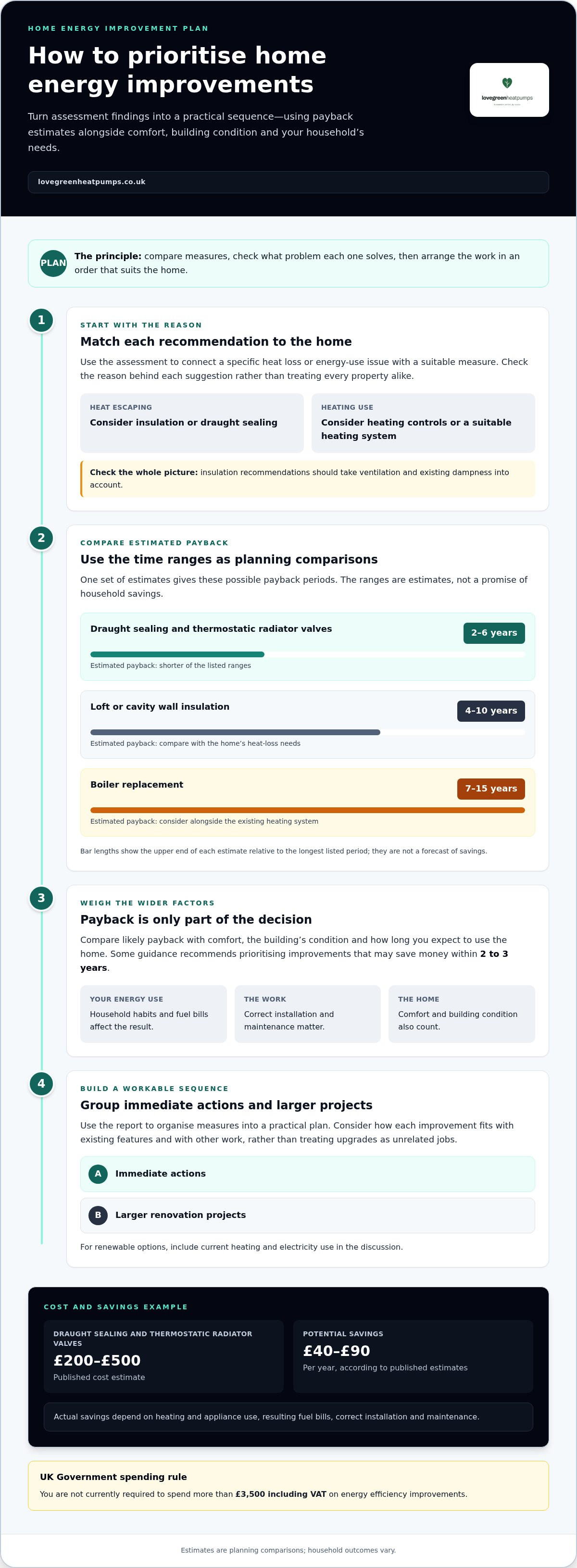
A plan can group measures into immediate actions and larger projects, helping you organise installation in a sensible order. For renewable options, consider how the home uses electricity and heat. Exploring solar PV and renewable options can form part of that wider discussion, alongside the recommendations in your report.
Prioritising improvements by payback
Payback estimates compare an improvement’s upfront cost with potential energy savings. One set of estimates suggests draught sealing and thermostatic radiator valves may pay back in 2 to 6 years; loft or cavity wall insulation, in 4 to 10 years. Boiler replacement estimates range from 7 to 15 years. Treat these periods as planning comparisons, not a promise of household savings.
Start by comparing measures with shorter estimated paybacks, then consider comfort, building condition and how long you expect to use the home. Some guidance recommends prioritising improvements that may save money within 2 to 3 years. Your energy use, fuel bills and how well work is installed all affect the result.
Improvement costs and savings
Published estimates place draught sealing and thermostatic radiator valves at £200 to £500, with potential savings of £40 to £90 annually.
These figures help compare measures, but savings depend on heating and appliance use, resulting fuel bills, correct installation and maintenance. According to the UK Government, you are not currently required to spend more than £3,500 (including VAT) on energy efficiency improvements.
Financial support varies with location and circumstances. Households may be assessed for the Great British Insulation Scheme, ECO 4 Grants or the ECO Flex Scheme. In Scotland, Home Energy Scotland advises treating online recommendations as an initial indication and seeking expert advice before investing. Its estimates assume heating levels stay the same after improvements, so compare any projected savings with your own household’s habits.
On-site assessment and energy performance calculations
An on-site assessment combines observations about the property with details about its construction and energy use. The assessor uses these findings to evaluate performance and identify areas that may need closer attention.
Insulation, draughts and openings
The inspection considers the home’s insulation, including what is present in the loft and walls. At windows and doors, the assessor looks for gaps, worn seals and signs of draughts. These details can explain why one room feels colder than another, even when the heating is on.
Tell the assessor about rooms that lose warmth quickly or feel uncomfortable. A draught near a door, for example, points to a different issue from heat escaping through an uninsulated roof. The assessment can also note condensation or dampness, since retrofit work needs to account for how the property manages moisture and ventilation.
The assessment considers heating, hot water and lighting alongside the building fabric. The assessor may review the heating system and controls, how hot water is provided, and the lighting in different rooms. Together, these observations show more about energy consumption than focusing on one suspected heat leak alone.
Survey process and assessment accuracy
The time needed for a home energy audit can vary with the property and the scope of the assessment. A qualified Retrofit Assessor may spend 1 to 3 hours assessing a home and discussing energy use and household goals. The time depends on the property’s construction and the scope of the assessment, so a focused EPC visit and a broader retrofit survey may differ.
Expect a room-by-room inspection and questions about household size, usual thermostat settings and which rooms you use most. Previous energy bills can add context about consumption and heating patterns. Before the visit, note draughty areas, condensation and rooms that are hard to keep comfortable. These details connect the inspection with your everyday experience.
An EPC calculation can assess a home’s energy use using a standardised approach. A home’s energy rating is calculated using the number of Standard Assessment Procedure points assigned to the property. Construction details, insulation and installed systems inform the assessment. The certificate provides a consistent rating, while an on-site audit can add practical context about how the home is used.
Accuracy depends on the quality of the property information and what the assessor can observe. Keep details of past improvements handy, and explain any changes to heating or hot water. Air-infiltration testing can also measure changes over a period ranging from a few hours to several months, providing a more focused view of air movement than visual inspection alone.
Insulation, heating, solar panels and ventilation
An inspection considers how the home’s fabric, heating and ventilation work together. Its findings can help distinguish heat loss from issues with system controls or airflow.
Insulation, solar panels and ventilation
Insulation recommendations depend on where the home loses heat and its existing construction. The assessment may consider lofts, cavity walls and solid walls, as well as gaps around doors and windows. Improving one area alone may not resolve cold rooms if draughts or poor ventilation also affect comfort.
Ventilation matters during retrofit work because a home needs to manage moisture as well as retain warmth. A ventilation report can assess how the house handles dampness and whether minor changes may be needed. Look for recommendations that consider airflow alongside insulation, particularly if rooms show condensation or feel stuffy.
Solar panels may be considered as part of a wider review of renewable energy options. Their suitability depends on the home and its energy needs, so consider the recommendation alongside findings about insulation and heating. The assessment should explain how a proposed measure suits the property, rather than presenting solar as a stand-alone solution.
Some households may also explore funding for energy-saving work. Government support depends on location and circumstances, so consider eligibility separately from the technical question of which measures suit the home.
Heating systems and controls
Heating and hot water deserve close attention: many UK homes spend over half their energy bills on them. An inspection can consider the existing system, controls and how warmth reaches different rooms. Note whether a room stays cold while the heating is on, or whether the system is difficult to control.
Heating controls affect when warmth is delivered and which areas are heated. Reviewing the settings and existing controls can reveal practical changes to make before considering larger work. Energy Saving Trust provides guidance on using existing controls efficiently and on DIY draught-proofing. Sealing a draught around a door may reduce cold air, but it does not replace suitable ventilation.
Boilers and heat pumps are heating options that may suit different homes. The right recommendation depends on the property, its existing system and how householders use heating and hot water. Ask how a proposed change relates to the assessment findings and any planned insulation work. This helps you weigh system changes against improvements to the building fabric, rather than treating new heating as the only route to better performance.
For a practical next step, note which rooms feel cold, when you use the heating and whether any controls are hard to operate. These details help connect the assessment findings with your daily routine.
Purpose and process of a home energy audit
To arrange an audit, decide whether you need a formal energy performance certificate or broader advice on home improvements. Then gather details about your property, energy use and the changes you’re considering.
Arranging a home energy audit
Start by deciding what you want the assessment to help you work out. You may be planning insulation, considering renewable energy or trying to understand high energy bills. Share the property type, known improvements and any persistent comfort issues when arranging the visit. This helps focus the assessment on relevant measures rather than general suggestions.
An energy performance certificate provides a rating and recommendations, whilst an audit can help explore practical improvement choices. If you need a formal certificate, arrange an EPC assessment. If your priority is planning a retrofit, describe the work under consideration so the assessment can address how proposed measures relate to the home.
Agree what the assessment will cover and what information to prepare. Previous energy bills can show consumption patterns, while records of insulation or heating changes provide useful context. Note whether your main aim is comfort, lower energy use or renovation planning. Clear priorities make the findings easier to apply.
Preparing for the assessment
Before the visit, make a short list of specific issues: a draughty hallway, a cold bedroom or condensation around a window. Include the rooms you use most and when they feel uncomfortable. These examples connect the property’s condition with your household’s daily routine, rather than relying on broad assumptions about typical energy use.
Gather recent energy bills and details of changes such as added insulation, replacement windows or heating controls. You don’t need to calculate your own energy rating. Accurate information helps the assessor understand the home’s current condition and tailor the discussion to your plans. Keep your questions together, especially if you’re weighing several possible measures.
During the assessment, describe how you use heating and hot water, including which rooms stay warm or cool. The assessor can compare your experience with the property’s features and explain the reasoning behind recommendations. Ask how each suggested measure addresses a particular issue and whether it depends on other planned work.
Afterwards, use the report to guide your decisions. Separate immediate actions, such as addressing a draught, from larger renovation plans. Compare recommendations with your priorities and consider how the measures fit together. This helps you decide what to investigate first and whether a formal certificate or broader retrofit advice better supports your next step.
Love Green Heat Pumps: Heat Pump Installation
Love Green Heat Pumps Ltd can help turn your assessment findings into practical next steps. If the report points towards a different heating system, its heat pump installation service may suit your plans. You can also discuss air conditioning, solar PV and other renewables, or heating engineering in relation to your property’s needs.
An assessment gives you useful context, but choosing upgrades means considering the home’s existing systems, insulation and energy use together. Share the relevant findings when discussing your options, so the next step reflects the improvements you’re considering.
For a straightforward discussion about a suitable next step for your home, contact Love Green Heat Pumps Ltd.
Choose a practical next step for your home
Use your home energy performance audit as a starting point for decisions that suit your life at home. You don’t need to plan every improvement at once. Start with the issue that matters most, whether it’s uneven warmth, a heating system you’re ready to replace or exploring renewable electricity. A clear priority makes it easier to turn findings into a considered home improvement plan.
Love Green Heat Pumps Ltd offers heat pump installation, air conditioning, and solar PV and other renewables. These services may be relevant if your next step involves changing how your home is heated, cooled or supplied with renewable energy. Consider how each option relates to your assessment and wider plans before deciding what to pursue.
If you’re ready to discuss a suitable next step for your home, contact Love Green Heat Pumps Ltd. A straightforward conversation can help you explore your options and decide how to take your plans forward with confidence.
Frequently Asked Questions
What is energy auditing?
Energy auditing is a structured review of how a building uses energy and where it may be wasted. For a household, this can mean examining heating patterns, insulation, ventilation and energy bills together. The aim is to identify practical measures suited to the property, not simply list equipment to replace. For example, a cold room could be linked to a draught, insulation or heating controls.
Can I get help with costs?
Financial support for energy improvements depends on where you live and your circumstances. Households may be assessed for schemes such as the Great British Insulation Scheme, ECO 4 Grants or the ECO Flex Scheme. Support may relate to eligible improvements, rather than every part of a project. Before planning work, identify the measures recommended for your home and find out whether your household and property meet the relevant scheme criteria.
Not sure where to start?
Begin with the issue that affects daily comfort most, such as a persistently cold bedroom or a heating system that is difficult to control. Note when and where the problem occurs, then gather recent energy bills and records of previous work. If you need an EPC, search the certificate register for your nation. The GOV.UK certificate service covers England, Wales and Northern Ireland, while Scottish properties use a separate service.
What is an energy assessment?
An energy assessment reviews a property’s energy performance and the factors that shape it. It can consider building features, heating and household energy use to identify possible improvements. The term can describe different levels of assessment, from an EPC visit to a broader review supporting retrofit planning. Before arranging one, decide whether you need a formal certificate, tailored improvement advice or both.
What is a home energy performance audit in the UK?
A home energy performance audit is a practical examination of a UK home’s energy use and improvement options. It connects property features with household needs, such as a cold living room or high heating use. Unlike a certificate designed to provide a standard rating, an audit can focus on the decisions you’re weighing, such as whether to improve insulation before changing the heating system.
What does a home energy audit include?
A home energy audit can include a room-by-room review, questions about household routines and an examination of building features and heating systems. The assessor may ask about household size, usual thermostat settings and the rooms used most often. Previous bills add context about energy use. Prepare examples such as a draughty entrance or condensation near a window, so the discussion can address specific issues in your home.
Can I get a free or subsidised home energy assessment in the UK?
Some support schemes may help eligible households with energy-saving improvements, but availability depends on location and circumstances. This does not mean every assessment is free or subsidised. Separate the cost of advice or a certificate from funding for installed measures, and check what a scheme covers before making plans. In Scotland, Home Energy Scotland’s home energy check offers recommendations as an initial indication, not a final specification for work.
How much could home energy improvements save on UK energy bills?
Potential savings depend on the home, energy use, fuel bills and how improvements are installed and maintained. Published estimates suggest loft or cavity wall insulation could save £200 to £300 annually, while a modern condensing boiler could save £350 to £500 annually. Treat estimates as comparisons, not a household-specific forecast. Heating habits matter: using more warmth after upgrades can change the amount saved on bills.
Disclaimer
Disclaimer
The information published on this website is provided by Love Green Heat Pumps for general information and educational purposes. As a specialist provider of heating and renewable energy solutions, we strive to ensure that our content is accurate, relevant and up to date. However, heating requirements, system suitability, installation specifications, costs and performance can vary depending on individual property characteristics, usage and other site-specific factors.
Information provided in our articles should not be regarded as a substitute for a professional property assessment, technical survey or tailored recommendation. Any decisions regarding the selection, installation, replacement or maintenance of heating systems should be made with appropriate professional guidance.
Love Green Heat Pumps accepts no responsibility for decisions made solely on the basis of general information published in these articles. For advice specific to your property or project, we encourage you to contact our team for professional guidance and an assessment of your requirements.


