
The lowest-carbon option on paper may not be the right heating system for your home. Choosing a low carbon home heating system can feel difficult when claims about emissions, efficiency and running costs are mixed together. It’s natural to wonder whether a different setup will keep every room comfortable.
The right fit depends on your home, its insulation and existing heating system, as well as the practical work involved. This guide explains what low-carbon heating means and compares the main options, so you can weigh their carbon impact against potential running costs.
We’ll look at heat pumps, biomass boilers, solar thermal and electric heating, then cover the details that help shape a suitable next step. A whole-home assessment and system design can turn general interest into a practical plan. For heat pump projects, Love Green Heat Pumps Ltd assesses the property and designs a system around its needs, including heat loss and existing radiators. The aim is to find an option that makes sense for the home, not just the technology.
Key Takeaways
- See what makes a low carbon home heating system different, and how heating options compare with technologies that support hot water.
- Learn how heat pumps, direct electric heating, solar thermal and biomass work, and what to consider for comfort, space and system integration.
- Separate carbon impact from running costs when comparing heating choices. The right option depends on the home and its energy source.
- Gather details about your current heating, energy use and household comfort preferences to make a home assessment more useful.
- Understand how a planned survey and system design can turn broad interest in low-carbon heating into a practical next step.
What is a low-carbon home heating system, and what options are available?
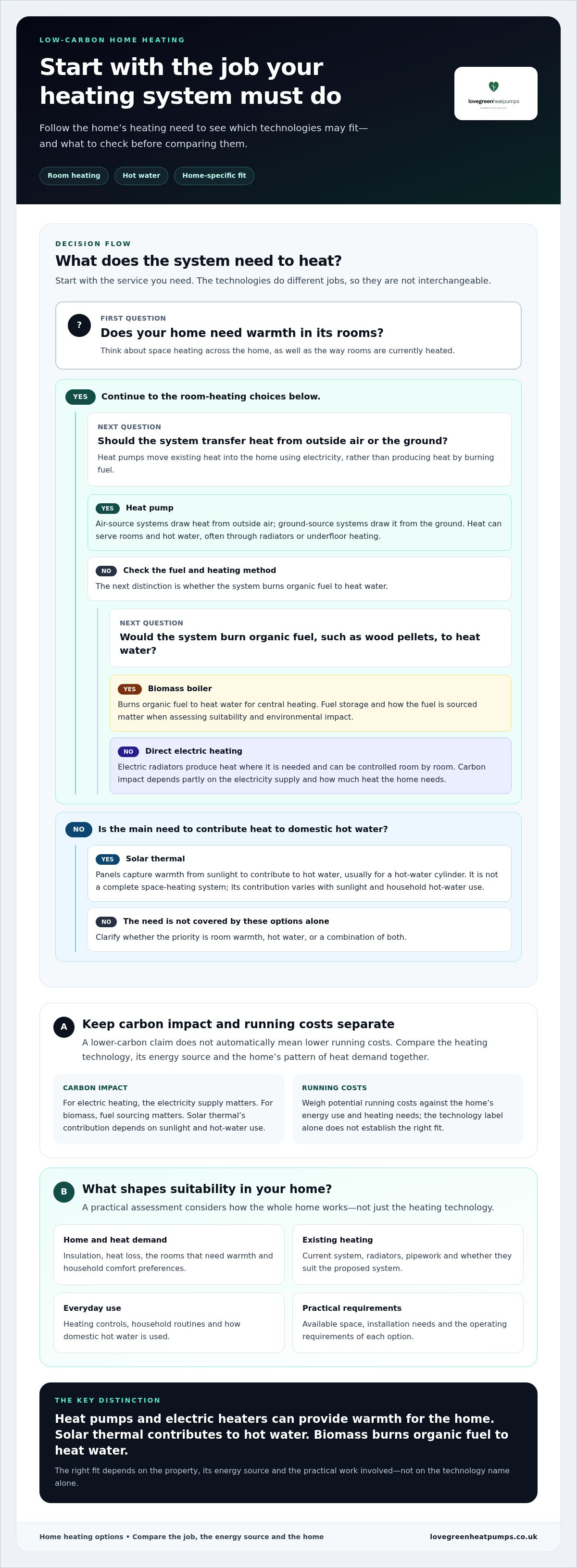
A low-carbon home heating system reduces reliance on higher-carbon fuels by using heat from the air or ground, electricity, solar energy or biomass. The term describes a system’s role and energy source, not a guarantee that heating has no emissions. A low carbon home heating system might provide warmth throughout the home, contribute to hot-water production, or work alongside another heating source.
That distinction matters when comparing options. Heat pumps and electric heaters provide heat for the home, while solar thermal contributes heat to hot water. Biomass boilers burn organic fuel to heat water for central heating. Each option has different space, installation and operating requirements, so none is automatically suitable for every property.
Which technologies count as low-carbon home heating?
Air-source and ground-source heat pumps move existing heat from the outside air or ground into the home. Rather than producing heat by burning fuel, they use electricity to transfer it. The captured heat can warm rooms and water, often through a wet central-heating system connected to radiators or underfloor heating.
Direct electric heating, such as electric radiators, uses electricity to produce heat where it is needed. It can be controlled room by room, but its overall carbon impact depends partly on the electricity supply and how much heat the home needs. Biomass systems take a different approach: they burn materials such as wood pellets to heat water. Fuel storage and how the fuel is sourced are important considerations when assessing suitability and environmental impact.
Solar thermal panels capture the sun’s heat and use it to contribute to domestic hot water. They aren’t a complete space-heating system, and their contribution varies with available sunlight and household hot-water use. A home designed to reduce heat demand, with suitable heating and insulation, can also help put these choices in context. The overview of a low-energy house describes how building design and heating technologies can work together.
How is lower-carbon heating different from renewable electricity?
A heating system and the electricity that powers it are connected, but they’re not the same thing. A heat pump is a heating system; electricity is its energy input. Direct electric heating also uses electricity, but produces heat at the point of use rather than transferring it from the air or ground. The carbon impact of either option depends partly on how that electricity is generated.
Solar PV generates electricity. That electricity may be used in the home, including to power electric heating equipment, but PV panels don’t capture heat for hot water. Solar thermal does. Renewable electricity generation, lower running costs and lower emissions are therefore separate measures, not interchangeable claims. To compare options fairly, consider the heating technology, the energy it uses and the home’s pattern of heat demand together.
How do low-carbon heating systems produce warmth and hot water?
Understanding how heat reaches your rooms can make a new system feel less unfamiliar. Heat pumps use electricity to move heat. Instead of creating warmth by burning fuel, they collect heat from outside and transfer it into the home. In a typical wet central-heating setup, heated water travels through pipework to radiators or underfloor heating.
How does a heat pump transfer heat into a home?
An air-source heat pump takes heat from the outside air, while a ground-source system draws it from the ground. Inside the unit, a refrigerant helps absorb and release heat as it circulates. The heat is raised to a useful temperature and passed into the home’s heating and hot-water system. The process is continuous, rather than a flame heating water in a boiler.
Heat transfer is the key difference. A gas or oil boiler burns fuel to heat water; a direct electric heater turns electricity into heat at the point of use. These systems deliver warmth in different ways, and the best fit depends on the property and how it’s used. A low carbon home heating system needs to be designed around the home’s heat requirements, rather than judged by its technology alone.
What role do controls, hot water, and existing heating play?
Controls help set when heating runs and how warm rooms should be, so daily routines and comfort preferences matter. System design also considers domestic hot water, not only warmth for living spaces. With a wet system, water carries heat around the home, much as it does with a boiler. Existing radiators and pipework are part of the design assessment, which establishes whether they suit the system.
Commissioning brings the installed system settings together so the heating can operate as intended. The detailed checks depend on the home and its existing setup. A properly planned system considers how the household uses hot water, which rooms need heat and how the controls will be used. The Energy Saving Trust heating advice also outlines how heating and hot-water choices fit into household energy use.
Solar thermal works differently from a heat pump or boiler. Panels capture warmth from sunlight and transfer it to water, usually to support a hot-water cylinder. It can contribute to hot-water provision, but it doesn’t generally replace the system that heats every room. The contribution varies with sunlight and household demand, so it’s best understood as one part of a home’s heating arrangements.
For a heat pump, a home-specific survey and system design can bring these practical details together, from heat delivery to hot-water needs. Love Green Heat Pumps Ltd provides heat pump projects covering survey, design, equipment supply and commissioning. Explore heat pump installation as one possible route to a heating plan shaped around your home.
How do low-carbon heating options compare for comfort and carbon impact?
Each option serves the home differently. Some can provide space heating and hot water, while others support one part of the system. Compare everyday comfort, space, integration and energy source rather than assuming one technology will suit every property.
| Option | Role and comfort | Space and integration | Energy source and carbon considerations |
|---|---|---|---|
| Heat pump | Can provide space heating and hot water across the home. Comfort depends on suitable design and how the household uses heat. | Needs a home-specific assessment. Air-source systems need outdoor space; ground-source systems need space for ground works. Can connect to a wet central-heating system. | Uses electricity to move heat from the air or ground. Its carbon impact depends partly on the electricity source and system operation. |
| Direct electric heating | Provides heat in the room where it is installed, which can suit targeted or room-by-room use. | Can be simpler to integrate where a wet system isn’t needed. How much heat the home requires is an important consideration. | Uses electricity to produce heat at the point of use. Carbon impact varies with the electricity supply and overall energy use. |
| Solar thermal | Supports domestic hot water rather than usually heating every room. | Needs suitable space for panels and a hot-water arrangement that can make use of the captured heat. | Uses solar energy for hot water. Its contribution depends on conditions and household demand; another system may still be needed for space heating. |
| Biomass | Can heat water for a wet central-heating system, providing warmth around the home. | Requires room for the boiler and fuel storage, as well as a plan for handling fuel. | Burns organic fuel. The fuel source and system operation affect its overall carbon impact. |
Suitability depends on the home and the system’s intended role, not on a technology label alone. A system that supports hot water may not replace the main heating, while a whole-home option can involve changes beyond swapping one appliance for another.
Which trade-offs should homeowners understand?
A heat pump is a heating system choice, not simply a like-for-like appliance swap. The home and existing setup need assessment so the design can meet comfort needs. Direct electric heating may be simpler in some settings, but consider how much electricity would be used to heat the rooms. Biomass is a distinct option, with fuel storage and supply to factor into the decision.
Does lower-carbon heating always mean lower bills?
No. Emissions, energy consumption and household bills are related, but they’re different measures. Carbon impact depends on the energy source and how the system operates. Consumption reflects the heat needed and the system’s performance in that home. Bills also depend on tariffs, controls, household routines and property characteristics. A low carbon home heating system isn’t automatically cheaper to run. Compare likely household usage and energy source as well as the technology, without treating lower emissions as a promise of savings.
What should you assess before choosing a low-carbon home heating system?
A suitable system starts with the home, not a shortlist of technologies. Before choosing a low carbon home heating system, build a clear picture of how your household heats its rooms and water, what the property needs and what matters most for comfort. This makes an assessment more useful and helps turn general interest into practical questions.
Work through these points in order:
- Understand the current setup. Note your heating system and fuel, how hot water is provided, and any recent changes or recurring comfort problems.
- Review home performance. Look at insulation, draughts and energy-use information. Heat loss affects the amount of warmth a system needs to provide.
- Set comfort priorities. Consider which rooms you use most, when you need warmth, and whether hot-water demand or steady heating matters most.
- Consider suitable systems. Compare options against the home’s needs, available space and existing heating arrangements, rather than relying on the property’s age or type as a shortcut.
Which home details help narrow the options?
Record the existing boiler or heating equipment, radiators or other heat emitters, hot-water cylinder arrangements and any controls you use. Note possible space for equipment, alongside household routines such as rooms used during the day and preferred heating times. Insulation and heat loss can influence system design and comfort. Two homes of a similar age may still have different needs, so avoid assumptions based on age or property type alone.
- Heating and hot water: What provides each today, and are there areas that feel difficult to heat?
- Energy use: Keep recent bills or meter information to show how the household uses energy across the year.
- Practical needs: Note available space, daily routines and any planned changes to the home or household.
How can you make an informed first assessment?
An Energy Performance Certificate (EPC) can provide useful context about a home’s energy performance and recommendations for improvement. Treat it as a starting point, not a complete heating design: it doesn’t replace an assessment of the home, its heat demand and existing system. Combine it with energy-use information and your own experience of comfort. A short list of priorities helps keep the discussion specific and grounded in everyday needs.
Before a home-specific assessment, write down what matters most:
- Consistent warmth in the rooms you use.
- Reliable hot water for household routines.
- Space available for heating equipment and any related changes.
- Future plans that could affect heating demand or how rooms are used.
These details help guide a whole-home assessment and system design. Love Green Heat Pumps Ltd provides heat pump projects from survey and design through equipment supply and commissioning, bringing the home’s needs into the plan. Explore heat pump installation as one possible low-carbon route for your home.
How can a planned heating assessment lead to the right next step?
Once you understand the options and have noted what matters in your home, the next step is to turn that information into a practical plan. A home-specific assessment connects the heating system to the property’s space, existing setup, hot-water needs and household routines. It can help show whether a heat pump is a suitable low carbon home heating system and what the project would involve.
A useful progression is straightforward: gather details about your current heating and energy use, set out your comfort priorities, then have the home and its requirements assessed. The resulting system design should respond to the property rather than assume every home needs the same solution. An EPC assessment can add context about energy performance, while solar PV may be relevant if you’re considering how the home could generate electricity. Neither is a requirement for every heating project.
What happens during a home-specific heat pump project?
Love Green Heat Pumps Ltd manages heat pump projects from survey and system design through equipment supply and commissioning. The process starts by understanding the home and how it needs to provide warmth and hot water. The system is designed around those requirements, then equipment is supplied and the completed system is commissioned. The focus is a joined-up project, not a one-size-fits-all appliance choice.
This planned approach connects the technology with everyday use. Household routines and hot-water demand are part of the brief alongside the property’s heating needs. The assessment and design bring those factors together so the proposed system has a clear purpose in the home. Technical checks and installation details depend on the property, so the project plan should reflect its actual requirements.
Keep the decision focused on the home. An EPC or interest in solar PV can inform wider energy planning, but neither should distract from the central question: what heating arrangement can suit the property and the way its occupants live? A heat pump is one possible low-carbon pathway, not an automatic answer for every home.
Where can homeowners continue learning?
As you prepare for a home-specific discussion, keep your notes on heating, hot water, energy use and comfort preferences together. You can also explore the heat pump installation guide and solar panel and heat pump installation guide for more background on those topics. The aim is to move from general research to informed questions, without needing to settle every detail in advance.
If you’re ready to discuss what a heat pump project could involve in your home, request a heat pump quote. Have your existing system details and household priorities to hand, so the conversation can start with what matters day to day.
Make your next heating decision home-specific
The most useful next step isn’t choosing a technology in isolation. It’s finding out how a low carbon home heating system could meet your household’s needs, and what a suitable project would involve. Your priorities around comfort, hot water and how you use each room can help make that discussion practical.
Love Green Heat Pumps brings HEIS-accredited expertise to heat pump projects, with work covering survey and system design through to commissioning. EPC assessments and solar PV services can also contribute to broader home energy planning where relevant. Together, these can help you consider heating in the context of the property, rather than as a standalone decision.
If you’re ready to explore what could work for your home, explore a heat pump assessment and get a free, no-obligation quote. You don’t need to have every detail decided first. Start with your home’s needs and take the next step with a clearer plan.
Frequently Asked Questions
What is a low-carbon home heating system?
A low-carbon home heating system reduces reliance on higher-carbon fuels to provide warmth or hot water. It might use a heat pump, direct electric heating or a biomass boiler; solar thermal can support hot-water provision. The system’s role and energy source both matter. For example, solar PV can supply electricity to heating equipment, but it generates electricity rather than heat itself.
Is a heat pump the only low-carbon heating option for a home?
No. Other options include direct electric heating and biomass boilers, while solar thermal can contribute to hot water. These don’t all do the same job: solar thermal usually supports one part of a home’s energy needs, whereas a heat pump can be designed for space heating and hot water. Which route makes sense depends on the property, available space and the household’s requirements.
Can solar panels heat a home directly?
Solar PV panels generate electricity, not heat. That electricity can be used by electric heating equipment, but the panels themselves don’t directly warm rooms or water. Solar thermal panels capture the sun’s heat and can contribute to hot-water provision. If you’re considering solar alongside a heating upgrade, first distinguish whether you want to generate electricity, support hot water, or address both needs.
Does a low-carbon heating system always cost less to run?
No, lower emissions don’t guarantee lower bills. Household costs depend on energy tariffs, how much heat the property needs, system design and how heating is used. A useful comparison starts with your actual energy use and current tariff, then considers how a proposed system might meet your household’s needs. Treat projected savings as estimates, not promises, and compare the assumptions behind them.
Will I need to replace my radiators when changing to a heat pump?
Not necessarily. Some existing radiators may work with a heat pump, while others might need changes to deliver the warmth required. It depends on the heat each room needs and the existing system. A home-specific design can identify whether adjustments are needed, rather than assuming every radiator must be replaced. Keep details of your current radiators and any rooms that are difficult to heat for the assessment.
Are grants available for low-carbon home heating in the UK?
Yes, schemes are available, but the support depends on where you live and whether the installation meets the scheme’s rules. In England and Wales, the Boiler Upgrade Scheme offers a standard £7,500 grant for eligible air-source and ground-source heat pumps. In Scotland, Home Energy Scotland offers a grant and optional loan package of up to £15,000. Check current terms before making financial plans, as funding and eligibility can change.
Can I keep my existing boiler when adding a low-carbon heating system?
It can be possible to combine a heat pump with an existing boiler in a hybrid arrangement. The two systems then share the heating role according to the design, rather than the boiler being removed outright. This means the home still uses a combustion-based heat source, so the arrangement isn’t the same as replacing the boiler completely. A system assessment can establish whether this approach suits the property and household.
Disclaimer
Disclaimer
The information published on this website is provided by Love Green Heat Pumps for general information and educational purposes. As a specialist provider of heating and renewable energy solutions, we strive to ensure that our content is accurate, relevant and up to date. However, heating requirements, system suitability, installation specifications, costs and performance can vary depending on individual property characteristics, usage and other site-specific factors.
Information provided in our articles should not be regarded as a substitute for a professional property assessment, technical survey or tailored recommendation. Any decisions regarding the selection, installation, replacement or maintenance of heating systems should be made with appropriate professional guidance.
Love Green Heat Pumps accepts no responsibility for decisions made solely on the basis of general information published in these articles. For advice specific to your property or project, we encourage you to contact our team for professional guidance and an assessment of your requirements.


