

Moving away from fossil fuel heating doesn’t mean giving up dependable warmth. It means changing the energy source, and heat pumps can help replace fuel-burning systems with heating powered by electricity.
It’s understandable to wonder whether that change can keep a home comfortable through a British winter. Home heating is challenging to decarbonise because it must provide reliable warmth in cold weather, and both the energy source and the way heat is produced matter.
This guide explains what fossil fuels and renewable energy mean, why changing how homes are heated takes careful thought, and how renewable electricity can support lower-carbon heating. It also compares air-source and ground-source heat pumps, explaining how each works and what can affect its suitability. The aim is to clarify the options without treating the transition as one-size-fits-all.
Key Takeaways
- Learn why oil, gas and coal remain embedded in energy systems, and what makes replacing them more complex than changing a boiler.
- Understand how fossil fuel use affects greenhouse gas emissions and air quality.
- See why renewable electricity can help reduce heating emissions, while weather-dependent generation brings practical considerations.
- Compare air-source and ground-source heat pumps, including how each uses electricity to provide heat and what installation involves.
- Explore how to consider UK financial support alongside the suitability and design of a replacement heating system.
Why are fossil fuels so hard to quit?
Fossil fuels are difficult to replace because homes, transport and electricity systems rely on established supplies and equipment. For households, the transition involves more than choosing a different boiler: the electricity supply, heating system and wider energy infrastructure all play a part.
Barriers to replacing fossil fuels
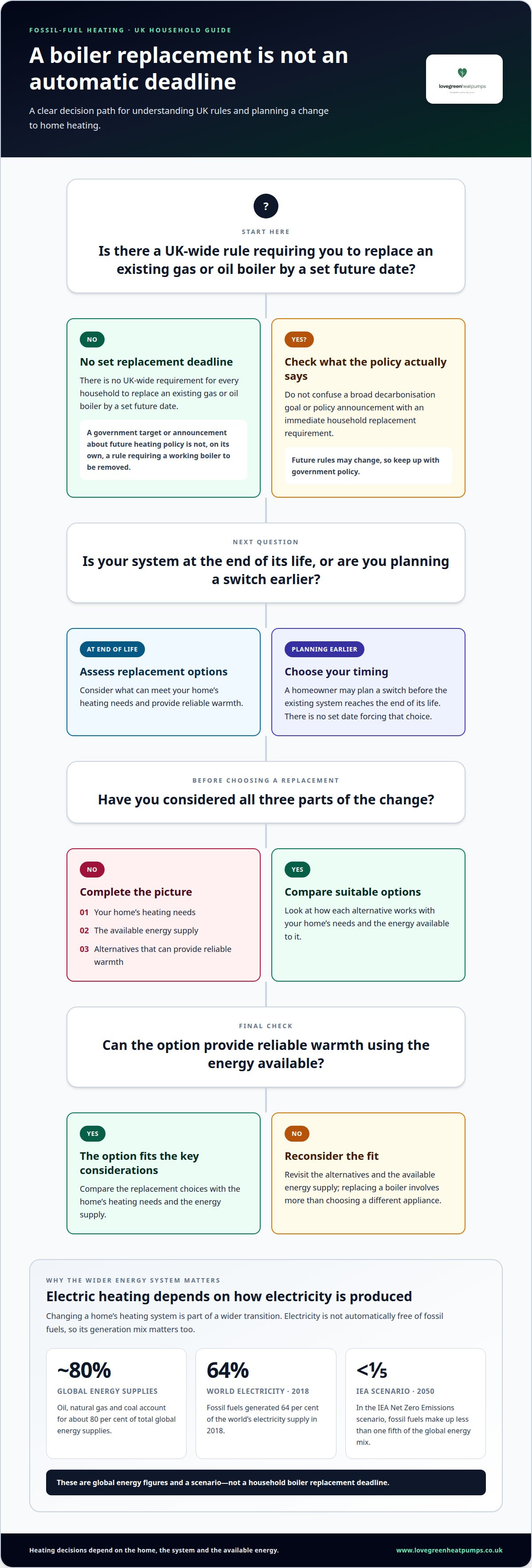
Oil, natural gas and coal account for about 80 per cent of total global energy supplies. Their existing infrastructure makes them readily available for heating, electricity generation and industry, while replacing it requires coordinated changes to equipment and energy networks.
Electricity is not automatically free of fossil fuels. In 2018, fossil fuels generated 64% of the world's electricity supply. So, the carbon effect of switching a home to electric heating depends partly on how that electricity is produced. Nuclear power can also generate electricity without burning fossil fuels, but it is a separate energy source, not renewable energy.
These connections make phasing out fossil fuels a system-wide challenge. Governments need to support changes to energy supply and infrastructure, while households need heating that works with the energy available. Replacing one fuel without considering how electricity is generated can leave part of the problem unresolved.
The transition away from fossil fuels
Moving away from fossil fuels means reducing their use over time and replacing them with lower-carbon energy sources and technologies. For a household, that could involve changing how heat is generated and using electricity from renewable sources such as wind or solar.
Renewable hydrogen and synthetic fuels are also discussed as alternatives, but neither is an instant replacement for natural gas. Their role depends on how they are produced, the energy used in production and how they are supplied to homes. A fuel made using fossil energy may still have a carbon impact, even when described as an alternative.
The scale of the wider shift is clear in the International Energy Agency’s Net Zero Emissions scenario, where fossil fuels make up less than one fifth of the global energy mix in 2050. That is a scenario, not a household deadline. It shows why the transition involves changes across energy generation, networks and end-use equipment.
UK boiler replacement rules and deadlines
There is no UK-wide requirement for every household to replace an existing gas or oil boiler by a set future date. A government target or announcement about future heating policy is not, on its own, a rule requiring homeowners to remove a working boiler.
For homeowners, the practical choice is whether to replace a system at the end of its life or plan a switch earlier. Consider the home’s heating needs, available energy supply and the alternatives that can provide reliable warmth. Keep up with government policy, as future rules may change, but don’t confuse a broad decarbonisation goal with an immediate replacement deadline.
Environmental effects
Burning coal, oil and gas releases greenhouse gas emissions that contribute to climate change. In a home, combustion takes place inside a boiler or another fuel-burning appliance. The impact goes beyond the moment fuel is used: these emissions add to the total driving changes in climate patterns. Replacing fossil-fuel heating is one part of reducing that total, alongside changes in transport, industry and electricity generation.
The effects are local as well as global. Pollution from fossil fuels can contribute to respiratory conditions, including asthma, bronchitis and emphysema, and potentially some forms of cancer. These effects are associated with pollution; they are not a prediction about any one household. Reducing pollution can therefore support both climate action and cleaner air.
The climate impacts reach beyond air quality. The IPCC says global greenhouse gas emissions must fall drastically before 2030 to keep warming well below 2 degrees Celsius and achieve climate neutrality in the second half of the century. That global assessment helps explain why action across the economy matters. Home heating is one practical area where households can consider a different way to produce warmth.
Energy policy also has environmental trade-offs. Removing subsidies for energy-intensive industries may shift production to countries with less regulation. This effect, known as carbon leakage, can increase global emissions if production moves rather than becomes cleaner. The IPCC estimates that eliminating fossil fuel subsidies could reduce greenhouse gas emissions by up to 10 per cent by 2030. The wider result depends on which subsidies are removed and what alternatives are available.
Using electricity instead of burning fuel at home changes where emissions arise, but the overall effect depends on how that electricity is generated. Renewable electricity can reduce reliance on fossil fuels, while the power system’s generation mix affects the emissions associated with electric heating. A household’s heating choice is therefore connected to wider changes in electricity generation, not just the appliance installed.
Wood is not a straightforward solution for every home either. Wood heating can have environmental effects, so its suitability depends on the wider context. This illustrates why replacing one fuel with another requires a wider environmental perspective. The source, its production and pollution during use all shape the outcome.
For households, the practical takeaway is to consider both the heating system and its energy supply. A lower-emission option should reduce reliance on fuel combustion without shifting avoidable harm elsewhere. As the IPCC’s emissions goals indicate, action is needed across the economy, and home heating is one tangible area for change.
Renewable electricity and decarbonisation
Renewable electricity can help reduce the carbon impact of home heating by replacing power generated from fossil fuels. Renewable energy comes from sources replenished naturally, including wind, solar, geothermal, ocean and hydropower. For a household using an electric heating system, the electricity’s source matters: a cleaner grid can lower emissions associated with using that system. Decarbonisation therefore involves both changing how electricity is generated and using it effectively in homes.
The global resource is substantial, but turning it into dependable electricity takes planning. The amount of solar energy reaching habitable land is more than 1,000 times the energy extracted from fossil fuels worldwide each year. That comparison describes available energy, not the amount that can be captured and delivered to homes. Panels need suitable locations, equipment and connections to the electricity network before sunlight can support household consumption.
Land use is one practical consideration. A comparison estimates that solar panels spread across almost 100 acres generate approximately 20 megawatts of energy. A nuclear power plant occupying the same space would produce five times as much energy. These figures illustrate different land-use patterns; they do not show that one source can replace every other source. A resilient electricity system can draw on several generation methods.
Wind and solar output vary with the weather. Solar generation depends on sunshine, while wind generation depends on wind conditions. This creates a balancing challenge because electricity demand continues when output from either source falls. Batteries can store renewable electricity for later use, but they can wear out quickly, and stored power can be lost if stored incorrectly. Storage is useful, but it cannot perfectly replace steady generation.
For a UK home, renewable electricity is not limited to panels on its own roof. The home draws electricity through the wider grid, where the generation mix affects the carbon impact of electric heating. Solar PV can generate electricity locally, while wind, hydropower and other sources contribute across the network. The practical result depends on generation, demand and how well supply is balanced.
Renewable electricity also matters beyond heating. As homes and other parts of the economy use more electricity, generation and network capacity need to keep pace. Decarbonisation is therefore not simply about extracting less fossil fuel; it also requires building and balancing alternatives. For households considering a heat pump, this connection helps explain why the electricity mix and heating system belong in the same conversation.
Air-source and ground-source heat pumps
Heat pumps move heat instead of producing it by burning natural gas or oil. An air-source model takes heat from outdoor air, while a ground-source model draws heat from the ground. Both use electricity and can reduce reliance on fossil fuels; their overall climate impact depends partly on how that electricity is generated. The heat source also affects the equipment and installation needed at home.
A heat pump can deliver two to three units of heat for every unit of electricity it consumes. This describes the heat moved into the home, not a guarantee of identical performance in every property. Outdoor temperature, system design and the home’s heat demand all affect operation. Unlike a heat pump, an electric-resistance heater turns electricity directly into heat rather than moving existing heat.
Air-source heat pumps collect heat from outdoor air, including in cold weather. Ground-source systems use buried pipework to collect heat from the ground. Air-source mini-split heat pumps cost considerably less than ground-source models because they avoid trenching or drilling wells. Ground-source systems need suitable land for the ground loop, while air-source systems need an appropriate outdoor position.
How does the running cost compare with a gas or oil boiler? There is no single figure: electricity and fuel tariffs, the home’s heat demand, system design and controls all affect the comparison. Consider expected electricity use alongside the boiler’s fuel consumption and the relevant unit prices.
Before installation, assess the property’s heat loss and existing radiators. Insulation upgrades can reduce heat demand, while radiator changes may be needed if existing radiators cannot provide enough warmth at the temperatures used by the new system. The work depends on the building, its insulation and heating layout; a full insulation overhaul is not automatically necessary.
Heat pumps do not need fuel stored at home in the way an oil boiler needs an oil tank. They do rely on a steady electricity supply and suitable controls. Solar PV can provide some electricity on site, although output varies with daylight and weather. Pairing solar with a heat pump can help a household use renewable energy, but the heating system still needs to be sized for the home’s cold-weather demand.
For a household moving away from fossil fuel heating, the useful comparison is not simply air versus ground. Consider the available outdoor or ground space, the property’s heat loss, radiator capacity and energy sources. These factors shape the design, installation requirements and expected running costs, and help maintain comfort through the UK heating season.
What UK grants and financial support are available for replacing fossil fuel heating?
Financial support for replacing fossil-fuel heating depends on the scheme, property and household. There is no single UK-wide eligibility test for every home. Support rules can differ between England, Scotland, Wales and Northern Ireland, so first establish where the property is located.
Grant schemes can help with eligible installation costs, but they are not automatic discounts for every household. Eligibility may depend on household circumstances, the existing heating system, property type and proposed replacement. Read the scheme’s terms before making a financial decision. Don’t assume a grant will cover every part of an installation or related home improvements.
Tenure matters too. Owner-occupiers, private tenants and social housing residents may have different routes to support and different responsibilities for approving work. If you rent, your landlord is involved in decisions about changing the heating system. If you own the home, its suitability and the proposed system remain central to planning.
Separate support for energy-efficiency improvements may also be relevant. Insulation can reduce a home’s heat demand, which may affect the heating system required. However, an insulation support programme does not necessarily provide a heat-pump grant. Check what each scheme covers, who can apply and whether measures need to be installed together.
Before relying on financial assistance, organise the decision around three points:
- Location: identify which UK nation’s scheme rules apply to the property.
- Eligibility: establish whether household and property criteria fit the scheme.
- Scope: distinguish support for heating equipment from support for insulation or other improvements.
Timing also matters. A scheme may have application conditions, funding limits or steps that must be completed before installation. Include these in the project plan rather than assuming funding can be claimed afterwards. Align the proposed heating design and any related improvement work with the requirements of the support being sought.
Financial support can change, so consult current official guidance for the relevant UK nation before committing to work. A heating engineer can explain system requirements and the work involved, but eligibility is determined by the scheme’s own conditions. Assessing the home, replacement system and available support helps you compare the project costs and decide how to proceed.
Love Green Heat Pumps: Heating Engineer
Love Green Heat Pumps Ltd can assess whether a heat pump suits your home and plan its installation. Its heat pump surveys and installation service supports households moving from fossil-fuel heating to electric heating.
A survey is useful when comparing air-source and ground-source options, considering radiator or insulation changes, or exploring how solar PV might work alongside a heat pump. Love Green Heat Pumps Ltd also provides air conditioning and other renewable energy solutions.
A well-planned system starts with the property’s heating needs, existing equipment and available space. Love Green Heat Pumps Ltd carries out a home survey and heat-loss calculation before designing and installing a system, then commissions it as part of the project.
If you’re considering a change, contact Love Green Heat Pumps Ltd to discuss your heating plans.
Make your next heating decision with confidence
Moving away from fossil fuel heating is both a home decision and an energy choice. Before taking the next step, consider what matters most in your property: reliable warmth, how well the existing system serves each room, and what changes you’re prepared to make. Clear priorities help keep the discussion focused on your home rather than a one-size-fits-all solution.
Bring those priorities to a conversation about your heating plans. Explain your current system, the comfort you want from a replacement and any practical constraints in the property. This gives the project a useful starting point and helps you understand the options for your home.
For a straightforward discussion about your plans, contact Love Green Heat Pumps Ltd. A considered next step can make the transition feel more manageable, with comfort and the needs of your home kept at the centre.
Frequently Asked Questions
What are the main alternatives to gas and oil heating in the UK?
Heat pumps and direct electric heating are alternatives to gas or oil boilers in UK homes. Air-to-water heat pumps provide heating and hot water, while air-to-air systems can heat rooms without the same hot-water arrangement. Ground-source systems draw heat from the ground. Solar PV generates electricity that can be used alongside electric heating, but it is not a heating system by itself.
How do air source and ground source heat pumps compare with gas boilers?
Air-source systems take heat from outdoor air, while ground-source systems collect it through buried pipework. A gas boiler burns fuel to heat water; a heat pump uses electricity to move heat. The home’s heat demand, system design and energy tariffs shape the running-cost comparison. Love Green Heat Pumps Ltd notes that costs are often similar to or lower than gas when a system is correctly sized and used with a suitable heat-pump electricity tariff.
How much does it cost to install a heat pump in the UK?
Installation costs depend on the property, so a generic figure would not show what your project will cost. Factors include the home’s size and heat demand, system type, radiator changes, hot-water requirements and electrical work. Love Green Heat Pumps Ltd provides a property-specific written quote after a home survey. Any eligible grant is included in the quote, but eligibility is never guaranteed.
How do I choose and find an MCS-certified heat pump installer in the UK?
Choose an installer whose design begins with a home survey and heat-loss calculation, rather than a standard package. Love Green Heat Pumps Ltd carries out installations with MCS-certified installation partners. Its process includes system design, a written quote and commissioning, with an MCS certificate included in the handover paperwork. This gives you a record of the installed system and work completed.
What are the steps for switching from a gas or oil boiler to low-carbon heating?
Start by sharing details about your property and existing heating system. The next steps are an initial assessment, home survey and system design. You then receive a property-specific quote before booking and installation. Love Green Heat Pumps Ltd completes the process with commissioning, handover and after-care. The survey identifies any changes needed, such as radiator or hot-water arrangements, before the design is finalised.
What are the disadvantages and risks of heat pumps, including noise and cold-weather performance?
Heat pumps need suitable outdoor space, careful system design and electricity to operate. Cold-weather performance depends on correct sizing and the home’s heat loss, so both are assessed before installation. Modern outdoor units are described as quiet, comparable to a fridge a few metres away. Their placement must meet permitted-development noise rules, and positioning is considered as part of the project.
Are heat pumps suitable for flats, older homes and properties without mains gas?
Older homes can often use heat pumps, with a survey identifying any improvements needed. Flats can involve additional planning considerations, and flats, listed buildings and homes in conservation areas may need planning permission. A property without mains gas can also be assessed for a heat pump: suitability depends on insulation, heat loss, outdoor space, the existing system and hot-water needs.
Disclaimer
Disclaimer
The information published on this website is provided by Love Green Heat Pumps for general information and educational purposes. As a specialist provider of heating and renewable energy solutions, we strive to ensure that our content is accurate, relevant and up to date. However, heating requirements, system suitability, installation specifications, costs and performance can vary depending on individual property characteristics, usage and other site-specific factors.
Information provided in our articles should not be regarded as a substitute for a professional property assessment, technical survey or tailored recommendation. Any decisions regarding the selection, installation, replacement or maintenance of heating systems should be made with appropriate professional guidance.
Love Green Heat Pumps accepts no responsibility for decisions made solely on the basis of general information published in these articles. For advice specific to your property or project, we encourage you to contact our team for professional guidance and an assessment of your requirements.


