

Solar panels can help run a heat pump, but they won’t usually power it alone throughout the year. Running a heat pump with solar panels in the UK means using the electricity generated on your roof when it’s available, with the grid supplying any extra power needed. An air source heat pump typically produces 3-4 kWh of heat for every 1 kWh of electricity it uses.
It makes sense to consider the two systems together: solar generation is often strongest when heating demand is lower, while colder, darker months can bring higher demand and less sunshine. That does not make the combination unsuitable. It means the right system size depends on your home, roof and energy use, rather than a simple panel-count rule.
This guide explains how solar PV and a heat pump work together, how much of the heat pump’s electricity solar may supply, and what affects the number of panels that could suit your home. You’ll also learn how roof direction, shading, storage and seasonal output shape the picture, so you can understand what a practical setup might look like.
Key Takeaways
- Match solar system size to your home’s heating demand, available roof space and electricity use, rather than relying on a standard panel count.
- Roof direction, tilt and shade from trees or nearby buildings affect how much electricity your panels can generate.
- A battery can help you use more of your solar electricity outside daylight hours, while surplus generation can be exported to the grid.
- For eligible installations, the Boiler Upgrade Scheme offers £7,500 towards the purchase and installation of a heat pump, according to the Department for Energy Security and Net Zero.
- Love Green Heat Pumps Ltd can bring heat pump installation and solar PV together in a system designed around your property.
Do solar panels work well with heat pumps?
Yes. Solar panels can supply some of the electricity a heat pump needs, reducing the amount drawn from the grid when generation and household demand overlap. Combining the systems can make practical sense, but the result depends on how much electricity the panels produce and when the heating runs. A battery can store surplus solar electricity for later use, although it adds another component to the installation.
Upfront costs cover two different installations: the heat pump system and the solar PV array. The work involved depends on the property, the heating system being replaced, the roof and the electrical setup. For example, a home needing changes to its heating distribution or electrical arrangements has different requirements from one where those elements already suit the planned equipment. A battery is an additional component, not a requirement for combining solar and heat pumps.
For eligible installations, the Boiler Upgrade Scheme offers £7,500 towards the purchase and installation of a heat pump, according to the Department for Energy Security and Net Zero. This grant can reduce the amount a household needs to fund for the heat pump installation. It does not represent a solar-panel grant, so the solar PV part of a combined project remains a separate consideration.
Tax treatment also affects the overall calculation. According to HM Revenue & Customs, 0% VAT relief on energy-saving materials remains in place until 31 March 2027. This applies to qualifying materials, rather than making every part of a project free of VAT. For a combined installation, it is useful to understand which work relates to eligible energy-saving materials and how the heat pump and solar PV elements are treated.
Savings depend on the household’s existing heating fuel, electricity use, solar generation and ability to use that electricity at home. One estimate places annual savings from installing solar panels and a heat pump together between £1,250 and £2,100. Treat this as an estimate, not a guaranteed result: a home that uses solar electricity as it is generated has a different pattern from one that exports more surplus power.
Planning permission and building regulations are separate considerations for UK solar panels and heat pumps. Whether either applies depends on the property and proposed installation, so the design and setting matter. These requirements sit alongside grant and VAT considerations, rather than forming part of the equipment cost itself.
To compare the full project, separate the heat pump installation, solar PV, any battery and related property work. Then consider any eligible grant and relevant VAT treatment against those components. This gives you a clearer view of how the combined system may suit your home, without treating an annual savings estimate as a promise for every household.
Using solar electricity to power a heat pump
A solar panel system can supply electricity directly to a heat pump when both are operating. How much it covers depends on generation, household demand and whether surplus power can be stored.
Heat pump demand and solar self-consumption
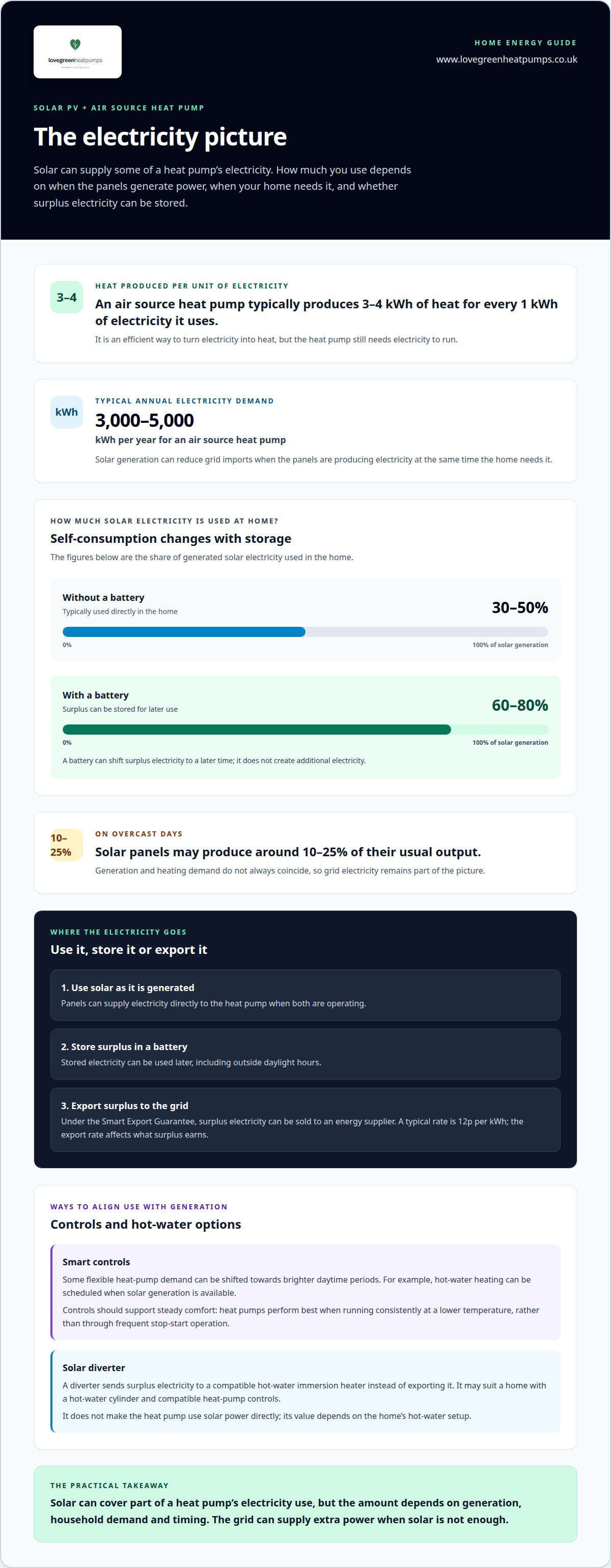
Heat pump demand is the electricity a heating system needs, while solar self-consumption is the share of generated electricity used in the home. An air source heat pump typically uses 3,000-5,000 kWh of electricity per year. Using more solar generation at home can reduce grid imports, but demand and sunshine do not always coincide.
An air source heat pump typically produces 3-4 kWh of heat for every 1 kWh of electricity it consumes. That makes it an efficient way to turn electricity into heat, but it still needs electricity to run. Solar panels generate less on overcast days, sometimes around 10-25% of their usual output, so grid electricity remains part of the picture.
Matching daytime use with solar generation
Daytime use matches solar generation when appliances or heating systems consume electricity while panels are producing it. In the UK, households typically use 30-50% of their solar electricity directly without a battery. A battery can raise self-consumption to 60-80% by storing surplus for later, although it does not create additional electricity.
Can you run a heat pump on solar electricity and export surplus power under the Smart Export Guarantee? Yes, solar electricity can power the heat pump, and surplus electricity can be sold to an energy supplier. A typical Smart Export Guarantee rate is 12p per kWh, though the export rate affects what surplus earns.
Solar diverters and smart controls
A solar diverter sends surplus electricity to a compatible hot-water immersion heater instead of exporting it. It can be useful where a home has a hot-water cylinder and the heat pump’s controls allow the two systems to work together. A diverter does not make the heat pump use solar power directly, so its value depends on the home’s hot-water setup.
Smart controls can shift some flexible heat-pump demand towards brighter daytime periods. For example, they can schedule hot-water heating when solar generation is available, while maintaining the home’s heating plan. Heat pumps perform best when running consistently at a lower temperature, so controls should support steady comfort rather than frequent stop-start operation.
For a setup that brings solar generation and heating demand together, explore solar PV systems as part of the wider home energy plan.
How air source heat pumps and solar PV work together
Solar PV generates electricity for the home, while an air source heat pump uses electricity to provide heating and hot water. Together, the systems can reduce how much power the home imports from the grid.
How solar PV supports a heat pump
Solar PV supports a heat pump by supplying some of the electricity needed to run its compressor, fans and controls. The panels feed electricity into the home’s electrical system, where the heat pump can use it alongside other household appliances. Solar generation can therefore offset part of the heat pump’s electrical demand, rather than supply heat directly.
The heat pump still operates as a heating system, drawing warmth from outdoor air and transferring it indoors. Solar panels generate electricity, not heat, so the two technologies perform separate jobs. For example, an air source heat pump can continue heating the home when solar output is low, using electricity from the grid.
Benefits of combining solar panels and heat pumps
Combining the systems gives a household another source of electricity for heating, hot water and everyday appliances. This can reduce grid electricity use when solar generation and household demand overlap. The balance changes through the year: heating demand often rises in colder weather, while solar output varies with daylight and conditions.
Solar PV can also support other home electricity needs, rather than serving only the heat pump. A battery can store some surplus generation for later use, while exporting electricity offers another route for excess output. The upfront cost covers separate equipment and installation work, so the benefit depends on how the household uses the electricity generated.
Sizing a solar system for a home with a heat pump
Solar system sizing means choosing an array that fits the property’s generation potential and electricity demand. A typical three-bedroom home in south-west England may pair an air source heat pump with a 4-6 kWp solar PV array. The suitable capacity depends on roof space, orientation, shading and how much electricity the household uses.
Eight to twelve panels may suit a typical south-west England three-bedroom home alongside an air source heat pump. Panel count alone does not determine the design: panel output, roof layout and the heat pump’s demand all matter. A solar array is sized to generate useful electricity for the home, not automatically to cover every unit the heat pump uses.
Government support can also form part of the wider decision. The Boiler Upgrade Scheme and solar PV address different parts of a combined project, so the heat pump and array need to be considered separately. A well-planned system accounts for heating needs, household electricity use and roof capacity, then brings those factors together in a practical design.
Solar panel suitability, roof orientation and shading
Roof space, orientation and shading all affect how much electricity a solar array can produce. For a home with a heat pump, insulation and heating demand also shape the overall design.
Roof orientation, tilt and shading
Roof orientation and tilt describe which way a roof faces and its slope, both of which affect sunlight exposure. A south-facing roof with a 30-50-degree tilt is recommended to maximise sunlight for solar panels. East- or west-facing roof sections can still provide useful generation, but their output pattern differs across the day.
Shading from trees, chimneys or neighbouring buildings can reduce panel output. A shadow crossing part of an array may affect its contribution even when other panels receive full sun. A clear roof area gives the system more opportunity to produce electricity, while the position and movement of nearby shade should inform the panel layout.
Roof space, materials and panel quantity
Roof space determines how many panels can fit, while the roof’s material and condition affect how the array can be mounted. As a guide, 20 panels for a 5 kW heat pump could occupy about 30 m² of roof space. That estimate helps show why panel count must be considered alongside available, unshaded roof area.
The roof layout can limit panel placement around features such as skylights, chimneys and roof edges. A typical south-west England three-bedroom home may use eight to twelve panels with an air source heat pump, but that example is not a universal design. Panel output, household electricity use and roof conditions all influence the suitable quantity.
Insulation also affects the heating demand that the system must meet. The recommended loft insulation depth is 200-300 mm, which can help improve home energy efficiency and comfort. A well-insulated home loses less heat through its roof, changing the heating load that informs heat pump design and the amount of solar electricity useful to the household.
Heat pump siting needs to be planned alongside solar roof space, even though the equipment serves a different role. A heat pump should usually be 1 metre from the property boundary. Its outdoor unit needs a suitable position at ground level, while solar panels use the roof; both locations must work with the property’s layout.
Roof suitability is not just a question of fitting panels. A sound design considers orientation, tilt, shading, roof materials, insulation and heating demand together. These factors show whether the available roof can support useful solar power and how the system should be arranged around the home.
Solar system size and panel numbers for heat pump use
Useful solar capacity is the amount a home can generate and use, not simply the number of panels. For homeowners planning a renewable upgrade, the heat pump’s demand, household electricity use and available sunlight all shape the system.
A 3-5 kW solar system can power an average UK home with a heat pump. For a home with two to three bedrooms, one example pairs a 5 kW heat pump with a 4 kW solar panel system. These figures offer a starting point, not a universal design. The heat pump’s capacity describes heating output, while solar capacity describes electricity generation.
A practical rule of thumb is four solar panels per 1 kW of system capacity. On that basis, a 4 kW array would use about 16 panels. Panel output and roof layout affect the final count, so this calculation helps homeowners understand scale rather than set a fixed specification. A larger array can generate more electricity, but only if the roof can accommodate it.
Location also changes expected generation. A 4 kWp solar array on a south-facing Devon roof is estimated to generate 4,000-4,500 kWh per year. That annual output can contribute to heating and household electricity bills, but it doesn’t mean every unit will be used by the heat pump. Demand, sunlight and generation times all shape how much solar electricity stays in the home.
What battery size works best with solar panels and a heat pump? Size the battery around the surplus electricity the panels generate and the household’s later demand. A home using more electricity after sunset needs a different storage capacity from one that uses most power during daylight. A battery shifts solar electricity for later use; it does not increase the amount the panels produce.
For a useful comparison, look at the heat pump’s electricity use alongside the solar array’s expected generation and the home’s daily pattern. Then consider whether storing surplus power suits the household’s routine. This approach helps distinguish an array sized to contribute to energy bills from one designed to cover a greater share of electricity use, including the heat pump.
Solar power can reduce reliance on grid electricity and support a lower-carbon home, but the system needs to suit the roof and heating demand. Plan a solar PV system around your heat pump’s electricity needs and the generation your home can make.
Love Green Heat Pumps: Heat Pump Installation
Love Green Heat Pumps Ltd brings heat pump installation and solar PV together for homes planning a lower-carbon heating system. This is a natural next step if you’re weighing roof capacity, heating demand and how the systems can work as one design.
The team manages installation from system design through to commissioning, considering how the heat pump and solar panels fit the property. Solar PV and other renewables can be planned alongside the heating system, while heating engineering helps address the home’s practical requirements. A free, no-obligation quote gives you a clear starting point for discussing your project.
Contact Love Green Heat Pumps Ltd to discuss heat pump installation and solar PV for your home.
Shape a home energy plan that fits
Before choosing equipment, decide what you want your system to do day to day. Is your priority lower grid imports, dependable heating through winter, or making better use of daytime generation? A clear priority helps shape how the solar array, heat pump and controls fit together. It also gives you a useful basis for planning around your home’s layout and future energy needs.
For running a heat pump with solar panels in the UK, the most useful next step is turning those priorities into a design for your property. Love Green Heat Pumps offers heat pump installation, solar PV and other renewables, and air conditioning. These options can be considered in the context of your home’s heating and energy plans, rather than as isolated upgrades.
Discuss your home energy plans with Love Green Heat Pumps. A considered design can help you move forward with greater clarity and confidence.
Frequently Asked Questions
How much could I save?
Savings depend on how much solar electricity your household uses instead of importing, alongside your previous heating fuel and electricity consumption. For example, daytime electricity use can help you make direct use of panel generation. Exporting surplus may also bring income, but that is separate from reducing energy bills. Compare your actual electricity imports and heating costs before and after installation to see how your household spending changes.
Do they work well together?
Yes. Solar panels generate electricity that a heat pump can use, helping reduce grid imports while the panels are producing power. The systems work independently, so the heat pump can still draw electricity when solar generation is low. A battery can shift stored solar power for later use, but cannot make generation match every period of heating demand. The outcome depends on your household’s electricity use and system design.
Does it make financial sense to install both?
It can make financial sense if the value of electricity used at home, exported power and relevant grant support outweighs installation and upkeep costs over time. The calculation depends on existing fuel costs, household demand, roof generation and how much surplus is exported. A battery changes the upfront investment as well as the proportion of solar electricity used later. Compare the whole system rather than assessing panel output alone.
How long do the systems last?
Solar panels typically have a life expectancy of 25 to 30 years. Heat pumps are expected to last 15-20 years, while batteries may last 10-15 years depending on usage. These different lifespans mean components may need replacing at different points. Include maintenance and eventual equipment replacement in long-term planning, rather than assuming the panels, heat pump and battery will all need attention at the same time.
How much will it cost?
The total cost depends on the property and system design. Key factors include heat demand, heat pump type, solar capacity, roof requirements, electrical work and whether battery storage is included. Love Green Heat Pumps Ltd provides a property-specific quote after a survey, rather than a generic price list. Any eligible grant support may affect the heat pump element, but eligibility is not guaranteed and must be confirmed before work begins.
What are the trade-offs?
The main trade-off is timing: solar generation changes with daylight and weather, while heating demand can be highest during darker, colder periods. A battery can store surplus electricity, but adds equipment and upfront cost. Using more solar power at home may also mean exporting less surplus. Roof space, shading and the home’s existing heating setup affect the design, so the right balance depends on household priorities.
What size solar panel system will I need?
There isn’t one system size that suits every home. The right capacity depends on household electricity consumption, heat-pump demand, roof space, orientation and shading. A household aiming to offset daytime electricity use may need a different design from one prioritising broader annual generation. Panel count alone is a poor guide: panel output and usable roof area matter, as do the times when the home consumes electricity.
How much electricity does a heat pump use in a typical UK home?
An air source heat pump typically uses 3,000-5,000 kWh of electricity per year. For running a heat pump with solar panels in the UK, compare that demand with your home’s generation and electricity use. Consumption also depends on heat loss, insulation, hot-water demand and heating controls. Reviewing these factors gives a more useful basis for planning than relying on a household average alone.
Disclaimer
Disclaimer
The information published on this website is provided by Love Green Heat Pumps for general information and educational purposes. As a specialist provider of heating and renewable energy solutions, we strive to ensure that our content is accurate, relevant and up to date. However, heating requirements, system suitability, installation specifications, costs and performance can vary depending on individual property characteristics, usage and other site-specific factors.
Information provided in our articles should not be regarded as a substitute for a professional property assessment, technical survey or tailored recommendation. Any decisions regarding the selection, installation, replacement or maintenance of heating systems should be made with appropriate professional guidance.
Love Green Heat Pumps accepts no responsibility for decisions made solely on the basis of general information published in these articles. For advice specific to your property or project, we encourage you to contact our team for professional guidance and an assessment of your requirements.


