

The heat pump with the highest headline efficiency may not deliver the best results in your home. A seasonal performance factor (SPF) shows how a system performs across a heating season, but the figure is useful only when you know what it includes and how it was measured.
SPF, COP and SCOP are easy to confuse, and an SPF figure is not a forecast of your household bills. Costs also depend on your home, energy tariff and heating habits. This guide explains what SPF measures, how it differs from other efficiency ratings, and what can affect performance, including flow temperature, insulation, system design and commissioning.
You’ll also learn why figures measured under different conditions are not always fair to compare, and what to ask an installer about the assumptions and measurement boundaries behind an estimate. That context helps you understand what expected seasonal performance could mean for your home.
Key Takeaways
- Use the seasonal performance factor to understand heat delivered against electricity used over a period, not at a single moment.
- Check how flow temperature, heat emitters, controls and household use may affect the result.
- Compare SPF, COP and SCOP only when you understand what each figure measures and the conditions behind it.
- Before relying on an SPF estimate, ask what period it covers and which heat output and electrical inputs are included.
- Look beyond one efficiency figure: a heat-loss assessment, system design and commissioning all help set realistic expectations.
What is seasonal performance factor and what does it tell you?
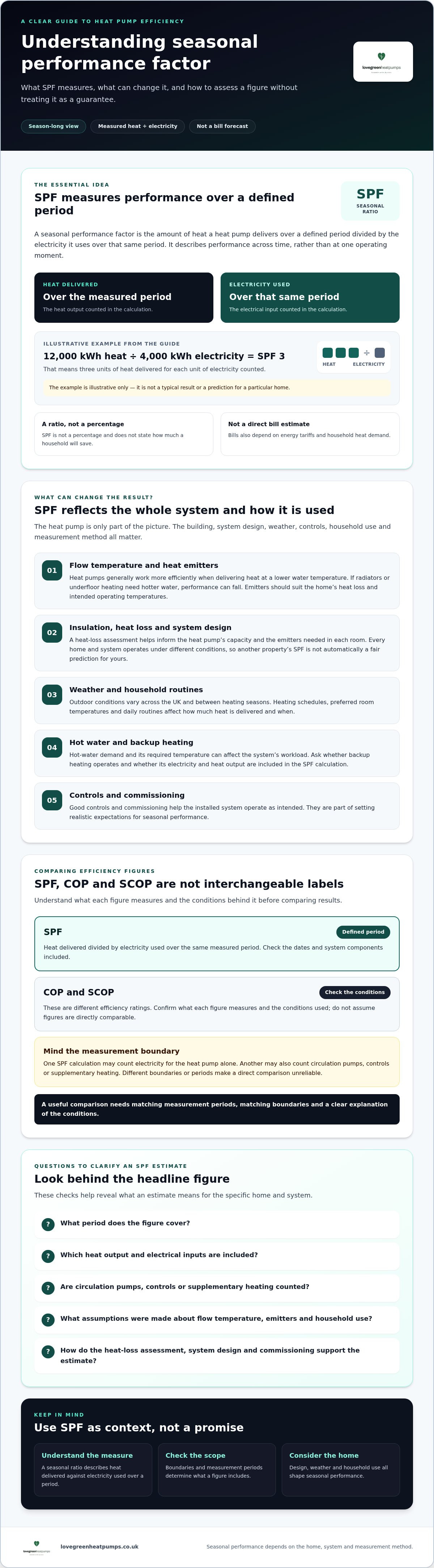
A seasonal performance factor (SPF) is the amount of heat a heat pump delivers over a defined period divided by the electricity it uses over that same period. It describes performance over time, such as a heating season, rather than at one operating moment. An SPF of 3 means three units of heat were delivered for each unit of electricity counted. It is a ratio, not a percentage or a direct forecast of household bills.
The result depends on the measurement boundary: which equipment and energy uses the calculation includes. One figure might count electricity for the heat pump alone; another might also include circulation pumps, controls or supplementary heating. These figures are not directly comparable unless their boundaries and measurement periods match.
How is a seasonal performance factor expressed?
SPF is calculated by dividing measured heat output by measured electricity input, using the same energy units for both. For example, assuming a system delivers 12,000 kilowatt-hours of heat and uses 4,000 kilowatt-hours of electricity during the measured period, its SPF is 3. These figures are illustrative, not a typical result or a prediction for a particular home.
The ratio does not show what that electricity costs, how much heat a household needs or what its bills will be. Energy tariffs and household demand matter too.
Why does seasonal performance matter to a household?
A heat pump operates through changing outdoor temperatures and changing demand for warmth. Its performance can vary as conditions change, so a result from one test point cannot describe the whole heating season. Seasonal measurement gives a broader view, provided you know which dates and system components were included.
Take care with similar terms. The North American Heating Seasonal Performance Factor (HSPF) is a separate rating, so do not assume it can be compared directly with a UK system’s SPF. Ask how any quoted figure was calculated and what it covers.
Which factors change a heat pump seasonal performance factor?
SPF reflects more than the heat pump itself. The controls, building, weather and way the system is used all play a part. The measurement method matters too. If backup heating or other electrical components are included in the calculation, they affect the result. If they are outside its boundary, the figure does not show their contribution.
SPF varies between homes because each system operates in a different building, under different conditions, and may be measured using different boundaries. A figure from one property is therefore not automatically a fair prediction for another.
How do flow temperature and system design affect SPF?
Heat pumps generally work more efficiently when they deliver heat at a lower water temperature. If radiators or underfloor heating need hotter water to warm the rooms, the heat pump has to work harder, which can reduce performance. The heat emitters need to suit the home: their size and output should match its heat loss and the system’s intended operating temperatures.
A heat-loss assessment helps inform the system design, including the heat pump’s capacity and the emitters needed in each room. Controls and commissioning matter as well, because they help the installed system operate as intended. For a closer look at the process, see this guide to heat pump installation in the UK.
How do weather and household use affect seasonal results?
Outdoor conditions vary across the UK and from one heating season to the next. Colder weather can increase the difference between the outdoor temperature and the temperature the system needs to supply indoors. Heating schedules and chosen room temperatures also influence how much heat is delivered and when.
Hot water adds another variable. Its demand and required temperature can affect the system’s workload. If backup heating operates, ask whether its electricity and heat output are included in the SPF calculation. Ofgem’s Seasonal Performance Factor (SPF) calculation resource can help clarify how a result is worked out.
There is no single household pattern to assume. Occupancy, preferred room temperatures and daily routines differ. If you are considering an installation, a properly scoped survey can help identify the design assumptions for your home, without promising a particular SPF. You can find out about heat pump installation surveys as a practical starting point.
SPF vs COP vs SCOP: which heat pump figure can you compare?
These three ratings describe efficiency in different ways. A figure is useful for comparison only when you know the conditions behind it and which equipment or energy use it includes.
| Figure | What it describes | Where you may see it |
|---|---|---|
| COP | Heat output compared with electricity input under stated operating conditions. | Product data or test results for a particular set of conditions. |
| SCOP | A standardised calculation of seasonal efficiency using defined conditions. | Product information and efficiency ratings. |
| SPF | Seasonal heat output compared with electricity input, based on a stated measurement boundary. | Monitoring results or estimates for an installed system. |
What is the difference between SPF and COP?
COP is a snapshot: it describes performance under specified conditions, such as particular temperatures. SPF considers performance across a period, when outdoor conditions and heating demand change. Think of COP as fuel use on one journey, and SPF as the average across a year of journeys. One COP result cannot predict how a system will perform in every home or throughout a whole season.
For a wider introduction to heat pump efficiency ratings, Penn State University explains how common heat pump ratings are used. Check the conditions attached to any rating before comparing it with a different figure.
Is SCOP the same as an installed system SPF?
No. SCOP is a standardised seasonal calculation commonly shown in product information. It allows products to be compared using defined test conditions, rather than measuring actual use in every home. Check the relevant test method and terminology against the applicable edition of BS EN 14825.
An installed-system SPF may be based on monitored operation and can include different components, depending on its measurement boundary. A product’s SCOP and a household’s SPF are therefore not automatically like-for-like. Ask what period, operating conditions and inputs each figure covers.
Compare like with like. Before drawing conclusions, check whether the figures use the same conditions, time period and system boundary. A clear explanation of those assumptions is more useful than a higher number without context. If you are considering a system for your home, you can ask about a heat pump survey to explore the design factors behind an estimate, without treating it as a guaranteed result.
How to assess an SPF figure without treating it as a guarantee
A quoted SPF is useful only if you can see how it was reached. It might be a design estimate, a standardised result or a measurement from a system that has been running. These figures answer different questions. Before using one to compare options, ask for the assumptions behind it and whether they reflect how your home is expected to operate.
An SPF figure needs its measurement boundary and assumptions to be meaningful. Use this checklist when reviewing an estimate or monitored result:
- 1. What kind of figure is it? Is it a design estimate, a standardised product result or a measurement from an installed system?
- 2. What period does it cover? Ask for the start and end dates, or the length of the period used in the calculation.
- 3. How is heat output counted? Clarify whether the figure covers space heating, hot water or both.
- 4. Which electrical inputs are included? Check whether the calculation counts circulation pumps, controls, immersion heating and any backup heat, as well as the heat pump itself.
- 5. What assumptions were used? Ask how the calculation treats heating demand, hot-water use, control settings and expected operating conditions.
What should you ask about the SPF calculation?
Ask for the calculation method and a plain explanation of its system boundary. If it is a monitored result, find out how heat and electricity were measured. If it is an estimate, ask which design conditions and household needs informed it. Clear answers help you understand what the figure represents and what it leaves out.
How should you use SPF when comparing heat pump options?
Compare figures only when their methods, conditions and included components are sufficiently alike. A higher number may reflect a different boundary or set of assumptions, rather than a better fit for your home. Treat projected performance as an estimate, not a guaranteed result or a precise running-cost prediction. Actual costs also depend on energy tariffs and household use.
Use SPF as one part of the decision. Consider whether the proposed design suits your home’s heat demand, preferred comfort levels and hot-water needs. Ask how those needs inform system sizing, controls and commissioning. A properly scoped survey can help establish relevant design assumptions, but it cannot promise a particular seasonal performance factor.
If you are reviewing an estimate, discuss your heat pump installation requirements with Love Green Heat Pumps Ltd and ask how the proposed system design relates to your home.
How good system design supports dependable seasonal performance
An SPF figure is useful, but it should not be the whole basis for choosing a heat pump. Good design starts with how much heat the property needs, then matches the system to that demand. Controls and commissioning help the installed system work as intended. Together, these steps support informed expectations, but they cannot guarantee a particular seasonal performance factor.
Clear design records also make an estimate easier to understand. Ask how the installer has accounted for the property, its heating needs and the system’s expected operation. A professional can explain the assumptions and uncertainties, including factors such as weather and household use that sit beyond their control.
What information helps an installer discuss expected performance?
Share useful details about the home and how you heat it. These might include the property’s layout, current heating arrangements, known insulation improvements and the temperatures you find comfortable. Mention typical hot-water needs and how the household uses heating through the day.
Then ask how the design will be explained and documented. In particular, discuss:
- How the heat-loss assessment informs the proposed system design.
- Whether existing or proposed heat emitters are suited to the required water temperatures.
- How the controls are intended to operate, and what commissioning checks will be recorded.
- Which assumptions shape any expected performance figure, and what could cause actual results to differ.
These questions help you understand the reasoning behind a proposal, not just its headline figure. A clear answer should distinguish design expectations from measured performance and avoid presenting an estimate as a certainty.
When is a heat pump survey a sensible next step?
A survey is useful when you need advice based on your own property rather than a general rating or example. It can inform whether a heat pump system is suitable and which design choices may be needed. It does not guarantee a particular SPF, because real results depend on the completed system, operating conditions and how performance is measured.
Love Green Heat Pumps Ltd’s installation process includes a home survey, system design, equipment supply and commissioning. If you are ready to discuss your property and the assumptions behind a proposed system, you can request a no-obligation heat pump quote.
Make your next heat pump decision with confidence
A seasonal performance factor is most useful when you know what it measures, which system components are included and what assumptions sit behind the figure. COP and SCOP can help with specific comparisons, but they do not automatically predict how an installed system will perform in your home.
Look beyond the rating. A heat-loss assessment, suitable system design, controls and commissioning all help shape expected performance. Clear questions about measurement boundaries and household needs can turn a headline figure into a more practical discussion, without treating an estimate as a promise about future bills or comfort.
Love Green Heat Pumps Ltd’s turnkey installation process includes a home survey, system design, equipment supply and commissioning. If you are considering a heat pump, arrange a no-obligation heat pump discussion to explore what may suit your property. A clear, home-specific conversation is a sensible next step.
Frequently Asked Questions
What is a good seasonal performance factor for a heat pump?
There is no SPF that is “good” for every home; suitability depends on the design and what the calculation includes. For context, the Boiler Upgrade Scheme’s design threshold for eligible systems is a minimum seasonal performance factor of 2.8. That is a scheme design threshold, not a promise of measured performance or a universal target. Ask what assumptions support the quoted figure.
Is seasonal performance factor the same as COP?
No. COP describes a heat pump’s performance under stated operating conditions, such as a particular set of temperatures. SPF describes performance across a defined period, using the heat delivered and electricity counted over that time. A COP result can help explain performance under its test conditions, but it does not automatically show how the system will perform throughout a heating season in your home.
What is the difference between SPF and SCOP?
SPF usually refers to the performance of a specific system over a measured or estimated period, with the result depending on the calculation’s boundaries. SCOP is a standardised seasonal calculation used in product information, based on defined test conditions. They can answer different questions, but are not automatically comparable. Check the test method, conditions and included components before using either figure to compare options.
Can a heat pump achieve the same SPF in every home?
No. Results vary with the home’s heat demand, system design, flow temperature, controls, weather and household use. Hot-water demand and backup heating can also affect a measured result, depending on what the calculation includes. Even the same heat pump model may perform differently in two properties. Look for an estimate based on your home’s requirements, and ask which operating assumptions it uses.
How is seasonal performance factor calculated?
SPF is calculated by dividing the heat delivered over a defined period by the electricity used during that same period. Both quantities need to use the same energy units. The calculation divides the recorded heat output by the recorded electricity input. Ask whether the figures include space heating, hot water, pumps, immersion heating or backup heat, as these boundaries affect the result.
Does a higher SPF always mean lower heating bills?
No. A higher SPF means more heat is delivered per unit of electricity counted, but it does not guarantee lower bills. Total costs also depend on how much heat your home needs, your electricity tariff, hot-water use and how the system is operated. Check what the SPF includes, then consider the property’s expected demand and tariff separately. Treat any running-cost projection as an estimate, not a certainty.
Can I compare the SPF figures of two heat pumps?
Yes, if the figures have been calculated on a sufficiently similar basis. Compare the same type of result, period, operating conditions and system boundary. Check whether both include the same electrical inputs and heat uses, such as hot water or backup heating. If one figure is a standardised product rating and the other is an installed-system measurement, they may not be like-for-like. Ask for the assumptions behind each.


