

What if the battery with the biggest capacity isn’t the best fit for your home? Searching for “solar battery storage installers uk” is only the first step. Installer claims can be hard to compare, and capacity figures or solar compatibility details don’t always show how a system will work day to day. It’s reasonable to want clear answers before agreeing to work.
This checklist will help you compare installers using evidence rather than headline promises. You’ll learn what a tailored proposal should explain about battery size, compatibility with your solar PV system and the work involved. We’ll also cover what to ask about installer credentials, electrical safety, grid connection, commissioning and aftercare. Before work begins, you should know what’s included, who is responsible for each step and where to turn with questions later. A clear design makes it easier to judge whether the proposed system suits your home and energy use, without needing to become an expert yourself.
Key Takeaways
- Use the same questions to compare solar battery storage installers uk, then verify relevant credentials with the scheme or register itself.
- Look beyond headline capacity: ask how the battery’s usable capacity, power and compatibility suit your solar generation and household electricity use.
- Before agreeing to work, clarify what the site survey covers, where equipment may be installed, how electrical compatibility will be checked and whether any DNO requirements apply.
- Compare written proposals side by side and check what installation, commissioning and ongoing support each one includes.
- Where practical, request more than one comparable proposal so you can make your decision using clearer evidence.
Solar battery storage installers UK: what a good installer should help you decide
A solar battery storage installer should assess your home, design a suitable project and explain how it will be delivered. When comparing solar battery storage installers uk, the useful question isn’t simply which battery has the largest capacity. It’s whether the proposed system fits your electricity use, solar generation, existing equipment and the practical limits of your property.
A home energy storage system stores electricity for later use, including electricity generated by solar panels. How well it serves your home depends on the whole design, not one specification in isolation.
What should a solar battery storage installer assess?
Ask how the installer will account for when you use electricity throughout the day and across the year. Evening demand, daytime routines and seasonal changes can all affect how much solar energy is available to store and when you might use it.
Your existing solar panels, inverter and other electrical equipment matter too. If you’re planning changes to your solar PV system, check that the proposal explains how they affect compatibility. A site-specific review should also consider possible equipment locations, access, cable routes and installation requirements. Ask what has already been checked and what still needs confirming.
Battery capacity and power: which figures matter?
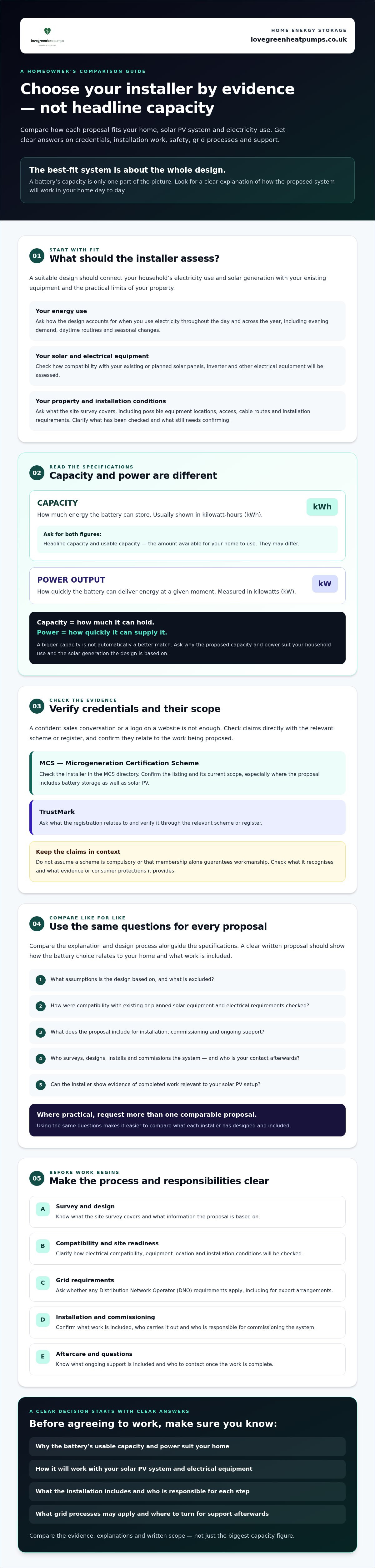
Capacity describes how much energy a battery can store, usually shown in kilowatt-hours (kWh). Usable capacity is the amount available for your home to use. It may differ from the headline capacity, so ask the installer to state both. Power output, measured in kilowatts (kW), describes how quickly the battery can deliver energy at a given moment.
Capacity tells you how much energy a battery can hold; power tells you how quickly it can supply it. A larger capacity isn’t automatically a better match. The right balance depends on your household’s energy use and the solar generation the system is designed around. Ask why the proposed figures suit your home rather than relying on a single headline number.
Compare the design process and its supporting explanation as well as the specifications. A clear proposal should connect the battery choice to your home’s electricity use, existing solar equipment and installation conditions. If the reasons aren’t clear, ask for an explanation before comparing proposals.
How to compare UK solar battery storage installers: a credentials checklist
A confident sales conversation isn’t enough when choosing solar battery storage installers uk. Check the evidence behind each claim, and make sure any qualification or scheme membership applies to the work being proposed, including solar PV and battery storage integration where relevant.
Which installer credentials and schemes should homeowners check?
Ask the installer to name the schemes they belong to and explain what each one covers. The Microgeneration Certification Scheme (MCS) provides a directory you can use to check whether an installer is listed. Confirm the listing and its current scope directly, especially if the proposal includes battery storage as well as solar PV.
TrustMark may also appear in an installer’s credentials. Ask what the registration relates to and verify it through the relevant scheme or register. A logo on a website or a general claim of accreditation doesn’t, by itself, show whether the credential covers your specific project. Don’t assume a scheme is compulsory or that membership alone guarantees workmanship. Check what the scheme says it recognises and what evidence or consumer protections it provides.
What questions reveal whether an installer is thorough?
Clear responsibilities matter. Ask who will survey and design the project, carry out the installation and commission the system, and who you can contact afterwards. If different people or organisations are involved, find out who coordinates the work and remains your point of contact.
Use this checklist when comparing proposals:
- Can you see evidence of completed work relevant to your home’s solar PV setup?
- What assumptions is the design based on, and what is excluded from the proposal?
- How has compatibility with your existing or planned solar equipment been checked?
- What MCS requirements, if any, apply to the proposed work and any export arrangements?
- Will the installer explain whether a DNO notification or connection process applies, and who is responsible for it?
Ask for answers in writing where practical. That makes it easier to compare proposals like for like and spot gaps before agreeing to proceed. If the installer can’t explain a credential, design assumption or responsibility in plain language, pause and clarify it.
If you’re planning solar PV with battery storage integration, you could also discuss the project scope with Love Green Heat Pumps’ solar PV team. Ask what the proposed design includes and which credentials apply to that specific work.
Compare solar battery installation proposals by design, compatibility and support
Once you have proposals, compare what each design is intended to do, not just the battery’s headline specifications. Solar battery storage installers uk should be able to explain how the proposed system relates to your solar generation and when your household uses electricity. If an explanation is vague, ask for more detail before deciding.
Does the battery design match the home and solar PV system?
Check that each proposal accounts for your existing solar equipment, including the inverter, and identifies any compatibility limits or changes required. The design should reflect your home’s electricity use rather than rely on a generic capacity recommendation. Ask how the system’s expected operation may vary between brighter and darker seasons, and what assumptions the explanation is based on.
To compare proposals fairly, set out these details side by side:
- Proposed capacity and usable capacity
- Power output and how it fits your household’s needs
- Compatibility with existing or planned solar PV equipment
- Included work, exclusions and who is responsible for each part
- Any stated warranty, monitoring and aftercare terms
If your system may send surplus electricity to the grid, ask installers to explain the export arrangements. Ofgem’s official Ofgem guidance covers electricity storage alongside schemes including the Smart Export Guarantee. Ask how the guidance applies to your proposed setup, and confirm relevant requirements with the installer and your energy supplier.
What should a clear proposal and aftercare plan include?
A written proposal should describe the equipment and project scope in plain language. Check that it identifies what is included, what is excluded and who is responsible for each stage. Ask what commissioning involves, what records you’ll receive and how the system will be handed over for everyday use.
Monitoring and fault support can differ between proposals. Check whether monitoring is included, how you can access it and what support is available if the system isn’t working as expected. Review warranty terms in writing, including what they cover and who you contact. Don’t assume these details are standard.
Any savings or performance forecast is an estimate, not a promise. Ask for the assumptions behind it, such as expected solar generation and household use, and how seasonal changes have been considered.
A documented design tells you how the system is meant to work in your home; a capacity figure alone can’t. Compare itemised, project-specific proposals rather than relying on generic claims or headline figures.
UK solar battery installation checklist: safety, grid processes and site readiness
Before installation day, make sure the site has been assessed and the practical steps are clear. A useful checklist helps you confirm what the installer has checked, which decisions are still open and who will handle the paperwork. For anyone comparing solar battery storage installers uk, clear answers can help avoid surprises once work is under way.
What happens during a battery installation survey?
A survey should consider the property, existing solar PV equipment and proposed battery location. The final design depends on site conditions and equipment specifications, so ask the installer to explain how these affect the plan. Raise practical questions about access, ventilation where required by the equipment, and whether the chosen location will work for everyday household use.
Before agreeing to proceed, work through these checks with your installer:
- Survey: Confirm what has been inspected, including existing solar equipment and the proposed battery location.
- Location and access: Ask why the proposed position is suitable, how the equipment will be accessed and what the manufacturer’s instructions require.
- Electrical compatibility: Check that the installer has considered your existing setup and explained any changes or limitations.
- Grid process: Ask which Distribution Network Operator (DNO) notification or connection processes apply to your project. G98 or G99 may be relevant, but ask the installer to confirm which, if either, applies to the specific installation and who will manage it.
- Export arrangements: If you expect to export surplus electricity, ask how this affects the proposed setup. Check current Smart Export Guarantee (SEG) eligibility and terms directly with the relevant supplier, as offers and requirements can vary.
- Handover: Confirm who will provide commissioning records, system instructions and any required project paperwork.
Which UK grid and export details should you confirm?
Ask the installer to explain the project’s grid connection steps in plain English, including any DNO application or notification they consider necessary. Find out who submits it, what information is needed and how you’ll be told it has been completed. Don’t assume every project follows the same process. Confirm the details for your property and proposed system before work begins.
Apply the same care to export arrangements. Ask whether the design includes exporting electricity and what you need to check with your supplier before relying on an SEG tariff. Terms and eligibility can change, so verify them directly rather than treating potential export payments as certain.
If you’re planning solar PV with battery storage integration, discuss your solar PV project with Love Green Heat Pumps and ask what the proposed scope includes.
Choosing a solar battery storage installer in the UK: your next steps
Make your decision in a clear order: assess what you want storage to do, verify each installer’s relevant credentials, compare written designs and confirm who is responsible for each part of the project. If practical, request more than one proposal. Give each installer the same information and ask the same questions, so you can compare their recommendations on equal terms.
What information should you prepare before requesting a proposal?
A little preparation helps an installer understand your home and explain the design. Gather details of your existing solar PV equipment, if you have it, along with any system documents or previous installation information available. Note when your household tends to use electricity and whether that pattern may change, for example if you’re planning a home improvement or a change in how the property is used.
It’s also useful to be clear about what you hope storage will achieve. You may want to use more of your solar generation at home, or simply find out whether a battery fits your proposed solar PV project. Share your priorities, then ask the installer to explain how the design responds to them.
Before comparing proposals, prepare questions about:
- How the proposed system is designed around your home and solar equipment.
- What installation work is included and what is excluded.
- Who will commission the system and provide handover information.
- What monitoring and ongoing support are included, if any, and on what terms.
How can a solar PV installer support a considered decision?
A solar PV installer can help by setting out the project design, equipment procurement and installation scope, then explaining the choices in practical terms. Love Green Heat Pumps provides solar PV design, procurement and installation. If you’re considering battery storage alongside solar PV, confirm during project design whether integration is suitable for your existing equipment, home and intended use, and exactly what the proposed scope covers.
Good advice should leave you able to understand the reasons behind a recommendation, not just its headline figures. Take time to review the written proposal and clarify any assumptions or responsibilities that remain unclear. The right choice is one you can assess with confidence.
If you’re considering a solar PV project, you can discuss your solar PV project with Love Green Heat Pumps. There’s no need to decide on battery integration before the design and project scope have been discussed.
Make your next step a well-informed one
Choosing among solar battery storage installers uk is easier when you look beyond headline capacity and ask for a design that reflects your home, solar equipment and electricity use. Check credentials against the relevant scheme, compare written proposals using the same criteria, and confirm who is responsible for installation, commissioning, grid processes and ongoing support.
A clear proposal should explain its assumptions and limits, including how the system is expected to work through changing seasons. Take time to ask questions and compare options where practical. You don’t need to decide on a battery before understanding how it might fit into a solar PV project.
Love Green Heat Pumps offers solar PV design, procurement and installation. Battery storage integration can be considered as part of a project-specific design, with suitability and scope confirmed during the project discussion. Discuss a solar PV project with our team and take the next step with clearer information.
Frequently Asked Questions
How do I choose a solar battery storage installer in the UK?
Compare written proposals, relevant credentials and clearly assigned responsibilities. Ask each installer how the design reflects your household’s electricity use, solar generation and existing equipment. Check scheme claims against the relevant register, then compare what’s included, such as commissioning, handover and support. If you’re researching solar battery storage installers uk, use the same questions for each company and ask for clear explanations, not just headline capacity figures.
What qualifications should a solar battery installer have in the UK?
Look for evidence of relevant electrical competence and scheme membership that covers the work proposed. Ask who will design, install and commission the system, and who will provide any required certificates or records. Check credentials directly with the issuing scheme or register, including their scope. Don’t assume a general accreditation covers battery work, or that a logo alone proves the installer is qualified for your particular project.
Is MCS certification needed for a solar battery installation?
MCS certification isn’t automatically a legal requirement for every battery installation, but it can matter if you want to access certain export arrangements, including the Smart Export Guarantee. Requirements depend on the system and supplier terms, so confirm them before proceeding. Check the installer’s current MCS listing and whether its scope covers the work proposed. Ask the installer to explain what certification and documents your project will receive.
Can I add battery storage to my existing solar panels?
Battery storage can often be considered alongside an existing solar PV system, but compatibility needs checking before you commit. The installer should review your panels, inverter and other relevant equipment, then explain any limits or changes the design may require. Share available system documents and ask whether the proposed setup can use your existing equipment. The answer depends on the specific components and conditions at your property.
How much battery storage does a UK home need?
There’s no single battery size that suits every home. A suitable design depends on when you use electricity, how much your solar panels generate, existing equipment and what you want storage to do. Ask for both the proposed and usable capacity, alongside the battery’s power output, and request a clear explanation of how these figures fit your household’s needs across different seasons. Treat generic size recommendations as a starting point, not a final design.
Do solar battery installers handle DNO notification?
Some installers manage Distribution Network Operator (DNO) communication as part of the project, but don’t assume this is included. Ask whether your specific installation requires notification or connection approval, whether G98 or G99 applies, and who will submit the relevant information. Confirm responsibility in writing and ask what records you’ll receive. The applicable process depends on the proposed system and its connection to the electricity network.
Can a solar battery store electricity from the grid as well as solar panels?
Some battery systems can be configured to charge from the grid as well as store electricity generated by solar panels, but this depends on the equipment, controls and system design. Ask the installer to confirm whether the proposed setup supports grid charging and how it would operate. If you’re considering a time-of-use tariff, check its terms with your electricity supplier and ask how the design handles charging and exporting electricity.


