

The cost of running an air source heat pump isn’t determined by the electricity rate alone. Your home’s heat demand, the system’s seasonal performance and your tariff all shape the bill, so the cost of running an air source heat pump in one home may differ considerably from another. Published estimates can provide a starting point, but they can’t account for your property or heating habits.
It’s understandable to question how a heat pump compares with your current heating system, especially when electricity costs more per unit than gas. For a fair comparison, consider how much energy each system needs to keep your home comfortable, not just the unit prices on your bill.
This guide explains the main factors behind running costs and how to make a transparent estimate using your own energy use and tariff. You’ll also find practical ways to manage costs, guidance on comparing systems like for like, and questions to ask an installer about your home’s heat demand, system design and expected efficiency.
Key Takeaways
- The cost of running an air source heat pump depends on your home’s heat demand, the system’s seasonal performance and your electricity tariff.
- Estimate electricity use by dividing the heat your home needs by the system’s seasonal performance, then apply your electricity unit rate.
- Compare a heat pump with a boiler by looking at the cost of delivering the same useful heat, not fuel prices or appliance costs alone.
- Good system design, commissioning, heat distribution and well-configured controls all influence electricity use and everyday comfort.
- Ask for a written estimate that sets out your home’s heat-demand and performance assumptions, so you can judge whether it reflects your circumstances.
What determines the cost of running an air source heat pump?
The cost of running an air source heat pump mainly reflects the electricity it uses to provide space heating and hot water, plus any relevant ongoing maintenance. Keep these costs separate from the initial installation price and any finance repayments. Your electricity standing charge usually applies whether or not you have a heat pump, so it isn’t a direct measure of the system’s consumption. Don’t count unrelated household electricity as heat pump use either.
A general estimate uses assumed heat demand, seasonal performance and an electricity rate. A household-specific calculation uses your property’s heat demand, the proposed system’s performance and your actual tariff. If your electricity meter also supplies the rest of your home, check whether the estimate isolates the heat pump’s consumption.
An air source heat pump takes heat from the outside air and transfers it indoors. For a useful technical overview, see How air source heat pumps work. Running costs depend on how much heat your home needs, how efficiently the system supplies it across the year, and what you pay for electricity.
Why two similar homes can have different heat pump bills
Floor area is only one part of the picture. Insulation, draughts, windows and other sources of heat loss affect how much warmth a home needs. Hot-water use matters as well. A larger household, frequent baths or a higher hot-water temperature can increase demand.
Daily routines and preferred indoor temperatures also make a difference. A home kept warmer for longer may need more heat than one with lower settings or different occupancy patterns. The heat pump’s headline output describes its capacity under specified conditions, not the household’s annual bill. A property survey and heat-demand calculation provide a more useful starting point.
What seasonal efficiency means for electricity use
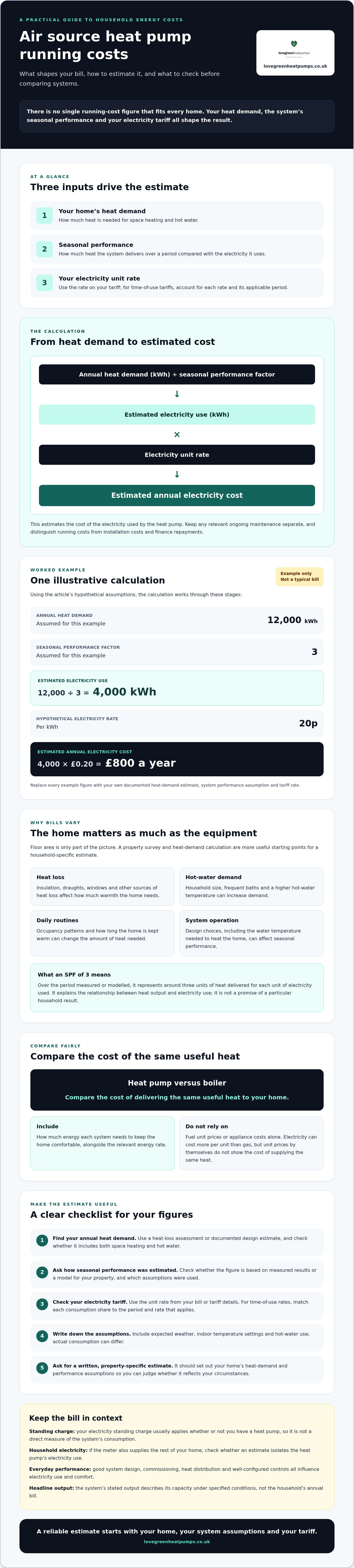
A seasonal performance factor (SPF) describes how much heat a system delivers over a period compared with the electricity it uses. For example, an SPF of 3 means around three units of heat delivered for each unit of electricity used over that period. It helps explain the relationship between heat output and electricity use, but it isn’t a promise of a particular household result.
Seasonal performance differs from a single test figure, which may reflect set conditions rather than changing outdoor temperatures and everyday operation. Ask whether an installer’s estimate is based on measured results or a model for your property, and what assumptions it uses. Design choices, including the temperature the water must reach to heat your home, can affect performance. A clear, property-specific estimate is more useful than a headline efficiency figure.
How to calculate your air source heat pump running cost
You can estimate the annual electricity cost with three inputs: the heat your property needs, the system’s seasonal performance and your electricity unit rate. To estimate annual electricity use, gather your property’s annual heat demand, the proposed system’s seasonal performance figure and your tariff’s unit rate.
Gather figures for your home and tariff
Start with a heat-loss assessment or documented design estimate. Check whether the annual heat demand includes both space heating and hot water. Ask the installer how the seasonal performance figure was modelled and which assumptions were used. Then check your bill or tariff details for the electricity unit rate. If you have a time-of-use tariff, note each rate and the period it applies to.
Use the calculation
- Divide annual heat demand by seasonal performance. This estimates the electricity needed: heat delivered (kWh) ÷ seasonal performance factor = electricity used (kWh).
- Multiply electricity use by your unit rate. This gives an estimated annual cost for that electricity.
Example only, not a typical bill: If a home’s estimated annual heat demand is 12,000 kWh and the assumed seasonal performance factor is 3, estimated electricity use is 12,000 ÷ 3 = 4,000 kWh. At a hypothetical rate of 20p per kWh, the estimated cost is 4,000 × £0.20 = £800 a year. Replace every example figure with your own documented estimate and tariff rate.
With a time-of-use tariff, split the estimated consumption across the relevant periods and multiply each share by its matching rate. The Energy Saving Trust advice on heat pumps is a useful reference alongside your own system assumptions.
Read the result as an estimate
Write down the assumptions behind your calculation, including expected weather, indoor temperature settings and hot-water use. Actual consumption can differ because weather, occupancy, controls and commissioning all affect how the system operates. A design estimate based on a property survey is more useful than a broad figure, but it still can’t guarantee your future bill.
Keep the result focused on the heat pump’s estimated electricity use. Don’t add the household’s full electricity consumption or standing charge as though either were entirely caused by heating. A standing charge is separate from the unit rate and is generally payable regardless of how much electricity the system uses.
If you’re comparing estimates, ask what heat-demand and seasonal-performance assumptions sit behind each one. You can also discuss a property-specific heat pump quote that sets out the survey and system-design basis, rather than treating a general estimate as a promise of savings.
Air source heat pump running costs versus a boiler
A fair comparison asks what each system costs to provide the same useful heat, hot water and level of comfort in the same home. Comparing electricity and gas unit prices alone can mislead because a heat pump and a boiler use their fuels differently, and both unit rates and tariffs can change. There isn’t one system that is always cheapest to run for every UK household.
For a heat pump, estimate electricity use by dividing annual heat demand by the system’s seasonal performance, then multiply by your electricity unit rate. For a boiler, divide the same useful heat demand by the boiler’s efficiency to estimate the gas it needs, then apply your gas rate. Use tariff rates relevant to your household and note when you checked them. The official government guidance on heat pumps offers further context on performance and efficiency.
Set up a like-for-like comparison
Use the same annual heat demand, indoor comfort assumptions and hot-water requirement for both systems. Your current fuel matters too. A household replacing gas will face a different comparison from one moving away from heating oil or LPG. Record the assumptions and inputs so you can see what drives the result.
| Input | Calculation basis | Caveat |
|---|---|---|
| Heat pump | Annual useful heat ÷ seasonal performance × electricity unit rate | Use the proposed system’s modelled or measured seasonal performance, not a headline figure alone. |
| Boiler | Annual useful heat ÷ boiler efficiency × gas unit rate | Use a reasonable efficiency figure for the boiler and state its source or basis. |
| Tariffs | Enter your household’s electricity and gas unit rates | Note the date checked and account for time-of-use rates where relevant. |
The result estimates energy costs for heating and hot water, not the full cost of owning either system. Keep installation, finance and maintenance separate. Any available support scheme may affect upfront installation costs, but it shouldn’t be counted as a reduction in annual energy use.
Why headline savings may not match your bills
Published comparisons rely on assumptions about fuel prices, system performance and household heat demand. Your tariff and existing heating fuel may differ, as may your indoor temperature, hot-water use and operating habits. An unsuitable design or poor commissioning can also affect actual consumption. Treat savings figures as estimates, not promises, and ask for a property-specific comparison that clearly shows its inputs.
What can lower or raise your heat pump electricity use?
The biggest gains usually start with a system designed for the home, not a quick-fix setting change. A careful survey, suitable equipment and sound commissioning help the system deliver the heat your rooms need. The heat pump installation homeowner guide covers design and installer considerations to explore before making a decision.
Check the home and heat distribution
Ask whether the heat-loss assessment reflects your property’s rooms, insulation and draughts, and whether the proposed design follows from it. Radiators or other heat emitters need to provide enough warmth at the system’s designed water temperature. Insulation improvements and draught reduction may also affect heat demand, but their impact depends on the home and shouldn’t be treated as guaranteed savings.
Review controls, tariffs and maintenance
Weather compensation adjusts heating flow temperature in response to outdoor conditions. When properly configured, it can help the system match heat output to demand. Sensible, steady controls may support comfort and efficient operation, but settings should suit the property and household. Follow the manufacturer’s guidance rather than assuming one schedule or temperature is right for everyone.
Electricity tariffs matter too. A time-of-use tariff may be worth comparing if your routine lets you use more electricity during cheaper periods. Check the rate windows, unit prices, standing charges and terms. A lower off-peak rate alone doesn’t prove that the tariff will reduce the overall cost of running an air source heat pump.
Follow the manufacturer’s maintenance guidance and ask the installer what servicing is suitable for the system, including the recommended interval. Don’t assume there is a universal schedule. Good commissioning and appropriate upkeep can help the system operate as intended, but neither guarantees a particular bill.
Before choosing an installer, ask how the survey informs system sizing, emitter suitability, controls and commissioning. A written explanation makes it easier to understand the design assumptions behind an estimate. If you’d like to discuss your property and system design, request a tailored heat pump quote.
Plan a realistic running-cost estimate before choosing an installer
A useful estimate should reflect your home, heating needs and electricity tariff, not just a generic example. Before speaking with installers, gather the information you already have. This gives you a clearer basis for comparing proposals and understanding the assumptions behind the estimated cost of running an air source heat pump.
- Property: note the floor area, insulation improvements, known draughts and any available heat-loss assessment or annual heat-demand estimate.
- Heating: record your current heating system and fuel, typical comfort preferences, household routines and hot-water use.
- Energy use: collect recent energy bills or meter information, plus your electricity tariff’s unit rate and any time-of-use periods.
- Proposed system: ask for the seasonal performance assumption, proposed heat emitters and the controls included in the design.
Questions to ask about an installer’s estimate
Ask which annual heat-demand figure and seasonal-performance assumption underpin the calculation, and how each was established. Check whether it includes domestic hot water and whether the proposed radiators or other heat emitters and controls are reflected in the design. Request the calculation method and its limitations in writing. A clear estimate shows what has been assumed rather than presenting a bill as certain.
Check that the comparison uses your tariff and says when its rates were checked. If a proposal gives one annual figure without explaining the inputs, ask for the detail before treating it as a guide to your household costs.
Prepare for a property-specific assessment
Before a survey, have recent energy information and details of your existing heating system to hand. Note any changes to the home that could affect heat demand, such as upgraded insulation or new windows. These details help the installer assess the property and explain how the design informs the estimate.
Love Green Heat Pumps Ltd provides turnkey heat pump projects, including a survey, system design, equipment supply and commissioning. A quote is an opportunity to discuss the assumptions for your property, not a promise of a particular bill or saving. If you’re ready to explore your options, request a free, no-obligation heat pump quote.
Make your next step a property-specific estimate
The cost of running an air source heat pump depends on your home’s heat demand, the system’s seasonal performance and your electricity tariff. A household estimate is more useful than a broad published figure, especially when it explains how those inputs were chosen. Compare heating systems on the cost of providing the same warmth and hot water, and keep running costs separate from installation and maintenance.
A properly surveyed and designed system gives you a clearer basis for discussing expected performance. Love Green Heat Pumps Ltd provides a turnkey service covering survey, design, equipment supply and commissioning. The company has HEIS-accredited expertise. Check the current scope of that accreditation when discussing your project.
A quote is a chance to talk through your property and the assumptions behind an estimate, not a promise of a particular bill or saving. Request a free, no-obligation heat pump quote and take the next step with a clearer understanding of what may suit your home.
Frequently Asked Questions
How much does it cost to run an air source heat pump in the UK?
Published UK estimates put annual running costs at roughly £855 to £1,700, but your bill could fall outside this range. The cost of running an air source heat pump depends on your home’s heat demand, the system’s seasonal performance and your electricity tariff. Treat national figures as a broad guide, not a household quote. For a more relevant estimate, use your property’s heat-demand figure and current unit rate.
Is an air source heat pump cheaper to run than a gas boiler?
It can be, but it isn’t always. Compare the cost of supplying the same useful heat and hot water, using your household’s electricity and gas rates and allowing for each system’s efficiency. Electricity and gas prices change, and your existing tariff, home and system design all affect the outcome. Compare energy running costs separately from installation, finance and maintenance so you don’t confuse one type of cost with another.
What affects the running cost of an air source heat pump most?
The biggest influences are how much heat your home needs, how efficiently the system supplies it across the season and the price you pay for electricity. Insulation, draughts, hot-water use and preferred indoor temperatures affect heat demand. System design, suitable heat emitters, controls and commissioning influence performance. A property-specific heat-loss assessment and clearly explained performance assumptions make an estimate more useful than the unit’s headline output alone.
Can solar panels reduce the cost of running an air source heat pump?
Solar panels may reduce the amount of grid electricity you buy if the system generates power while your heat pump needs it. The benefit depends on generation, household demand, timing and your energy tariff. A battery may change when you can use generated electricity, but it also affects the overall project. Solar panels don’t reduce the home’s heat demand, and the impact on bills depends on how the system is used.
Do air source heat pumps use more electricity in winter?
Usually, electricity use rises in colder weather because the home needs more heat, and colder outdoor conditions can affect heat pump performance. The amount varies with weather, insulation, system design and household settings. A well-designed, commissioned system should be assessed across seasonal conditions rather than judged by one cold day. Look at longer-term meter data where available, and compare it with the heat pump’s expected use and your tariff.
How can I estimate my air source heat pump electricity use?
Divide the home’s estimated annual heat demand, including hot water if applicable, by the system’s seasonal performance factor. The result estimates electricity use in kilowatt-hours. Multiply that figure by your electricity unit rate to estimate the energy cost. For example, 12,000 kWh of heat demand divided by an assumed seasonal factor of 3 gives an estimated 4,000 kWh of electricity use. Use property-specific assumptions, not this example as a forecast.
Does a heat pump running-cost estimate include maintenance?
Not necessarily. Some estimates show only the electricity used for heating and hot water, whilst others may include an allowance for relevant maintenance. Check exactly what the figure covers. Keep servicing or maintenance separate from energy use, installation costs, finance repayments, standing charges and unrelated household electricity. If comparing installer estimates, ask each one to list its inclusions and exclusions so you can compare like with like.


