

A battery doesn’t generate more solar electricity; it lets you use more of what your panels produce. Solar panel and battery package deals in the UK can help reduce electricity bills by storing daytime surplus for use later, when your home might otherwise draw power from the grid.
Look beyond the headline package price. The right setup depends on your household’s electricity use, how much solar your roof can generate and how much battery storage you need. A battery may be less useful if you use most of your solar electricity during the day.
This guide explains how battery storage can affect your bills and what shapes a package’s price. It also covers system size, battery capacity, warranties and installation, so you can compare options and see what matters when considering solar for your home.
Key Takeaways
- Assess roof direction, pitch and installation requirements to understand what may shape a suitable system.
- Consider how UK weather and your household’s electricity use affect the solar generation you can make use of.
- Match battery capacity to your needs, and compare warranty terms as well as storage size.
- Look beyond panel count when comparing on-grid packages: system size and battery options also affect what’s included.
- Use the price factors in this guide to understand why package costs vary and which system choices matter most.
Roof and installation factors affecting price
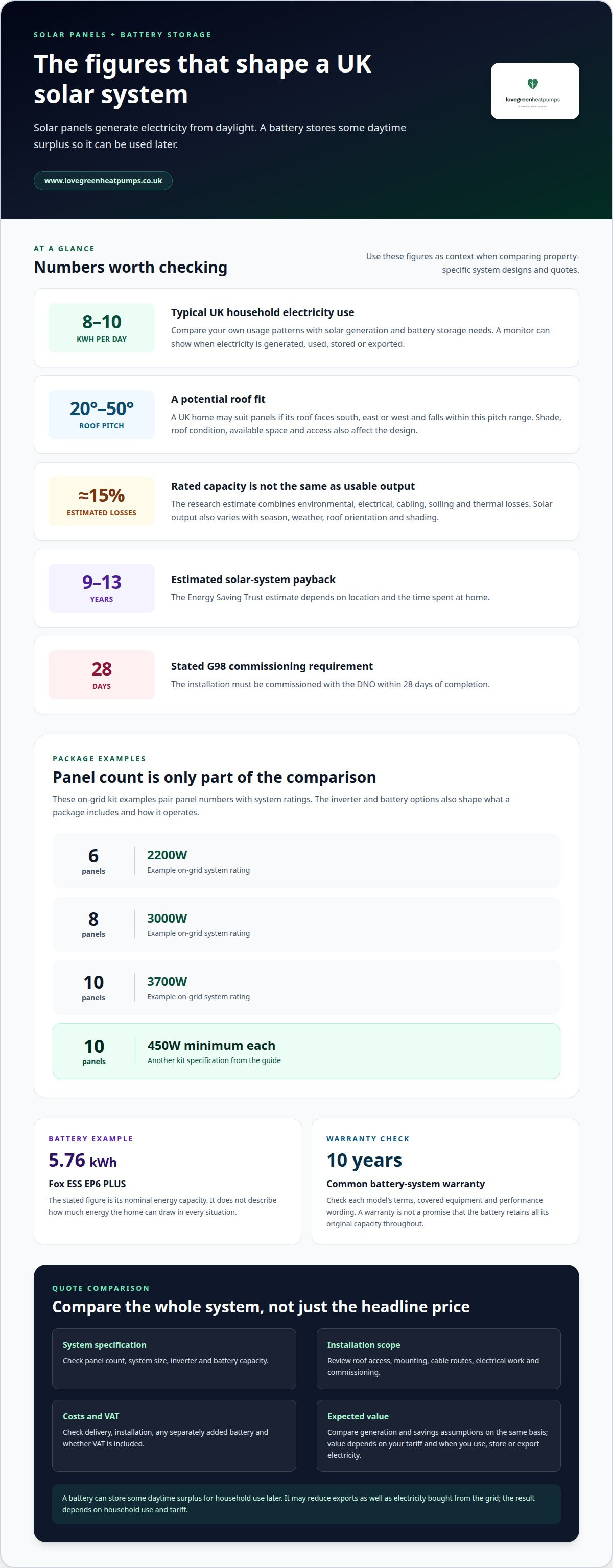
A roof’s direction, pitch and available space shape how a solar system can be designed. A UK home may suit panels if its roof faces south, east or west and has a pitch between 20° and 50°. Shade, roof condition and access also affect panel placement and the installation work required. For example, a shaded roof section may generate less electricity, so a design may use a clearer area instead.
Installation details can affect the work involved beyond the panels themselves. Roof access, mounting requirements and the route for cables between the panels, inverter and battery system all matter. The installer also needs to consider where battery storage can be positioned and how the system connects to the home’s electrical supply. Under the stated G98 commissioning requirement, the installation must be commissioned with the DNO within 28 days of completion.
To compare solar panel and battery quotes, look at the full system specification, not just the panel count: check the inverter, battery capacity, included installation work and warranty terms. Then compare estimated generation and savings assumptions on the same basis. The Energy Saving Trust estimates that a solar system can pay for itself in 9-13 years, depending on location and time spent at home.
Export tariffs and Smart Export Guarantee (SEG) payments can add value when your solar system sends surplus electricity to the grid. A battery can store some of that surplus for household use later. This may reduce exports, while also reducing the electricity you buy from the grid. The value depends on your tariff and when you generate, use, store or export electricity.
Package prices depend on factors such as roof access, system size, battery capacity and the installation work required. The cost is specific to the property and system design, so compare written, property-specific quotes. If a quote includes finance, compare the total repayment, any fees and the repayment period with the upfront cost.
VAT treatment matters when adding storage. A retrofitted battery installation may qualify for 0% VAT when it is installed for the customer. A quote should make clear whether the battery is being installed alongside new solar panels or added to an existing system, as installation scope affects the VAT position. These details help explain what is included and how the proposed system suits the property.
Is it sunny enough to have solar panels in the UK?
Yes. UK panels generate electricity from daylight, so they can produce power even when the sky is cloudy. Output changes with the season, weather, roof orientation and shading. A solar system is therefore judged by expected generation across the year, not by whether every day is sunny. The research estimate for combined environmental, electrical, cabling, soiling and thermal losses is around 15%, which helps explain why usable output differs from a panel’s rated capacity.
Panel count is one way to compare package specifications. Examples include on-grid kits with six panels for a 2200W system, eight panels for a 3000W system and ten panels for a 3700W system. Another kit specification includes ten panels rated at 450W minimum each. These examples show why a panel count alone is not enough: the system rating and inverter also shape what the package can generate and how it operates.
Solar panel and battery package prices vary with the number of panels, system size, inverter, battery capacity and whether installation is included. DIY kits and professionally installed packages cover different scopes, so compare the equipment list, mounting parts, electrical work, delivery and commissioning, not just headline prices. If a package excludes VAT, compare it with a total that clearly includes VAT and any delivery or installation charges.
Household use matters too. A UK home typically uses between 8kWh and 10kWh of electricity per day. A monitor can help show when panels are generating, how much power the home is using and whether surplus is charging the battery or being exported. Match those patterns with your electricity tariff: savings depend partly on using stored solar power instead of buying electricity later.
Before buying, look for costs or risks that may sit outside the headline package: delivery, installation, electrical work, mounting equipment, commissioning and any battery added separately. Check the warranty period and what equipment it covers; solar battery systems often come with a 10-year warranty. Battery storage also has a different working life from panels, so include possible replacement in a long-term comparison.
VAT treatment can depend on the installation arrangement. A battery retrofitted to an existing system may qualify for 0% VAT when installed for the customer, so package documentation should distinguish that work from a battery installed alongside new panels. For a property-specific system design, solar PV planning can help connect panel choices, battery storage and household use.
Battery models, warranties and storage capacity
A battery stores surplus solar output for later use, but capacity and warranty terms differ between models. A useful comparison looks beyond the headline kilowatt-hour figure.
Battery Models and Warranties
Battery specifications identify the model, nominal capacity and whether it works with the system’s inverter. For example, the Fox ESS EP6 PLUS has a nominal energy capacity of 5.76kWh. That figure helps compare models, but it doesn’t describe how much energy your home can draw in every situation.
Solar battery systems often come with a 10-year warranty. Read the terms for each model, including what the manufacturer covers and any conditions on use. A warranty is different from a promise that the battery will retain all its original capacity throughout that period. Check how warranty wording describes performance and supported equipment.
Battery models also differ in how they connect to a solar system. A hybrid inverter can manage solar generation, battery charging and household electricity flows. Compatibility is especially important when adding storage to existing panels. The specification should name the battery and inverter together, making the proposed system clear.
Storage Capacity and Energy Use
New lithium-ion solar storage batteries typically range from around 5kWh to 15kWh. Choose capacity with your daily pattern in mind: a larger battery can store more surplus, but only if the panels generate enough electricity to charge it. Consider evening use, overnight demand and whether daytime consumption leaves energy available for storage.
Storage can shift solar electricity from midday to later hours. This may reduce grid imports when panels aren’t generating, but a battery cannot create additional electricity. Its value depends on the match between solar output, household demand and the amount of energy it can store.
There are trade-offs. A battery can make more of your solar generation available at home, but storing energy means less surplus may be available for export. Charging and conversion also affect how much stored electricity reaches your appliances. Compare capacity with the system’s expected generation and your usual use, rather than choosing the largest battery by default.
Panels can last 25 years or more, so include at least one battery replacement when considering total system costs over time. Battery storage may suit homes that use more electricity after daylight hours. If most solar power is used immediately, the benefit of extra storage may be smaller. Look at the battery’s capacity, warranty and role in your energy routine together.
On-grid solar kits with battery options
An on-grid solar kit connects a home’s panels and battery to the electricity network. Panels supply renewable electricity while generating, and the battery can store surplus for later use. The grid supplies electricity when household demand exceeds available solar output. By contrast, an off-grid setup is designed to operate without a grid connection.
Kit specifications describe different system sizes and components. For example, the Fox ESS H1 G2 hybrid inverter has a rated power of 3.68kW. A hybrid inverter manages the connection between panels, battery storage and household electricity. The package design also needs suitable wiring and mounting equipment. These details affect how the system works together, not just how much panel capacity appears on its specification.
Battery expansion depends on compatibility. Adding another battery module may increase storage capacity, but the inverter and system design must support the configuration. An existing installation may need different equipment or electrical work from a new combined package. The design should state which modules are included, whether expansion is supported and how the complete system will manage charging and household use.
Finance changes how you pay for a package. If finance is offered, compare the deposit, repayment period, fees and total amount repayable with the upfront price. Review these alongside the equipment specification and installation scope. This helps you distinguish the costs of the solar kit, battery, electrical connection and installation work before signing an agreement.
VAT treatment can depend on the installation arrangement. A retrofitted battery may qualify for 0% VAT when it is installed for the customer. The written quote should distinguish a battery added to an existing solar system from one installed with new panels. That helps show how the quoted package and tax treatment relate to the work described.
Before choosing an on-grid package, compare the inverter, battery compatibility, wiring and grid connection in one complete specification. Check that the system design explains how electricity moves between panels, storage, household use and the grid. A package that supports battery expansion may suit changing needs, but extra capacity only helps if the system can charge and use it effectively. The right configuration depends on your existing equipment and intended use.
How do solar panel and battery package prices compare by system size and battery capacity?
Package prices rise or fall with the equipment and installation included, so compare like for like. A 2200W system with six panels has a different generation capacity from a 3000W system with eight panels or a 3700W system with ten. The inverter, battery, mounting equipment and installation scope also affect the total. A larger system may suit higher electricity use, but its value depends on how much of its output the household can use.
Battery capacity changes the package too. New lithium-ion solar batteries typically range from around 5kWh to 15kWh. A smaller battery stores less surplus for evening use; a larger one can hold more, provided the panels generate enough electricity to charge it. Compare capacity with your household’s usage pattern and expected solar generation, rather than assuming the largest battery delivers the best value.
This is a broad market range, not a price for a complete installed package. System costs depend on the property and specification, so compare property-specific written quotes. Key factors include system size, battery capacity, equipment, roof access and installation work.
Use the written specification to see what each package includes. Compare the system rating, panel count, inverter, battery capacity, mounting equipment and installation scope. Check whether commissioning, electrical work and any required grid connection are included. Warranty terms matter too: a lower initial price may reflect different equipment or cover, so assess the full specification and expected service life together.
- 2200W: compare the six-panel configuration and its battery option.
- 3000W: check the eight-panel system and the included storage capacity.
- 3700W: assess whether ten panels and the proposed battery match household demand.
These system examples show why panel count alone cannot settle a comparison. The same battery capacity paired with different panel ratings may have different opportunities to recharge. A package should explain how the panels, inverter and battery work together, and whether the quoted storage can be expanded. Also distinguish a supply-only kit from an installed system, as they cover different work.
To compare a system for your home, request a solar PV quote based on the property, equipment and installation requirements.
Love Green Heat Pumps: Solar PV & Other Renewables
Love Green Heat Pumps Ltd offers Solar PV & Other Renewables for households considering solar panels and battery storage. Its installation process covers system design through to commissioning, bringing equipment choices and the home’s energy needs into one plan. This is a practical next step if you’re comparing packages and want a solar PV system designed around your property, rather than choosing components in isolation.
A solar design can take account of your roof, expected generation, inverter and how battery storage may fit your household’s energy use. Love Green Heat Pumps Ltd also offers Heat Pump Installation, Air Conditioning and Heating Engineer services for related home energy needs. To discuss solar PV for your property, contact Love Green Heat Pumps Ltd.
Plan your next step with confidence
Choosing among solar panel and battery package deals in the UK is an opportunity to plan how your home uses energy over time. Consider how your needs may change: an electric vehicle, different working patterns or a change in heating can affect when your home uses electricity. A system design should suit your household now while taking those future priorities into account.
Love Green Heat Pumps Ltd can discuss Solar PV & Other Renewables alongside related home energy work. Its services also include Heat Pump Installation and Air Conditioning, which may be relevant if you’re considering wider changes to your home’s energy use. Start with a conversation about your property and what you want the system to do.
Contact Love Green Heat Pumps Ltd to discuss solar PV for your home. Take the next step when you’re ready, with a clearer idea of what matters to your household.
Frequently Asked Questions
How does a battery save me money?
A battery can reduce how much electricity you buy by storing surplus solar power for later. For example, electricity generated during the day can be used in the evening, when panels produce less. The saving depends on how much solar electricity would otherwise be exported, how much your household uses later, and your import and export tariffs. A battery shifts energy use; it doesn’t generate additional electricity.
How much can you save with solar?
A typical UK solar panel system can save households around 50-70% on electricity bills. Your result depends on the system’s generation, how much electricity you use while it is being generated, and your tariff. A household that can run appliances during sunny hours may use more solar directly. Battery storage can shift some unused generation to later, although its effect depends on household demand and system design.
Are solar panels worth it in 2026?
They can be worthwhile if the expected value of electricity used at home and exported compares favourably with the system’s total cost over time. In 2026, consider your roof’s generation potential, when your household uses electricity, tariff terms and equipment warranties. Include battery replacement in a longer-term calculation, as panels can last longer than the battery. The strongest comparison uses your household’s actual usage rather than a generic savings estimate.
Can I get help with paying for solar panels?
Support may be available for battery storage: the Warm Homes Plan includes a government-backed loan of up to £15,000 for an electrical storage battery. This is not the same as a grant for solar panels, and it does not establish eligibility for every household. Before including it in your budget, understand which work the loan covers, its repayment terms and how the battery fits the proposed system.
Is my roof suitable for solar panels?
A roof facing south, east or west, with a pitch between 20° and 50°, may be suitable for panels. Usable roof space, shading and roof condition also affect the system design. In areas such as Southwark or Greenwich, the same practical assessment applies: the roof’s orientation and surrounding buildings matter more than the postcode alone. A property-specific design can show how much of the roof can be used.
What do solar panel and battery package deals cost in the UK in 2026?
There isn’t one fixed package price for every UK home. The total depends on panel and system size, battery capacity, equipment, roof access and the installation work required. A supply-only kit and a professionally installed package also cover different things. For an accurate comparison, use written specifications that set out the equipment and work included, then compare the same scope across quotes.
What is included in a typical UK solar panel and battery package?
A package may combine solar panels, an inverter, battery storage, mounting equipment and the work needed to install and connect the system. The exact scope varies. Some offers cover equipment only, while others include installation and commissioning. Look for the named components, battery capacity, warranty terms and any excluded work in the specification. This helps distinguish a complete system from a kit that requires further purchases.
Which UK solar and battery installers offer the best package deals and warranties?
There’s no single best package for every home. Compare each proposed system, installation scope and written warranty terms, including which components are covered and for how long. Love Green Heat Pumps Ltd offers Solar PV & Other Renewables across its local service area, including in London boroughs such as Lewisham and Greenwich. The right system depends on how well it suits your roof and household electricity use.
Disclaimer
Disclaimer
The information published on this website is provided by Love Green Heat Pumps for general information and educational purposes. As a specialist provider of heating and renewable energy solutions, we strive to ensure that our content is accurate, relevant and up to date. However, heating requirements, system suitability, installation specifications, costs and performance can vary depending on individual property characteristics, usage and other site-specific factors.
Information provided in our articles should not be regarded as a substitute for a professional property assessment, technical survey or tailored recommendation. Any decisions regarding the selection, installation, replacement or maintenance of heating systems should be made with appropriate professional guidance.
Love Green Heat Pumps accepts no responsibility for decisions made solely on the basis of general information published in these articles. For advice specific to your property or project, we encourage you to contact our team for professional guidance and an assessment of your requirements.


