

What if the right solar system starts with your household’s energy use, not the number of panels that fit on your roof? Choosing domestic solar panel installers uk can feel difficult when you’re unsure how roof direction, shading or battery storage will affect the design.
Those are sensible questions. A suitable proposal should explain how the system fits your home and needs, not simply give you a panel count. You’ll also want a clear picture of each stage, from the initial survey and design to installation and commissioning, and what paperwork is involved.
This guide explains what to look for in a solar proposal, how roof characteristics and battery choices shape a system, and what to expect during the project. Love Green Heat Pumps Ltd provides a tailored, turnkey solar PV service, bringing design, procurement and installation together. By the end, you’ll have a clearer basis for comparing options and planning your next step.
Key Takeaways
- Assess roof characteristics, household electricity use and project priorities before settling on a system size.
- Understand how panels, an inverter, metering and optional battery storage each contribute to a home solar PV system.
- Compare domestic solar panel installers uk by looking beyond panel count to the proposed design, equipment, storage and commissioning scope.
- Follow the project stages from initial enquiry and survey through design, procurement, installation and commissioning.
- See how Love Green Heat Pumps brings solar PV design, procurement and installation together in a tailored, turnkey service.
What domestic solar panel installers in the UK assess before recommending a system
A domestic solar PV installation combines roof-mounted panels with supporting equipment to convert daylight into electricity for use in your home. The system can generate some of the electricity your household needs, with surplus potentially stored or exported. The right design depends on the property and how you use energy, not simply on how many panels can be fitted.
That’s why domestic solar panel installers uk should assess the home before recommending a system. Two houses with similar roofs may have different electricity-use patterns, shading or project priorities, so their generation and use of the electricity may differ. Panels can generate electricity in daylight, but output changes with the weather, season and site conditions. No design can promise identical results for every home.
Which roof and household factors shape solar suitability?
Roof orientation and pitch influence how sunlight reaches the panels during the day. A south-facing roof may receive strong sun around midday, whilst east- and west-facing roof areas can produce electricity at different times. These are design considerations, not a simple pass-or-fail test. Available roof area matters too: chimneys, roof windows and other obstructions can limit where panels fit.
Shading from trees, neighbouring buildings or roof features may affect generation, and the roof’s physical condition should be considered before equipment is installed. A property-specific survey brings these details together with practical site constraints. It helps inform a design based on what the roof can accommodate, rather than an assumed panel count.
Household demand matters as well. If people are home and using appliances during daylight hours, more generated electricity may be used as it is produced. If most electricity is used in the evening, storage preferences may shape the proposal. A survey and discussion of your priorities can connect the system design to everyday routines, such as when you run appliances or charge an electric vehicle.
What can solar PV do, and what should homeowners not assume?
Photovoltaic panels convert daylight into electricity. Output varies with sunlight and site conditions, so a bright summer day and a dull winter day won’t produce the same amount. For a straightforward explanation of the technology and its components, see How Solar Panels Work.
Solar generation is the electricity your panels produce; household use is the electricity your home consumes. These amounts won’t always match. Electricity generated while the home needs it can be used on-site. A battery can store some surplus for later use, subject to the system design. Any electricity not used or stored may be exported to the grid, depending on the installation and applicable arrangements.
Solar PV can contribute to a home’s electricity supply, but it shouldn’t be treated as a guarantee of fixed savings, constant output or year-round energy independence. A useful proposal explains the assumptions behind its design and considers roof conditions alongside household needs. That gives you a practical basis for weighing up the options.
How a domestic solar PV system works with your home
A solar PV system turns daylight into electricity your home can use. Panels generate direct-current electricity, which an inverter converts into alternating current for typical household circuits. Electricity is used in the home as it is generated; any surplus may be stored in a battery or exported to the grid, depending on the system design.
The components work together, but each has a distinct job. Understanding those roles makes it easier to see how a proposed system could fit your home, rather than judging it by panel count alone.
What do the main solar PV components do?
- Panels: photovoltaic cells generate direct-current electricity from daylight.
- Inverter: converts that electricity into alternating current for use by household appliances and circuits.
- Metering: records electricity flows, helping show how much power the home uses or exports.
- Monitoring: where included, a system display or interface can help you follow generation and use over time.
In practice, a kettle or washing machine running during daylight may use some of the electricity being generated at that moment. The inverter helps make the panels’ output usable within the home. Metering provides a record of electricity flows, whilst monitoring can make those patterns easier to understand. For a broader look at planning solar alongside low-carbon heating, explore this heat pump and solar installation guide.
Is battery storage necessary for a domestic solar system?
No. A battery is an option, not a requirement. It stores some surplus solar electricity for later, which may be useful if your household tends to use more power in the evening than during daylight. Without storage, electricity not used in the home at the time of generation may be exported, subject to the system and relevant arrangements.
The trade-off is that adding storage changes the system’s scope and design. Its usefulness depends on when your household generates and uses electricity, as well as your priorities for using surplus power. A household that can run appliances during sunny hours may value a different setup from one with higher evening demand. Battery capacity should therefore relate to expected use, rather than being treated as a standard addition.
Good system design brings the roof, household routines and chosen equipment together. Domestic solar panel installers uk should explain how the proposed panels, inverter, metering and any battery work as one system. Love Green Heat Pumps Ltd tailors solar PV design, procurement and installation to the home and project requirements. If you’re considering a system, a tailored solar PV quote can help turn those priorities into a practical proposal.
How to compare domestic solar panel installers and proposed designs
A useful solar proposal explains why its design suits the property, not just how many panels it includes. Compare the scope and assumptions behind each design alongside the equipment and work covered. This makes differences easier to understand and helps show whether the proposed capacity relates to the roof and household electricity use.
| What to compare | What the proposal should explain |
|---|---|
| Design assumptions | How roof characteristics, available area and household demand inform the proposed capacity and expected generation. |
| Equipment | Which panels and inverter are included, and how the system is intended to work with the home. |
| Battery storage | Whether a battery is included, what role it serves and how storage fits the household’s usage patterns. |
| Installation scope | What the installation covers, including any related work identified for the project. |
| Commissioning | What checks and handover activities are included before the system is put into use. |
What should a tailored solar installation proposal explain?
Capacity is only meaningful in context. A larger system may not be the best fit if roof space, shading or household electricity use points towards a different design. A proposal should set out the assumptions behind its capacity and generation estimates, so you can see how the figures relate to the home rather than a generic panel-count target.
A complete proposal sets out the design assumptions, system capacity, equipment, installation scope, storage choices and commissioning plan. It should distinguish estimates from guaranteed outcomes and make clear which details form part of the agreed project scope. Love Green Heat Pumps Ltd tailors solar PV projects to roof characteristics, system capacity and battery storage integration, bringing design, procurement and installation together.
How do export arrangements and network considerations fit in?
The distribution network operator, or DNO, is responsible for local electricity distribution. A solar installation may involve notification or approval steps, depending on the project and applicable procedures. Those requirements should be described for the proposed system, rather than assumed to be identical for every home.
The Smart Export Guarantee (SEG) may offer a route to payment for eligible electricity exported to the grid. Eligibility and payment terms can vary, so don’t treat export income as automatic or assume a fixed rate. Keep the projected value of exported power separate from estimates of electricity used in the home. Domestic solar panel installers uk should make the proposed export assumptions clear, along with any relevant network considerations.
Love Green Heat Pumps Ltd brings the design and installation scope together as a tailored solar PV project. For a practical starting point, you can request a solar PV installation quote shaped around your home.
What happens during a UK domestic solar panel installation?
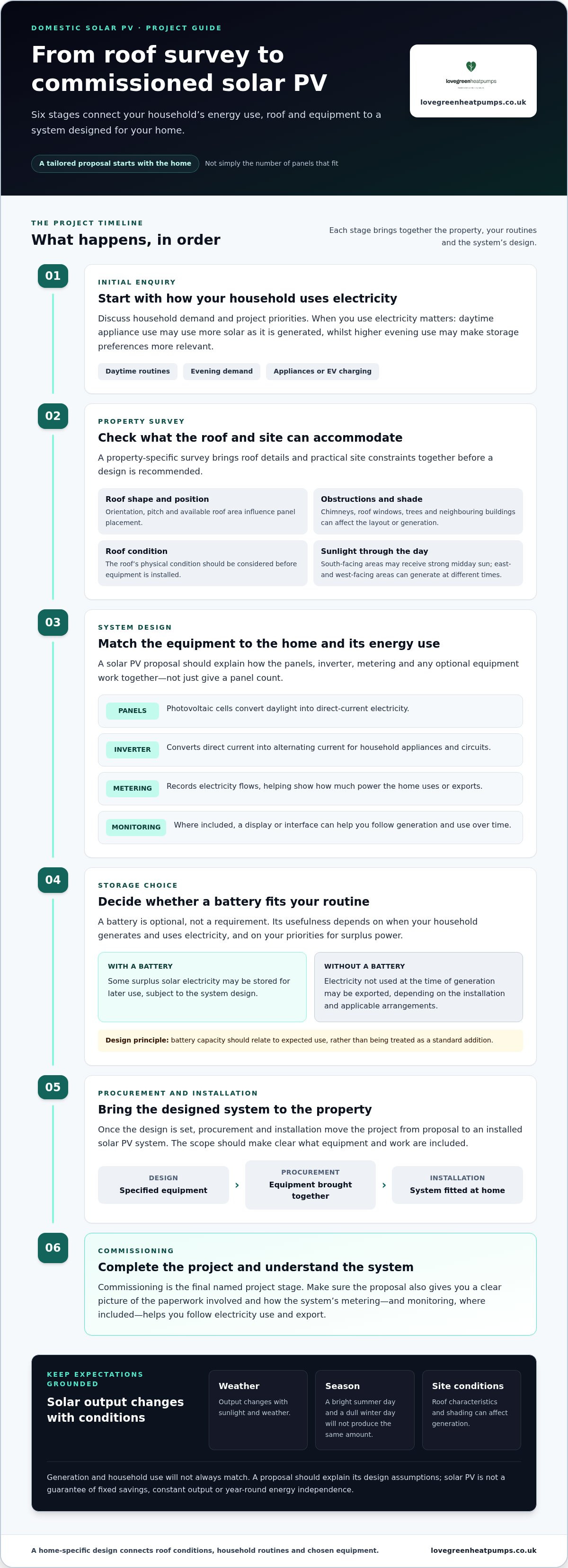
A clear project has defined stages, so you know what decisions are being made and when the installation can move ahead. The exact details depend on the property and agreed scope, but the usual journey follows a practical sequence.
- Initial enquiry: Share the basics of your home, what you hope solar will do and whether you’re considering battery storage. This gives the project a starting point, not a final design.
- Survey and project assessment: The property is assessed to understand roof characteristics, available space and other site conditions. Household requirements and priorities also inform the next steps. The survey helps identify details that may affect the system design or installation plan.
- System design and proposal: The assessment informs the proposed capacity, equipment and any storage integration. The design should set out its assumptions and explain the installation scope, so you can understand what is included before agreeing to proceed.
- Procurement and installation: Once the project scope is agreed, equipment is procured and installation follows the plan. The work involves fitting the solar equipment and connecting it as set out in the design. Any site-specific arrangements should be explained as part of the project.
- Commissioning and handover: The installed system is checked before handover. You should receive clear guidance on how to understand system operation, use any monitoring or controls, and keep relevant project documentation.
How do survey, design and installation fit together?
The survey links the home’s actual conditions to the system proposal. Roof space, physical characteristics and the project’s storage requirements can all affect equipment selection and installation planning. The design then provides a shared reference for the agreed work. This helps keep procurement and installation aligned with the proposal, rather than relying on assumptions made before the property was assessed.
Domestic solar panel installers uk should make the transition between these stages easy to follow. A change identified during assessment may affect the design or agreed scope, so clear communication helps you understand what it means before work proceeds. No two homes need identical choices, even when the overall stages are similar.
What should commissioning and handover cover?
Commissioning checks the installed system’s operation before it is handed over. A useful handover explains how to read the system’s controls or monitoring, what the available information means, and which documents relate to the installation. It should include plain-English guidance on practical essentials, such as how to see whether the system is generating electricity.
A well-managed installation keeps the design, agreed scope and handover connected. Love Green Heat Pumps Ltd provides solar PV design, procurement and installation as a turnkey service, with each project tailored to the home. If you’re ready to discuss your requirements, request a free, no-obligation quote.
Plan a domestic solar installation with Love Green Heat Pumps
A suitable solar project starts with the home and the people who live in it. Roof characteristics help shape where panels can go and what system capacity is practical. Household electricity use helps show when generated power may be useful, whilst your preferences around battery storage influence how surplus electricity could be managed. These details guide the design; you don’t need to arrive with technical calculations or a finished system plan.
Love Green Heat Pumps provides a turnkey solar PV service, bringing design, procurement and installation together. The project is tailored to the roof specifications, system capacity and storage requirements. For homeowners comparing domestic solar panel installers uk, this joined-up service makes it easier to understand the project scope and next steps.
What information helps shape an initial solar project discussion?
A few everyday details can help frame a project-specific design discussion. You might consider:
- Which roof areas you think could suit panels, and whether trees or other features cast shade.
- How your household uses electricity, including whether more power is used during the day or later in the evening.
- Whether you’re interested in battery storage, or would first like to understand a solar-only design.
- Any wider plans for the home that could affect how you want to use electricity.
You don’t need exact usage calculations to start. A recent electricity bill or a general sense of when appliances are usually used can help describe your household’s needs. The project assessment and design can then consider those priorities alongside roof conditions. A tailored proposal should explain how its recommended capacity and storage choices relate to the property, rather than expecting you to select equipment before the design is understood.
How can solar fit into wider home-energy plans?
Solar is one part of how a home uses energy. If you’re also considering changes to your heating, it can help to think about those plans together. For example, household demand may change as heating equipment or other electrical needs change. A joined-up view can help keep decisions about solar capacity and storage grounded in how you expect to use the home, without assuming one standard design suits everyone.
Love Green Heat Pumps can shape the solar PV project around your roof, system requirements and battery-storage preferences. If heating is also part of your plans, the heat pump system design and commissioning guide explains what homeowners can expect from that separate project. There’s no need to resolve every decision at once. Start with the home and the priorities that matter to you.
For a straightforward next step, request a free, no-obligation quote. It’s an opportunity to discuss a solar PV project tailored to your property, without starting with a predetermined panel count or storage choice.
Take the next step at your own pace
Your first conversation doesn’t need to settle every technical choice. Start with what matters most at home: making better use of daytime electricity, planning for future energy needs or considering whether storage could suit your routine. That gives the design discussion a practical focus and keeps decisions grounded in your priorities.
Love Green Heat Pumps supports homeowners across the UK with a turnkey solar PV service, from design and procurement through to installation. Each project is shaped around the property and its requirements, rather than a standard package. If you’re exploring domestic solar panel installers uk, a free, no-obligation quote is a straightforward way to consider what a tailored project could involve, without committing to a predetermined system.
Request a free, no-obligation solar PV quote and take the next step when it feels right for your home. A clear starting point can make the rest of the process more manageable.
Frequently Asked Questions
Is my roof suitable for domestic solar panels?
It may be, but suitability depends on the roof and how your household uses electricity. Roof area, orientation, pitch, shading and condition all matter, as do features such as roof windows or chimneys that reduce usable space. A survey can assess these details before the design is settled. If you know the roof needs repairs or changes are planned, include that in the initial discussion.
Do solar panels work on cloudy days in the UK?
Yes, panels can generate electricity from daylight on overcast days, but their output varies with light conditions. A cloudy day may still contribute to generation, whilst producing less than brighter conditions. A useful estimate should account for the property and state its assumptions. Treat projected generation as an estimate, not a promise of a fixed daily supply.
Do I need a battery with domestic solar panels?
No, a battery isn’t essential for every home. It can store some surplus solar electricity for later use, but its suitability depends on your routines and project priorities. For example, compare a panel-only option with a battery design if your home is often quiet during daylight and uses more electricity in the evening. Look at both proposals using the same household-demand assumptions, rather than assuming storage is automatically the better choice.
How long does domestic solar panel installation take?
There isn’t one installation duration that applies to every home. The time spent fitting equipment is only one part of the project, which also includes assessment, design, procurement and commissioning. Roof access, system choices and the agreed scope can affect the sequence. A project plan should distinguish the installation work from the wider timeline and explain the expected stages, without treating a general estimate as a guaranteed schedule.
Can I export unused solar electricity to the grid?
Some households may be eligible for payment for electricity exported through the Smart Export Guarantee (SEG). Eligibility and payment terms depend on current scheme arrangements and the supplier’s offer, so don’t build a fixed export income into your plans without checking the details. Network notification or approval steps may also apply to a particular installation. The project documentation should explain its export assumptions and any relevant network considerations.
How much do domestic solar panel installers in the UK charge?
There’s no single figure that suits every installation. The price depends on the proposed capacity, roof requirements, equipment and whether storage is included. When comparing domestic solar panel installers uk, compare the complete scope rather than a headline amount: check what design, procurement, installation and commissioning cover, and note any exclusions. Love Green Heat Pumps provides free, no-obligation quotes for tailored solar PV projects, so you can review the proposed scope for your home.
Will solar panels work with a heat pump?
Solar PV and a heat pump can be considered as part of one home-energy plan, but the design needs to reflect the property and how energy is used. Solar generation changes with daylight and season, whilst heating demand also varies, so panels shouldn’t be treated as a guaranteed source of heat-pump electricity. Consider both systems together if you’re planning them, and think about how their requirements fit your wider household energy needs.
Disclaimer
Disclaimer
The information published on this website is provided by Love Green Heat Pumps for general information and educational purposes. As a specialist provider of heating and renewable energy solutions, we strive to ensure that our content is accurate, relevant and up to date. However, heating requirements, system suitability, installation specifications, costs and performance can vary depending on individual property characteristics, usage and other site-specific factors.
Information provided in our articles should not be regarded as a substitute for a professional property assessment, technical survey or tailored recommendation. Any decisions regarding the selection, installation, replacement or maintenance of heating systems should be made with appropriate professional guidance.
Love Green Heat Pumps accepts no responsibility for decisions made solely on the basis of general information published in these articles. For advice specific to your property or project, we encourage you to contact our team for professional guidance and an assessment of your requirements.


