

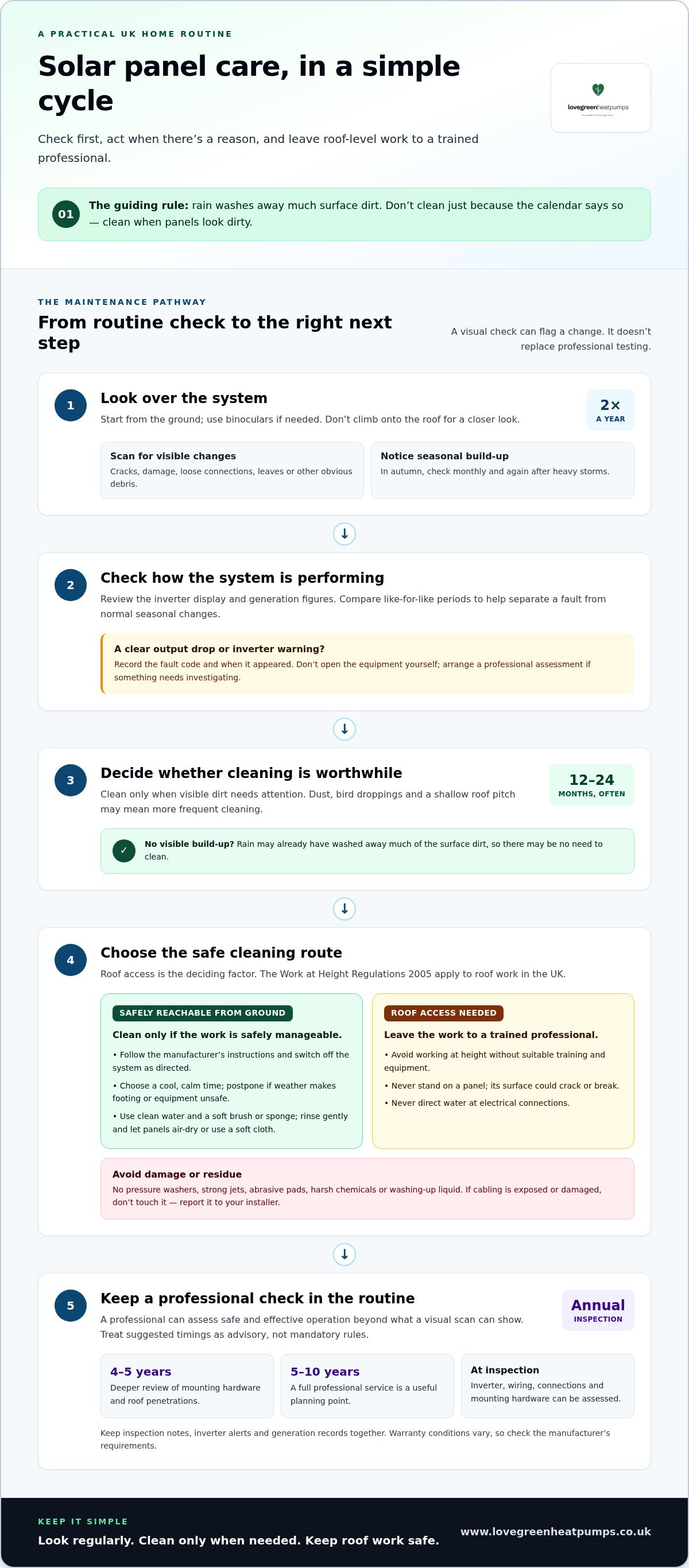
Good solar panel care is about regular checks, not constant cleaning. A practical solar panel maintenance schedule for a UK home is to inspect the system visually twice a year, arrange an annual professional inspection and clean the panels when they look dirty, often every 1-2 years. Rain can wash away much of the surface dirt, so there’s no need to clean them just because the calendar says so.
It’s easy to assume solar panels need little attention after installation. They are generally low-maintenance, but leaves, bird droppings, blocked drainage or a change in output can be early signs that something needs attention.
This guide explains how to inspect panels safely, when cleaning is worthwhile and what to check as autumn debris gathers. You’ll also learn how to review generation data and spot a drop in performance, so you can maintain the system without adding unnecessary jobs to your routine.
Key Takeaways
- Build a simple routine around visual checks, and clean panels when they’re visibly dirty rather than following a rigid cleaning calendar.
- Keep roof access safe. The Work at Height Regulations 2005 apply to roof work in the UK, according to UK legislation.gov.uk.
- After autumn leaves or heavy storms, look for debris around the panels and check that rainwater can drain freely.
- Review your generation data regularly and compare like-for-like periods to help distinguish a fault from normal seasonal changes.
- Regular attention can help spot developing issues early and keep avoidable dirt or obstructions from affecting system output.
1. How do you maintain your solar panels?
In many cases, rain can wash away surface dirt, so panels may not need routine cleaning. There’s no strict cleaning calendar: inspect them twice a year and clean them when visibly dirty, often every 12 to 24 months. Bird droppings, dust and a shallow roof pitch can mean more frequent attention.
Start each visual check from the ground, using binoculars if needed. Look for cracks, damage, loose connections or obvious debris before considering cleaning. Check the inverter display and generation figures too: a drop in output may be another reason to investigate. Don’t climb onto the roof for a closer look.
You can clean panels yourself only when the work is safely manageable from the ground. The Work at Height Regulations 2005 apply to roof work in the UK, according to UK legislation.gov.uk. Avoid working at height without suitable training and equipment. Never stand on a panel, as its surface could crack or break.
Before cleaning, follow the manufacturer’s instructions and switch off the solar system as directed. Manufacturers commonly recommend switching it off first to reduce the risk of electric shock. If you spot exposed or damaged cabling, stop. Don’t touch it; report the damage to your installer.
Choose a cool, calm time, such as early morning, rather than cleaning hot panels in strong sun. Water can evaporate quickly from hot glass, leaving streaks or residue. Avoid cleaning in windy, rainy or snowy conditions. Check the forecast and postpone if the weather makes your footing or equipment unsafe.
Use clean water with a soft brush or sponge to loosen dirt. Avoid pressure washers, strong jets, abrasive pads and harsh chemicals, which can damage surfaces or leave residue. Washing-up liquid can also leave deposits. Rinse gently, then let the panels air-dry or use a soft cloth. Never direct water at electrical connections.
For a typical home, assess dirt during twice-yearly checks and clean only when needed. Panels in dusty locations or beneath trees may collect more grime than those on a clear, steep roof. Follow the manufacturer’s approved cleaning method, as warranty conditions may depend on maintenance. If cleaning requires roof access, leave it to a trained professional.
2. Maintenance inspections and professional servicing
A visual check helps spot changes, but an annual professional inspection can assess whether the system operates safely and effectively. Treat the suggested frequencies as advisory, not mandatory rules. A full professional service every 5 to 10 years is another useful point to plan for, alongside checks prompted by a fault or a clear change in output.
During an inspection, a professional can assess the inverter, wiring, connections and mounting hardware. Annual checks of wiring and connections can identify wear, loose fittings or damage before it worsens. An inverter inspection can also reveal warning lights, error messages or ventilation problems. Record any fault code and when it appeared rather than opening the equipment yourself.
Mounting hardware needs attention too. A professional can check that rails, clamps and fixings remain secure, with a deeper review every 4 to 5 years. Roof penetrations, where cables or fixings pass through the roof surface, can be inspected on the same 4 to 5-year cycle. Look for visible water ingress from indoors, but leave roof-level checks to someone equipped to work safely.
Summer is a practical time to check for shading from new growth and pollen build-up on panels. During a service, ask for the inverter’s airflow and surrounding space to be checked. Keeping the ventilation area clear helps prevent avoidable obstruction. A professional can also inspect accessible cabling, connectors and the system’s ground connection for visible damage or signs of loosening.
Electrical checks go beyond a quick visual scan. A professional can test connections and wiring, examine the inverter and assess mounting components rather than relying on appearance alone. Larger systems may need more frequent maintenance checks. For a home system, keep inspection notes alongside inverter alerts and generation records, so a technician can compare changes over time.
Do UK solar panel warranties require regular maintenance or professional inspections? Warranty terms vary, and neglect that contributes to a fault may affect cover. Read the manufacturer’s conditions, as some installers require a full service within a specified period.
How much does solar panel inspection or cleaning cost in the UK? The price depends on the system and work required, and is given after a quote request; key factors include array size, roof access, testing scope and any repairs.
If an inspection points to an installation or system-design issue, explore solar PV solutions as a next step. Keep the inspection record, inverter alerts and any test findings together; these details help make a follow-up assessment more focused.
3. Autumn debris removal and drainage checks
As autumn progresses, fallen leaves, twigs and windblown debris can collect around panels. Make a visual check monthly and repeat it after heavy storms. From a safe position, look for material resting on the array or caught near its lower edge. Remove loose debris only if you can reach it safely; don’t climb onto the roof or disturb the mounting.
Check where rainwater runs off the panels and roof. Leaves can collect at roof edges and around gutters, slowing drainage and allowing water to pool. After rainfall, look for overflowing gutters, visible blockages and water marks on outside walls. Clear accessible ground-level drains, but leave roof gutters and other work at height to someone with suitable equipment.
Autumn is also a useful time to look for changes in the mounting and visible wiring. From the ground, note any panel that appears out of line, loose or unusually shaded by new growth. Don’t tug cables or touch exposed wiring. If a storm has caused damage, record its location and arrange a professional assessment before trying to remove nearby debris.
Compare electricity generation with the same period in previous years, allowing for shorter days and changing weather. A seasonal decline alone doesn’t prove a fault. A persistent output shortfall of 10% or more for several weeks, after seasonal variation is considered, may point to a developing problem. Note the dates and any storm or shading changes alongside the figures.
Include the inverter in your autumn checks. A flashing green light indicates normal operation, while an error code that remains after a day or two is a reason to contact the installer. Don’t open the casing or try electrical repairs. Solar inverters typically need replacement every 10 to 15 years, so keep its age and any service records with your system documents.
If you have battery storage, note warning messages on its display and arrange a professional check annually. Keep the battery’s ventilation area clear of leaves, boxes and other obstructions. If the unit, its wiring or the surrounding surface looks damaged or wet, don’t handle it. Record what you see and report it to the installer for assessment.
What are common solar panel faults and warning signs? Look for cracks, loose mounting, damaged wiring, persistent inverter error codes or generation that stays unusually low after allowing for seasonal changes. If you notice any of these, leave electrical components untouched and report the issue to your installer. A clear note of the warning and when it appeared can help identify what to check next.
4. Performance monitoring and data review
Check your solar generation figures monthly and keep a simple record. Note the date, total electricity generated and any inverter messages. A generation meter, inverter display or monitoring portal may show these readings. Use the same source each month to compare like with like. A brief note beside each figure can capture heavy cloud, shading or a system shutdown.
Monthly monitoring helps distinguish normal seasonal changes from a sustained drop. Shorter winter days generally produce different results from brighter summer days, so compare similar months rather than judging a single reading. Lower output after several overcast days is not the same as a continuing decline over several weeks.
Compare the recorded output with the system’s earlier readings and note whether generation is increasing or falling over time. A shortfall of 10% or more lasting several weeks, after seasonal variation is considered, may indicate a developing fault. Write down when the change began and whether it followed a storm, new shading or an inverter warning. These details give a specialist a clearer starting point.
Changes in household electricity use can complicate how you interpret energy readings. Solar panels generate electricity whether or not the home is using it at that moment, so separate system output from energy used inside the property. Review the generation total first. Then consider whether a change in household routines, such as daytime appliance use, explains a difference in imported electricity.
Monitoring data cannot reveal every physical problem. During a ground-level visual check, note visible cracks, new shading from nearby growth or panels that appear out of position. Compare these observations with the month’s output. If generation drops and the inverter shows an error, record the exact message and date instead of trying to reset or open the equipment.
Keep one log for monthly readings, inverter alerts and inspection findings. For example, note a low-output month alongside prolonged cloudy weather, then compare the next month before drawing a conclusion. If a substantial shortfall continues for several weeks, share the dates and readings with a specialist. A clear record helps assess whether the issue relates to weather, shading, electrical equipment or a panel fault.
5. Benefits of regular solar panel maintenance
Regular attention helps keep sunlight reaching the panels and gives you a clearer picture of their performance. Leaves, bird droppings and accumulated dirt can shade cells, reducing the light available to generate electricity. Heavily soiled panels can lose up to 20% of their output. Removing visible obstructions helps limit avoidable losses without making cleaning a job for every week.
Regular checks can help you spot changes before they become harder to assess. A visual inspection may reveal cracks, loose fittings or new shading, while monthly generation records show whether output has shifted. For example, if readings fall and a nearby tree has grown over the array, visible obstruction may be the cause rather than an electrical fault. Combining observations with data makes follow-up decisions more useful.
Proper maintenance can increase energy production by around 15%. That figure is not a target for every home, since results depend on the system’s condition, shading and local soiling. The practical benefit is knowing whether the panels have a clear surface and whether the inverter is reporting normally. A simple record helps distinguish a genuine change from ordinary seasonal variation.
Regular checks can also support sensible warranty management. Warranty terms vary by manufacturer, and maintenance or neglect that contributes to a fault may affect cover. Keep installation documents, service records and dated notes together. If a fault appears, these records show what changed and when, helping a specialist assess the system without relying on memory alone.
Solar panels typically last around 25-30 years with minimal upkeep. Maintenance doesn’t mean constant intervention; it means noticing issues and acting appropriately. Check visible condition, note generation changes and follow the manufacturer’s instructions. That approach can help you avoid unnecessary cleaning while keeping an eye on the equipment that turns a renewable resource into household electricity.
The main takeaway is straightforward: regular checks help protect performance, identify developing problems and make maintenance decisions more informed. If your records or inspection point to a wider system concern, discuss your solar system’s next steps with a professional. Keep the original readings and dates to make that conversation practical and specific.
Dirt can reduce solar panel generation by limiting how much sunlight reaches the panels, so check the surface when assessing a change in output.
Love Green Heat Pumps: Heat Pump Installation
If your inspection notes or generation records point to a wider solar PV issue, or you’re planning renewable energy improvements, Love Green Heat Pumps Ltd can help. Its Solar PV & Other Renewables service covers solar projects from design through to commissioning, providing a clear route from initial plans to an installed system.
Maintenance guidance can help you spot concerns, but electrical faults and persistent output changes need a practical assessment. Share your system details and any readings or warning messages you’ve recorded. If you’re also considering how heating fits into your renewable energy plans, heat pump installation may be part of the wider project.
Contact Love Green Heat Pumps Ltd to discuss your solar PV or renewable energy plans.
Make your next energy decision with confidence
A solar panel maintenance schedule is most useful when it supports the way you plan to use energy at home. Your recorded output and the system’s condition can inform future decisions, from maintaining existing equipment to considering how renewable electricity fits with heating and cooling.
Love Green Heat Pumps Ltd offers Solar PV & Other Renewables, Heat Pump Installation and Air Conditioning. If you’re considering a change or want to discuss your home’s renewable energy plans, bring your system notes and questions to the conversation. A clear picture of your current setup makes it easier to explore practical next steps while keeping what already works for your household in mind.
Contact Love Green Heat Pumps Ltd to discuss your plans. A steady, informed approach can make caring for your system feel like a manageable part of looking after your home.
Frequently Asked Questions
How do you maintain your solar panels?
Maintain solar panels by recording their condition and arranging safe cleaning when grime or bird droppings build up. Follow the manufacturer’s instructions before handling equipment, and don’t climb onto the roof or touch damaged wiring. For example, if a panel looks cracked from the ground, note its position and arrange an assessment instead of attempting a repair yourself.
How often should solar panels be inspected in the UK?
Check panels visually twice a year and arrange a professional inspection annually. These are advisory frequencies, not mandatory requirements for every system. A practical routine is to check once in spring and again in autumn, when new shading or fallen leaves may be easier to spot. Larger systems may need more frequent maintenance checks than a typical domestic installation.
What does a solar panel maintenance schedule include?
A solar panel maintenance schedule can include visual checks, an annual professional inspection, output monitoring and cleaning when panels are visibly dirty. Add autumn notes on leaves, drainage and new shading, along with any inverter warnings. Keep the manufacturer’s maintenance instructions and warranty terms with your records. This makes it easier to track what was checked and spot changes over time.
How often should solar inverter filters and ventilation be checked?
Have the inverter inspected annually and follow its manufacturer’s instructions for filter cleaning or replacement. Filter designs and maintenance needs vary by model, so don’t remove covers or clean internal components yourself. Keep the area around the unit clear of stored items and debris. If ventilation openings appear blocked or the inverter displays a warning, record the message and arrange professional attention.
How often should solar panel mounting, wiring and roof seals be inspected?
Arrange an annual professional check of wiring, connections and mounting hardware. A deeper mounting review and an inspection of roof penetrations are recommended every 4 to 5 years. Roof penetrations are points where cables or fixings pass through the roof. After severe weather, report visible displacement, damaged cables or signs of water ingress rather than attempting roof-level checks yourself.
How can I monitor solar panel performance and spot faults?
Review your generation figures monthly and keep dates, readings and inverter messages together. Compare similar months, since winter and summer generation naturally differ. A shortfall of 10% or more lasting several weeks, once seasonal variation is considered, may indicate a developing fault. Add notes about prolonged cloudy weather, new shading or a system shutdown. This context helps a specialist investigate the change.
When should solar panels be serviced by a qualified electrician or MCS installer?
Plan a professional service every 5 to 10 years, or sooner if the system shows persistent low output, an unresolved inverter warning or visible damage. UK solar owners can use an electrician or an installer accredited by the Microgeneration Certification Scheme (MCS) for checks. Review your warranty terms too, as some installers require a full service within a specified period to keep cover valid.
Disclaimer
Disclaimer
The information published on this website is provided by Love Green Heat Pumps for general information and educational purposes. As a specialist provider of heating and renewable energy solutions, we strive to ensure that our content is accurate, relevant and up to date. However, heating requirements, system suitability, installation specifications, costs and performance can vary depending on individual property characteristics, usage and other site-specific factors.
Information provided in our articles should not be regarded as a substitute for a professional property assessment, technical survey or tailored recommendation. Any decisions regarding the selection, installation, replacement or maintenance of heating systems should be made with appropriate professional guidance.
Love Green Heat Pumps accepts no responsibility for decisions made solely on the basis of general information published in these articles. For advice specific to your property or project, we encourage you to contact our team for professional guidance and an assessment of your requirements.


