

A warm room or unfamiliar smell doesn’t always mean your air conditioner has a serious fault. A few simple checks may explain what has changed. Home air conditioning servicing also helps you understand what you can safely do yourself and when a professional should assess the system.
If your system isn’t cooling as well as it used to, it’s worth knowing what a service involves and which tasks are suitable for homeowners. Routine maintenance supports dependable operation, but work on internal components or refrigerant should be left to a professional.
This guide explains what routine servicing involves, which straightforward checks you can carry out between visits, and what signs mean it’s time to arrange professional attention. You’ll also learn how to respond to poor cooling, unusual smells and other changes without guessing at the cause or reaching for tools you don’t need.
Key Takeaways
- Understand what routine home air conditioning servicing checks and why the tasks vary by system.
- Use a simple checklist for safe visual checks and user-accessible cleaning between professional visits.
- Note changes in cooling, odours or operation without trying to diagnose the cause yourself.
- Use the manufacturer’s guidance and your system’s pattern of use to help plan servicing.
- Learn how Love Green Heat Pumps Ltd can help assess air conditioning issues and carry out routine maintenance.
What does home air conditioning servicing cover?
Home air conditioning servicing is planned inspection and maintenance to support reliable system operation. It gives a technician the opportunity to assess the equipment, carry out appropriate maintenance and identify signs that need further attention. The checks depend on the unit, its condition and the manufacturer’s guidance, so there isn’t one checklist that applies to every home.
A routine service is different from a repair or a new installation. If the system has stopped working or developed a fault, further investigation may be needed to identify the cause and decide on a repair. Installation is about fitting a system, rather than maintaining one already in place. Keeping these tasks distinct helps set clear expectations about what a service visit can establish.
Which parts of a home air conditioning system may be checked?
Most domestic systems have indoor and outdoor units, as well as filters and airflow paths that affect operation. The Air conditioner overview explains the basic components and cooling process. During servicing, checks are guided by the equipment and may include:
- Filters: their condition and whether they need attention under the manufacturer’s instructions.
- Indoor and outdoor units: visible condition, access and any obvious obstruction around the equipment.
- Airflow: whether air can move freely through the unit and its outlet.
- Visible drainage components: whether accessible parts show signs that need closer assessment.
These are examples, not a guarantee that every item will be checked in the same way on every model. A technician assesses the equipment using procedures suited to its design and condition. Don’t remove covers or reach into a unit to inspect parts yourself.
Why routine air conditioning maintenance matters
Dust, blocked airflow or visible obstructions can affect how comfortably a system cools a room. Keeping user-accessible areas clean and having the equipment assessed in line with the manufacturer’s guidance can support dependable everyday use. Maintenance may also bring an emerging operational concern to attention before it becomes more disruptive, although it can’t guarantee that a fault won’t occur.
It’s best to view home air conditioning servicing as planned care, not a promise of lower bills or fault-free operation. If a technician identifies a concern, they can explain whether it needs further diagnosis or repair. In the meantime, follow the unit’s instructions for simple user-level care and leave unfamiliar or internal work to a professional.
Home air conditioning servicing checklist: what can you check yourself?
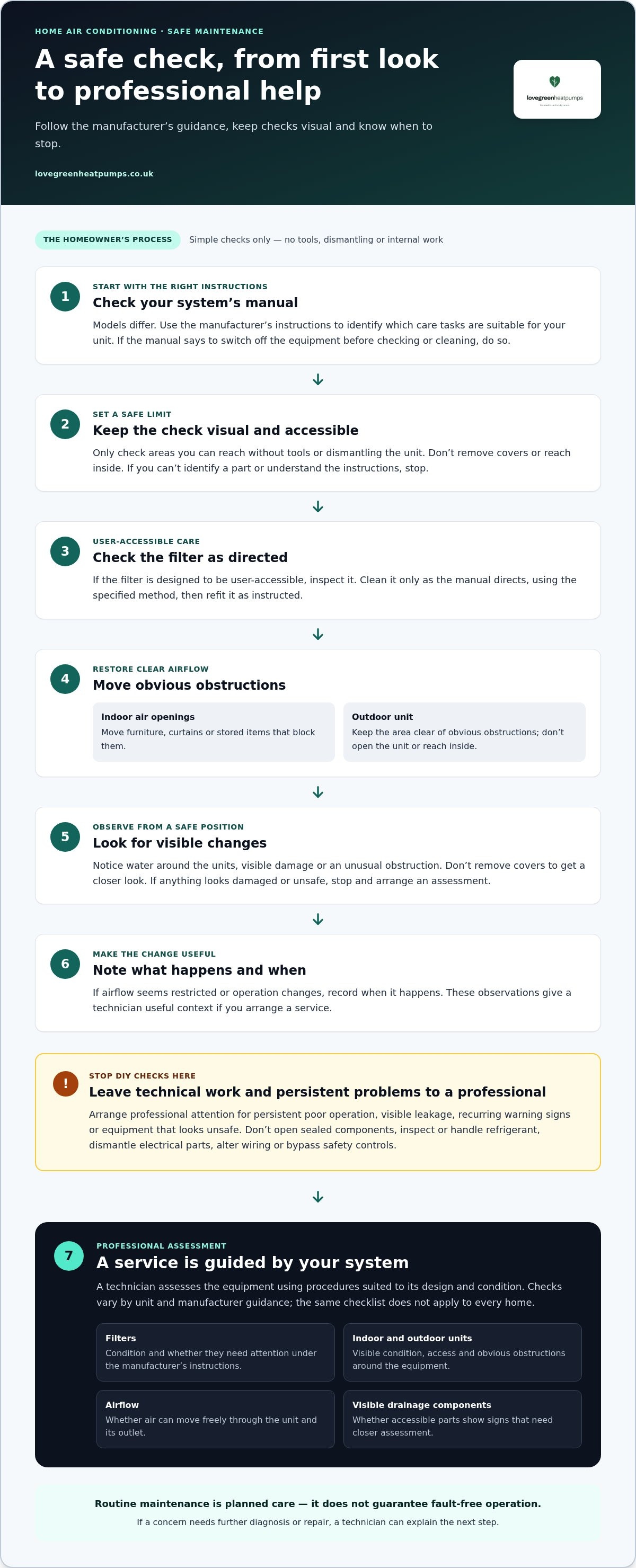
A few safe checks can help you spot obvious obstructions or changes before arranging routine maintenance. They don’t replace professional servicing and shouldn’t involve opening the unit or reaching into its internal parts. Start with the manufacturer’s manual: models differ, and it explains which user-level tasks are suitable for your system.
Safe routine checks mean following the manual, cleaning only user-accessible parts as directed, keeping airflow openings clear and leaving internal or technical work to a professional. If the instructions say to switch off the equipment before checking or cleaning it, do so. Don’t proceed if you can’t identify the part or aren’t sure what the instructions mean.
Simple checks between professional visits
Keep checks visual and limit them to areas you can access without tools or dismantling the unit. If anything looks damaged or unsafe, stop and arrange an assessment instead of investigating further.
- Check the filter. If it’s designed to be user-accessible, inspect it and clean it only as the manual directs. Follow the specified method and refit it as instructed.
- Clear the airflow. Move furniture, curtains or stored items blocking the indoor air openings. Keep the area around the outdoor unit clear of obvious obstructions, without opening it or reaching inside.
- Look for visible changes. From a safe position, check for water around the units, visible damage or unusual obstruction. Don’t remove covers to get a closer look.
- Note what you observe. If airflow seems restricted or operation changes, record when it happens. This gives a technician useful context if you arrange a service.
The manufacturer’s instructions are the best guide to care for your model. For a further manufacturer perspective on maintenance and homeowner checks, see Carrier UK Air Conditioning Service. Use the manual supplied with your system for its specific instructions.
What not to attempt without suitable training
Keep DIY care to visible checks and tasks the manufacturer identifies for the user. Other parts of a system require specialist knowledge and appropriate procedures. Guesswork can damage equipment or create a safety risk, so don’t treat a routine checklist as permission to dismantle the unit.
- Don’t open sealed components or attempt to inspect, add or remove refrigerant.
- Don’t dismantle electrical parts, alter wiring or bypass safety controls.
- Don’t keep using equipment that looks unsafe. Avoid touching damaged parts and arrange a professional assessment.
Persistent poor operation, visible leakage or recurring warning signs need professional attention, not repeated DIY checks. If you’re unsure what’s safe, stop and seek advice. Love Green Heat Pumps provides domestic air conditioning servicing and repairs across the UK when your own checks aren’t enough.
Air conditioning warning signs: when should you arrange a service?
A change in how your air conditioner behaves is useful information, but it doesn’t reveal the cause by itself. A room taking longer to cool, a new sound or water near the unit can each have different explanations. Rather than dismantling anything or guessing at a fault, note what has changed and arrange a professional assessment if it persists, worsens or concerns you.
Have persistent changes in cooling, airflow, noise or operation assessed professionally, so the cause can be diagnosed instead of guessed from a symptom alone. A gradual change may justify booking an inspection. Signs of electrical danger or significant water leakage call for a more cautious response. If there’s smoke, sparking, a burning smell or visibly damaged electrical equipment, stop using the system and don’t touch the affected parts.
Changes in cooling, airflow or noise
Pay attention to differences from the system’s usual behaviour. Weak airflow from an outlet, inconsistent cooling during normal operation or the unit running longer than expected may be reasons to seek advice if they continue. A new or worsening sound is also worth noting, even if the system still appears to cool the room.
- Note when it happens: record whether the change occurs every time the system runs or only occasionally.
- Describe what you notice: note the affected room, airflow or sound in plain terms.
- Look for a pattern: record whether the symptom is becoming more frequent or noticeable.
These observations help explain the issue during an assessment, but they aren’t a diagnosis. Don’t assume a particular part has failed based on a noise or change in cooling, and avoid opening the unit to investigate.
Unusual smells, leaks or repeated shutdowns
A persistent unusual odour is a reason to investigate, not simply cover it with an air freshener. If you see water around the equipment, note where it appears and whether it continues. Don’t remove panels or try to clear internal drainage parts. Repeated shutdowns or a fault indication that returns after you follow the user instructions also need professional attention.
- Persistent odour: arrange an assessment rather than masking the smell.
- Continuing visible water: stop using the equipment if the leakage is significant and seek professional advice.
- Repeated stopping or a recurring fault indication: note any displayed message and arrange an inspection.
Stop using the air conditioner if you see sparks or smoke, suspect electrical damage or notice significant water leakage. Don’t touch wet electrical equipment or try to reset a safety control. If there’s no immediate safety concern but a change keeps returning, professional diagnosis can establish what attention is needed. Love Green Heat Pumps Ltd provides domestic air conditioning servicing and repairs to investigate persistent issues and support dependable comfort at home.
How often should home air conditioning be serviced?
There isn’t one schedule that suits every home air conditioning system. Timing depends on the model, how often it runs, its surroundings and the manufacturer’s instructions. Start with the user manual or service records, which may set out recommended maintenance and user checks. If you can’t find the guidance, a professional can help plan servicing around the equipment and how you use it.
Frequent use may mean the system needs closer attention than one that runs occasionally, but don’t assume a fixed interval based on use alone. Consider the manufacturer’s advice alongside the unit’s condition and any recurring changes in operation. Routine home air conditioning servicing is planned maintenance, not a substitute for an assessment when a problem appears.
What can affect your servicing schedule?
Consider the setting as well as how many hours the system runs. Dusty surroundings, pets and nearby stored items can affect how quickly accessible areas get dirty or airflow becomes obstructed. These factors don’t set a service date by themselves, but they can help you decide when to review the manual or seek professional advice.
- Operating hours: note whether the system runs regularly for long periods or only now and then.
- Dust and pets: check user-accessible filters as often as the manufacturer directs.
- Equipment surroundings: keep a record of visible obstructions or changes around the indoor and outdoor units.
- Service history: save service records and note recurring symptoms, including when they occur.
A clear record helps you spot patterns and gives a technician useful context. If the system is heavily used or the same change keeps returning, seek professional advice rather than waiting for a convenient season. Follow the equipment guidance, as maintenance needs vary between models.
Preparing your system for warmer weather
Before regular cooling becomes part of your routine, make time for simple checks. Inspect and clean an accessible filter only as the manual instructs, and move furniture or stored items that block air openings. Check the area around the units visually, without removing covers or reaching inside. These steps can help you notice an obvious issue before you rely on the system more often.
Try the system early enough to observe its usual operation before warmer weather brings more regular use. If cooling seems inconsistent, airflow is weak or the unit displays a fault, note what happens and arrange an assessment instead of attempting a repair. Bedroom location and how you plan to use cooling there may also shape system decisions; the bedroom air conditioning installation guide covers those considerations.
If you’re planning a new system rather than maintaining an existing one, the domestic air conditioning installer UK guide can help you explore the installation process. For help setting a maintenance plan for your current system, arrange domestic air conditioning servicing with Love Green Heat Pumps Ltd.
Professional home air conditioning servicing with Love Green Heat Pumps
Simple checks are useful, but they can’t assess every part of an air conditioning system. Love Green Heat Pumps Ltd provides domestic air conditioning servicing and repairs across the UK. When arranging a service, explain what you need, describe any symptoms and discuss a suitable next step based on the unit, its condition and your home.
You don’t need to diagnose the problem before getting in touch. Explain what you’ve noticed and whether you’re seeking planned maintenance for a working system or help with an issue. This keeps the discussion focused on your equipment rather than assumptions about what might be wrong.
What to note before arranging a service
A little information can make the initial discussion clearer. Gather what you can without removing covers or handling internal parts. If you can’t find a detail easily, you can still arrange an enquiry.
- Model details: note the make and model if they’re readily visible or recorded in your paperwork.
- Symptoms: describe changes such as inconsistent cooling, unusual noise or repeated stopping, and when they happen.
- Recent changes: mention if the behaviour has become more noticeable or started after a change in use.
- Service history: share any previous repairs or recurring issues that may help explain the system’s background.
These notes are useful context, not a substitute for assessment. Stick to observations you can make safely. Clear descriptions help distinguish a request for routine home air conditioning servicing from one where a repair assessment may be more appropriate.
Choosing the right next step for your system
If the system is operating as expected and you’re looking for planned upkeep, routine maintenance is a sensible starting point. If cooling has changed, a fault indication keeps returning or the unit repeatedly stops, explain that when you enquire. A repair assessment can then focus on investigating the issue rather than treating it as routine maintenance alone.
If you’re considering a new system or different ways to cool several rooms, installation planning is separate from servicing an existing unit. The multi-split air conditioning UK guide explains this system option and can help you explore whether it fits your home and needs.
The appropriate service or repair depends on the system and what it needs. Love Green Heat Pumps Ltd can discuss your requirements and provide a free, no-obligation quote. If you’re ready to explore a suitable next step, explore air conditioning servicing with Love Green Heat Pumps Ltd.
Make your next maintenance step simple
Give your air conditioner a clear maintenance plan that works for your household. Keep the manual and service notes somewhere easy to find, then use the manufacturer’s guidance to plan its care. This makes home air conditioning servicing a considered part of looking after your system, rather than something you only think about when comfort changes.
If you’re unsure whether your system needs routine maintenance or further investigation, you don’t have to diagnose it yourself. A clear description of how the unit is behaving can help establish the right next step. There’s no need to wait until a concern becomes more disruptive before seeking guidance.
For a practical next step, explore air conditioning servicing with Love Green Heat Pumps. A little planning can help you feel more prepared for the seasons ahead and more confident about keeping your home comfortable.
Frequently Asked Questions
What is included in home air conditioning servicing?
A service involves assessment and maintenance appropriate to the particular system, rather than one identical set of tasks for every model. The technician may consider accessible filters, units, airflow and visible drainage components, following the equipment’s guidance. If something needs repair or further diagnosis, that’s a separate step from routine maintenance. Share the model details and any concerns you’ve noticed to make the visit more useful.
Can I clean my air conditioner filter myself?
Yes, if the filter is intended to be user-accessible and the manufacturer’s instructions explain how to clean it. Switch the equipment off first if the manual says to, and use only the recommended method. Don’t force a filter out or use a cleaning product or tool the instructions don’t specify. If the filter is damaged, difficult to reach or fitted behind a cover you’re unsure about, leave it for professional attention.
What are the signs that my home air conditioning needs servicing?
Arrange an assessment if you notice a persistent change from normal operation, such as less consistent cooling, weaker airflow, a new sound or repeated stopping. A fault message that returns after you follow the user instructions is another reason to seek advice. Note when the change occurs and whether it affects one room or the whole system. Those details help explain the problem without guessing at its cause.
Should I turn off my air conditioner if it is leaking water?
If water is leaking significantly, stop using the air conditioner and arrange a professional assessment. Keep clear of wet electrical equipment, and don’t remove covers or try to clear internal parts. If the water is close to sockets or other electrical equipment, avoid touching the affected area. A small amount of water can be difficult to assess by appearance alone, so note where it’s collecting and whether it continues.
Does servicing improve air conditioner efficiency?
Maintenance can help keep the system’s accessible parts and airflow in suitable condition, which may support operation as intended. It can’t guarantee lower energy use or a particular improvement. Room conditions, system settings and the equipment’s state all affect its performance. If your electricity use or cooling behaviour seems different, share that observation during an assessment rather than assuming servicing alone will resolve it.
Can home air conditioning be serviced if it is not cooling properly?
Yes. A professional can assess a system that isn’t cooling properly and advise whether it needs routine maintenance, further diagnosis or a repair. Explain how the room feels, whether the change is constant and whether the system displays a message. Don’t attempt to open the unit or adjust internal parts. If cooling has stopped suddenly or the system repeatedly shuts down, mention that when arranging help.
Disclaimer
Disclaimer
The information published on this website is provided by Love Green Heat Pumps for general information and educational purposes. As a specialist provider of heating and renewable energy solutions, we strive to ensure that our content is accurate, relevant and up to date. However, heating requirements, system suitability, installation specifications, costs and performance can vary depending on individual property characteristics, usage and other site-specific factors.
Information provided in our articles should not be regarded as a substitute for a professional property assessment, technical survey or tailored recommendation. Any decisions regarding the selection, installation, replacement or maintenance of heating systems should be made with appropriate professional guidance.
Love Green Heat Pumps accepts no responsibility for decisions made solely on the basis of general information published in these articles. For advice specific to your property or project, we encourage you to contact our team for professional guidance and an assessment of your requirements.


